Meghauli Serai, A Taj Safari
Meghauli Serai, A Taj Safari stands on the bank of the Rapti River on the quieter western side of Chitwan National Park, which has been UNESCO listed since 1984 and holds 694 of Nepal’s 752 one-horned rhinos.
Worth knowing before you choose it
Meghauli is not Sauraha. The busy end of Chitwan sits east of here with the day-trip traffic and the elephant crowds, and choosing this side means fewer vehicles at a sighting and a longer drive to reach it.
Getting there is either a flight to Bharatpur and a transfer, or several hours by road. Either way it is a half day, and it is worth planning as one rather than squeezing it.
The Terai is hot from April and floods through the monsoon, when tracks close. February to April is the strongest window, when the grass is short and animals concentrate near water.
The property
Twenty nine accommodations in total: twelve Meghauli rooms, sixteen Rapti one-bedroom pool villas each with a private plunge pool, and a two-bedroom presidential villa. Rooms carry four-poster beds under nets and bathrooms finished with Nepalese stone spouts.
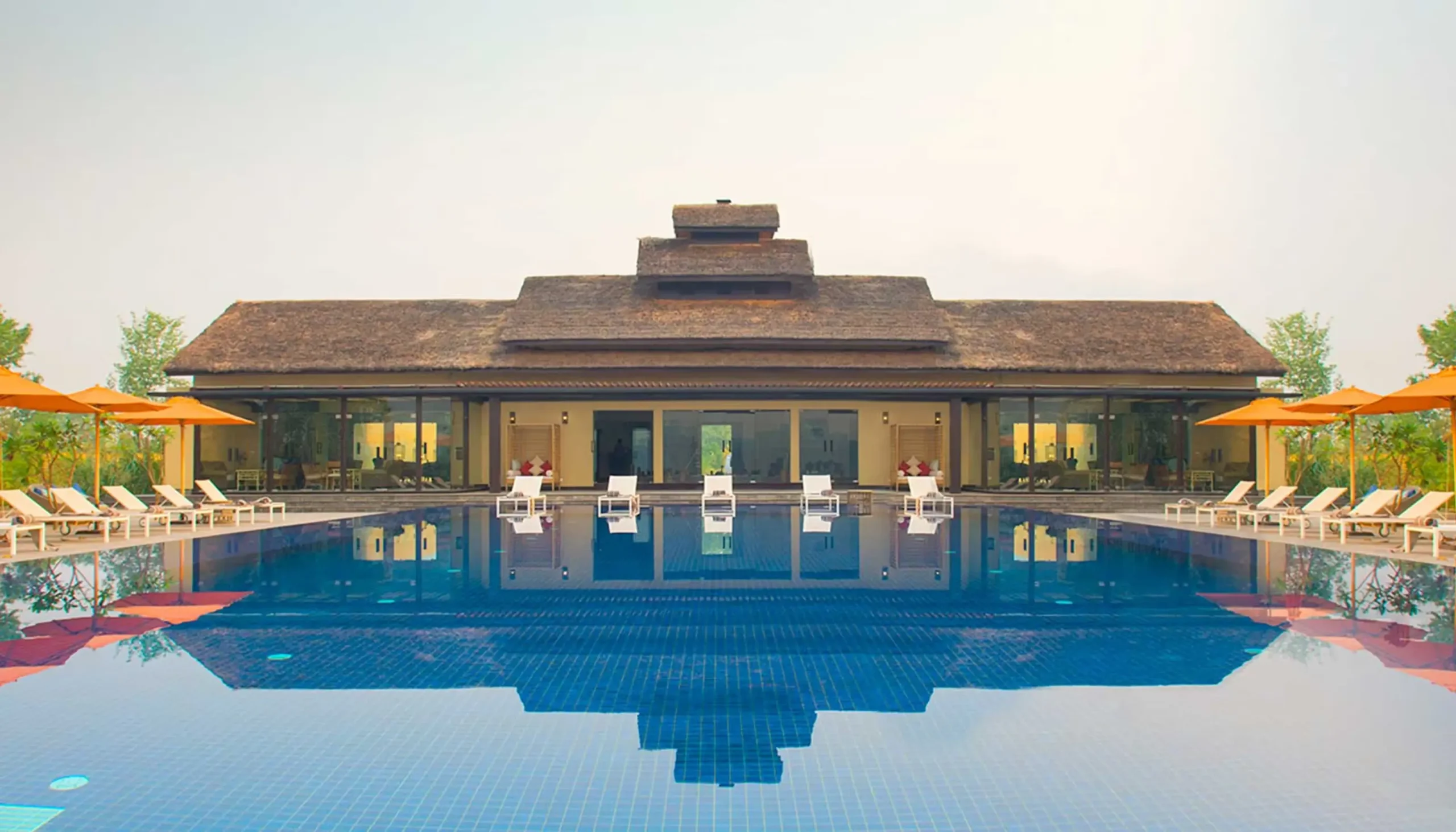
There is an all-day restaurant, a river-view deck above the Rapti, a spa, a gym and yoga room, and an outdoor infinity pool. The design work through the property was done by Nepali artists.
Who tends to choose it
Guests who want serious wildlife without giving up how they live, travellers pairing the jungle with the mountains in one journey, and anyone who would rather watch a rhino from a vehicle with a naturalist than from a crowd.
Viewing here is by vehicle, on foot with an armed guide, and by boat on the Rapti.
Planning this trip? Let’s talk.
Send us your questions about routes, costs or the best time to go — our travel experts in Nepal reply within 24 hours.
