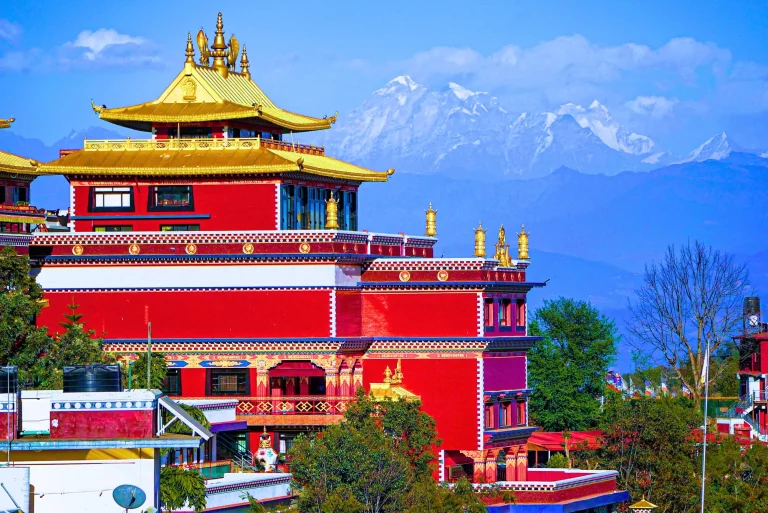
The Grand Nepal Journey

A 16-Day Private Journey Through Kathmandu, the Himalaya, Jungle and Renewal

16 Days

Country:

Nepal

Max Altitude:

2,000m

Activities:

Culture, Walking, Wildlife, Wellness

Region:

Kathmandu Valley, Annapurna, Chitwan

Starting/Ending Point:

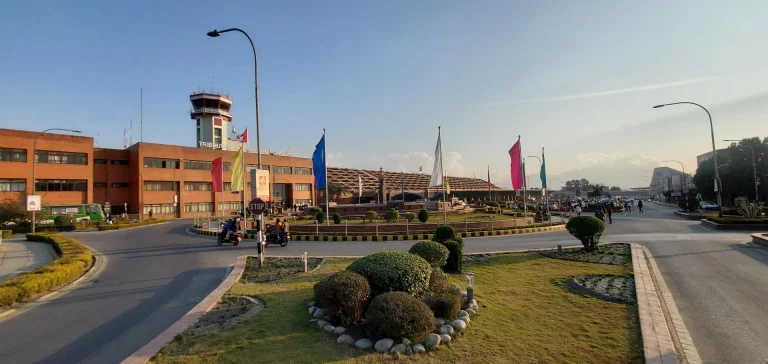
Kathmandu (Tribhuvan International Airport)

Grade:

Easy to Moderate

Group Size:

Up to 5 guests

Accomodation:

5-Star Hotel/Luxury Lodge/Wellness Retreat

Experiences

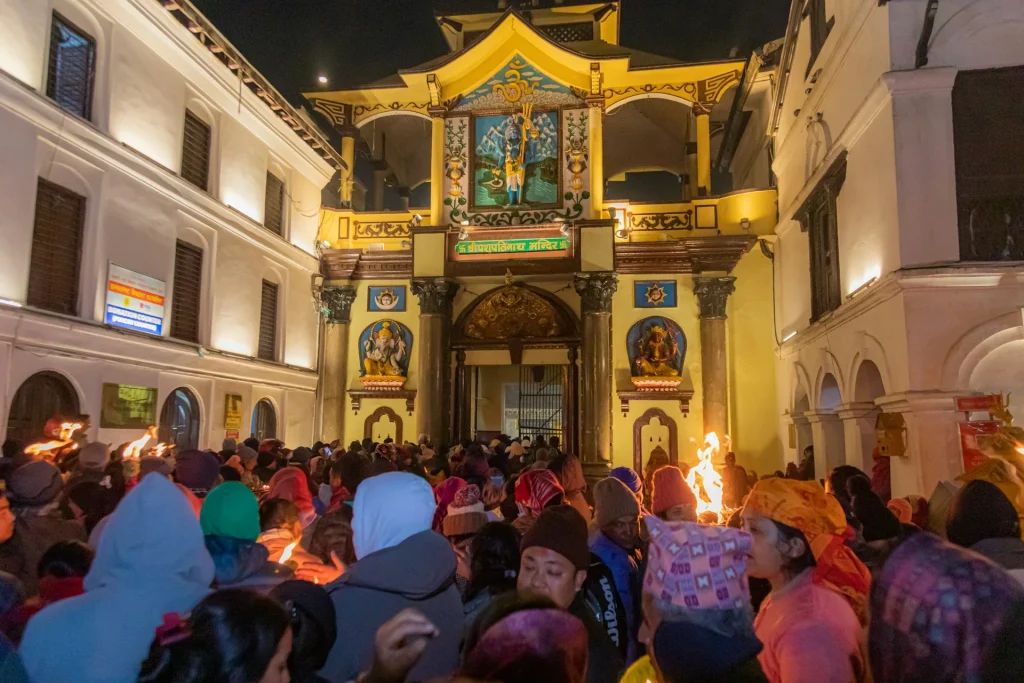
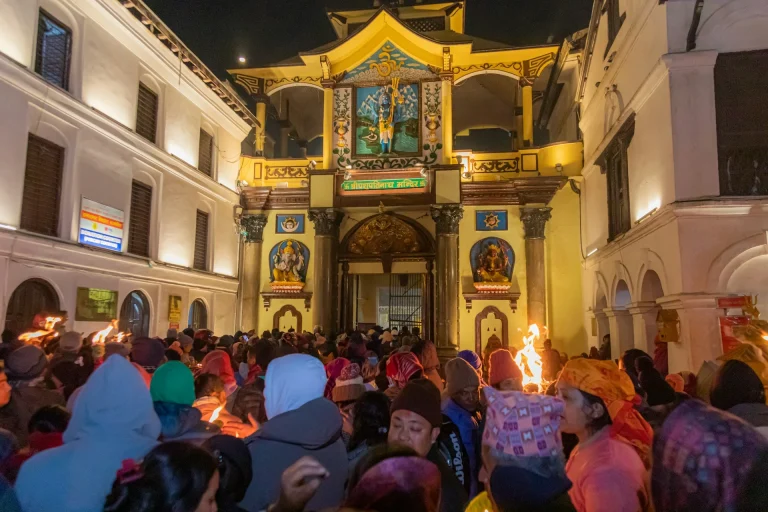
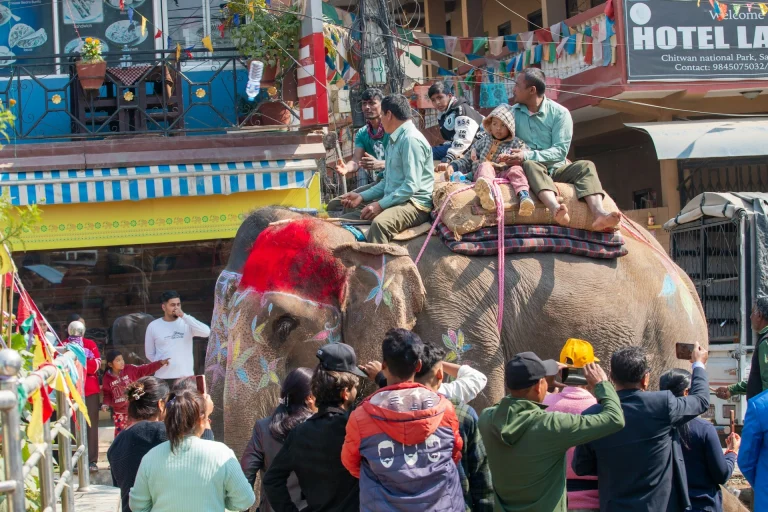
Pashupatinath Temple beside the Bagmati river in Kathmandu
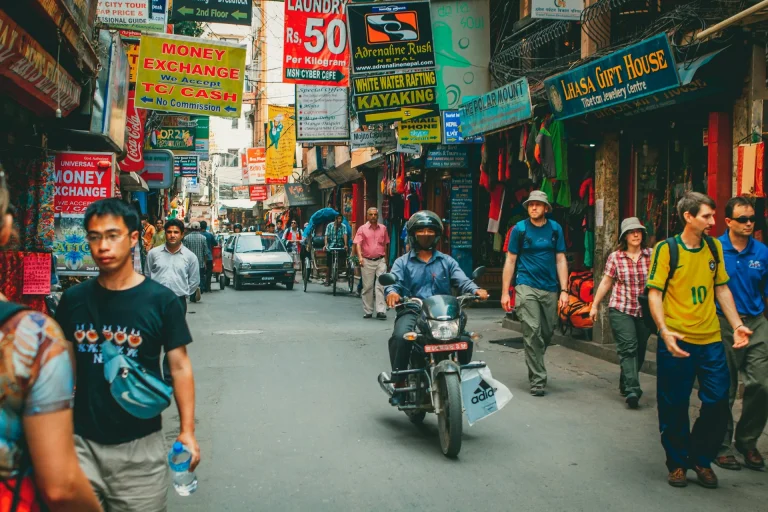
Temples & Living Heritage
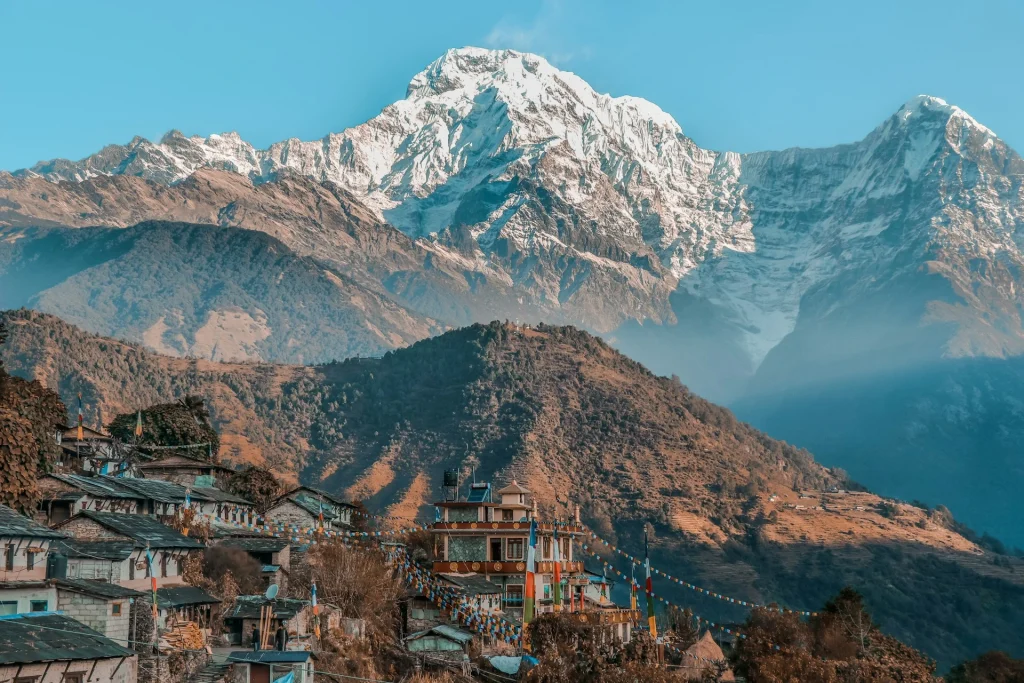
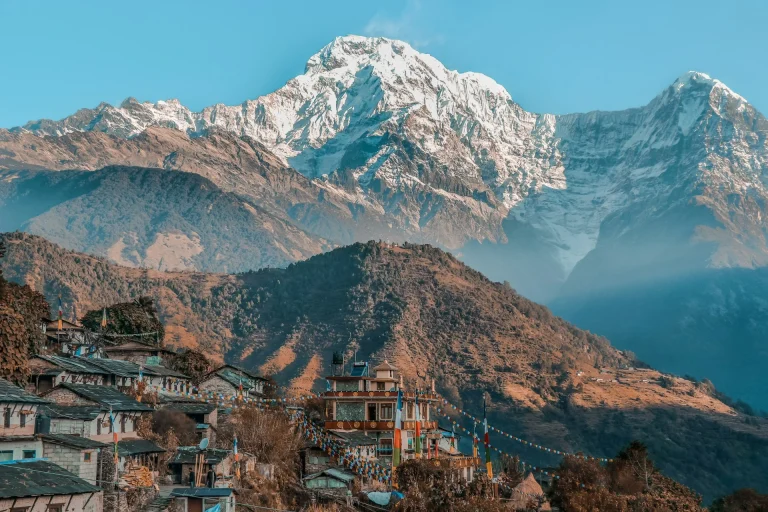
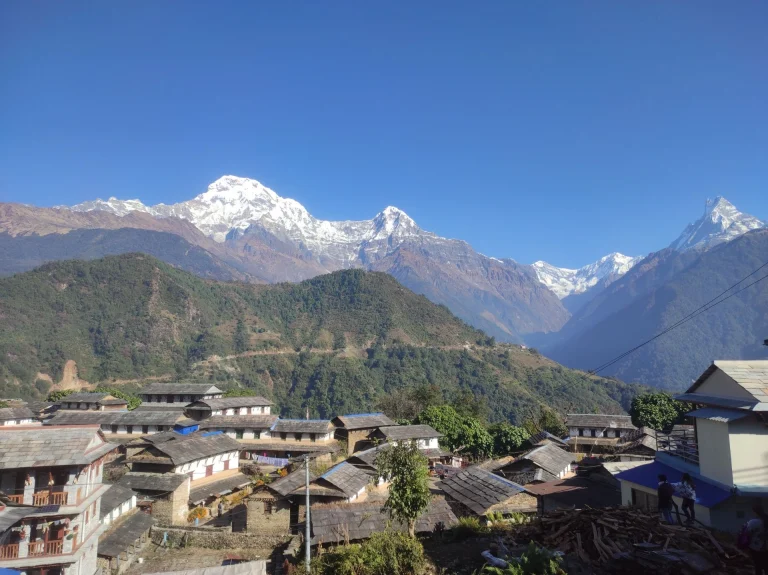
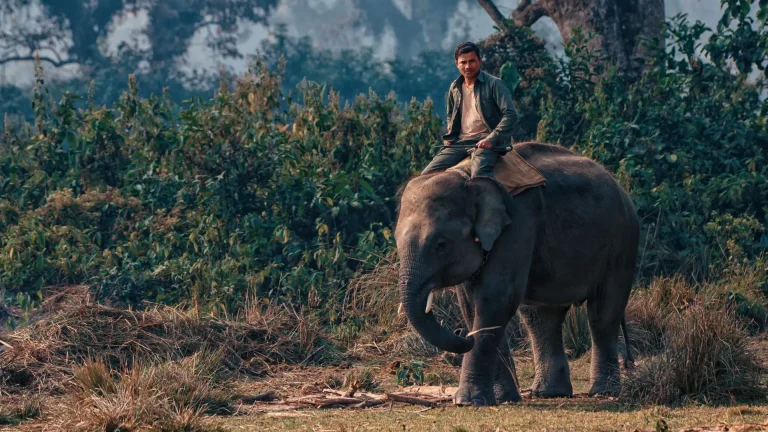
Sinuwa village on the Annapurna Base Camp trek
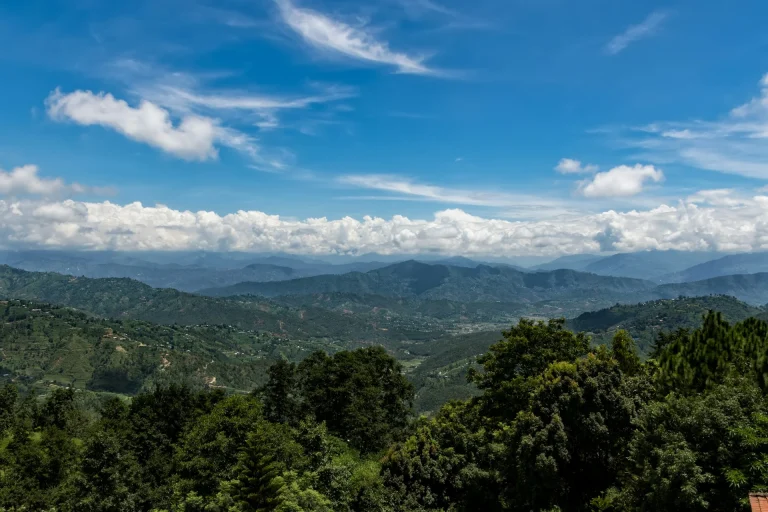
Mountains & Gurung Villages
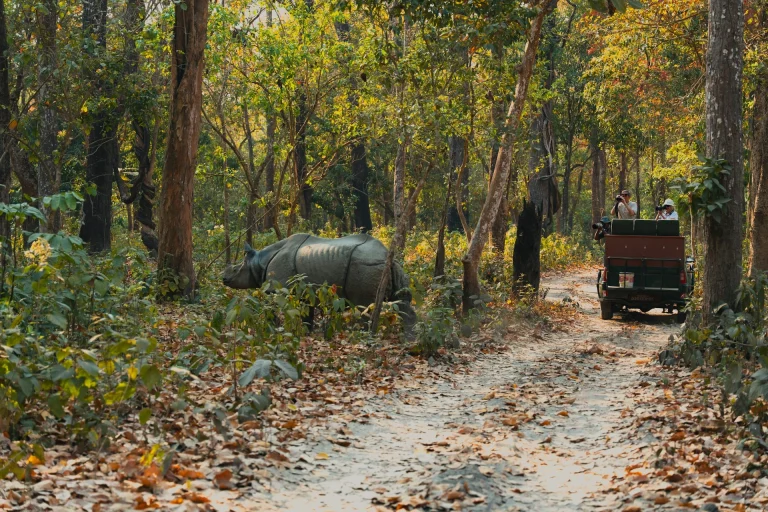
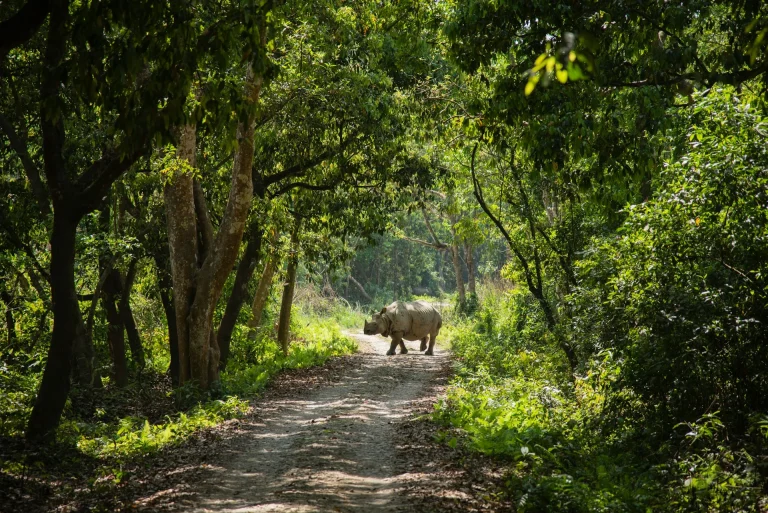
A Greater One-horned Rhinoceros crossing a dirt track in front of a tourist safari jeep inside Chitwan National Park, Nepal.
Jungle & Wildlife
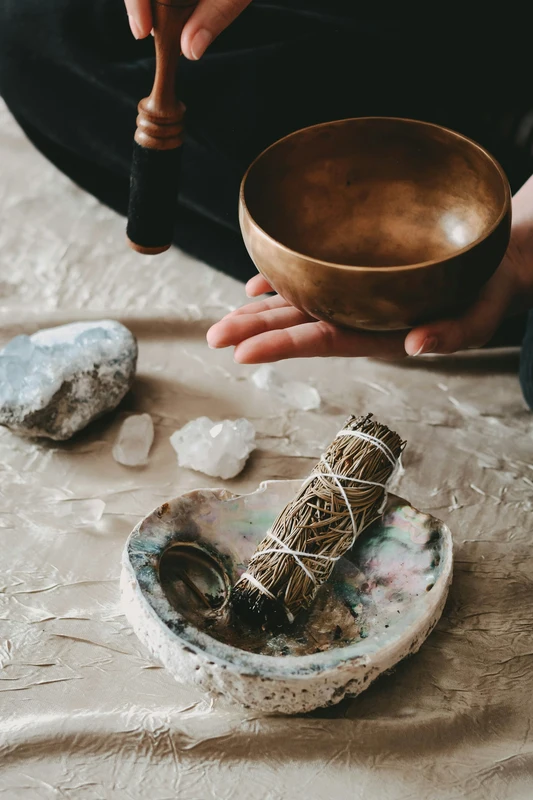
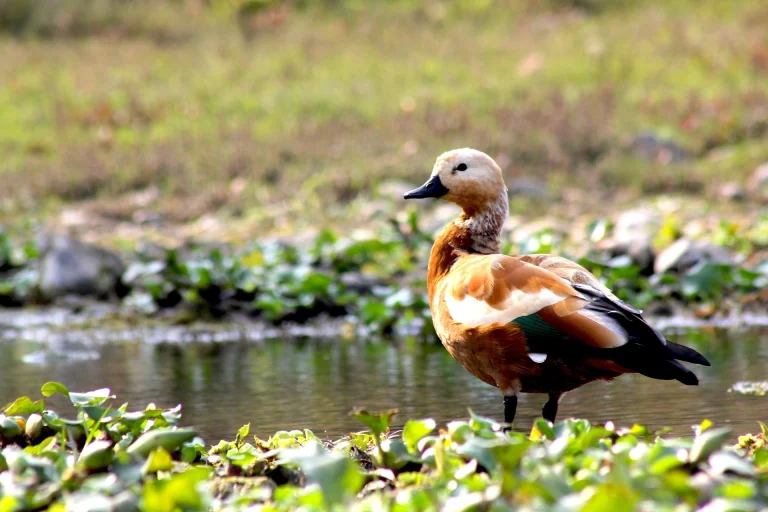
Ayurveda & Healing
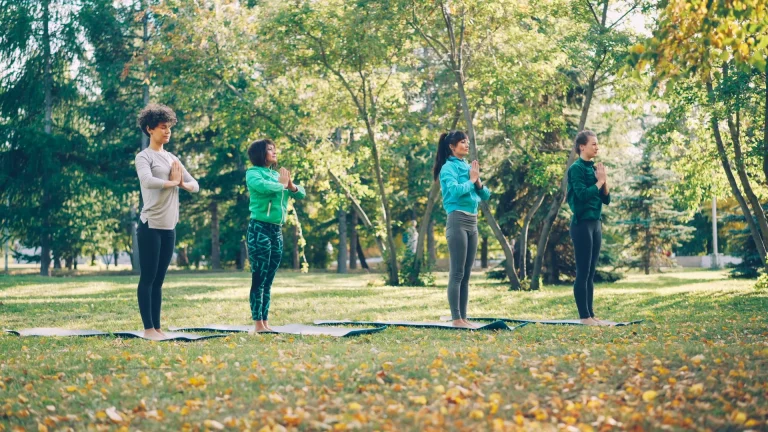
Yoga & Ayurvedic Renewal

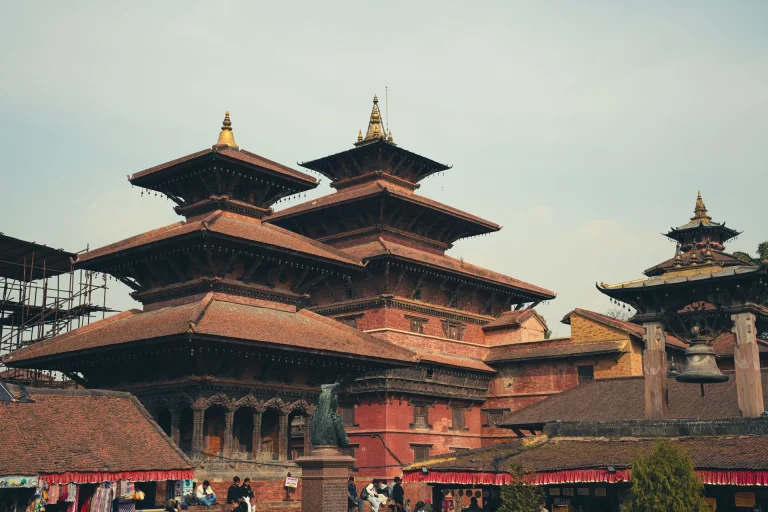
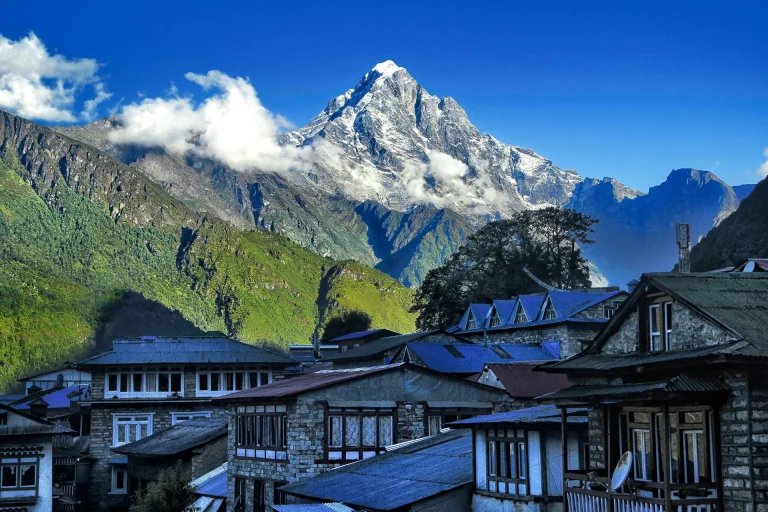
Nepal does not reveal itself in one landscape. There is the valley, where gilded roofs sit above courtyards four hundred years old and the air smells of juniper smoke. There is the wall of white mountains beyond it. There is the jungle along the southern border, where rhino move through elephant grass at first light. And there is the quiet in the hills east of the city, which is what most people are actually looking for.

Almost everyone who comes here sees one of those four and goes home believing they have seen Nepal. This journey holds all of them. You begin in the Kathmandu Valley with a heritage scholar rather than a guide, fly west to the Annapurna horizon, walk into Gurung country, drop south to the Terai for the wildlife, and close on a ridge at Dhulikhel with the Himalaya on the skyline.

The order is not arbitrary. You arrive tired from a long flight, so the valley comes first, low and warm and full of things that reward slow attention. The mountains follow once you have been in the country several days, which is how ascent should be paced. The Terai sits near sea level, so the jungle becomes a descent rather than another climb. The hills come last, when you have something to reflect on.

What makes this possible is a geography almost no other country offers. The jungle and the high Himalaya sit within a day of each other here. You can watch rhino graze at first light and be standing under Annapurna South within the same week, without either feeling rushed.

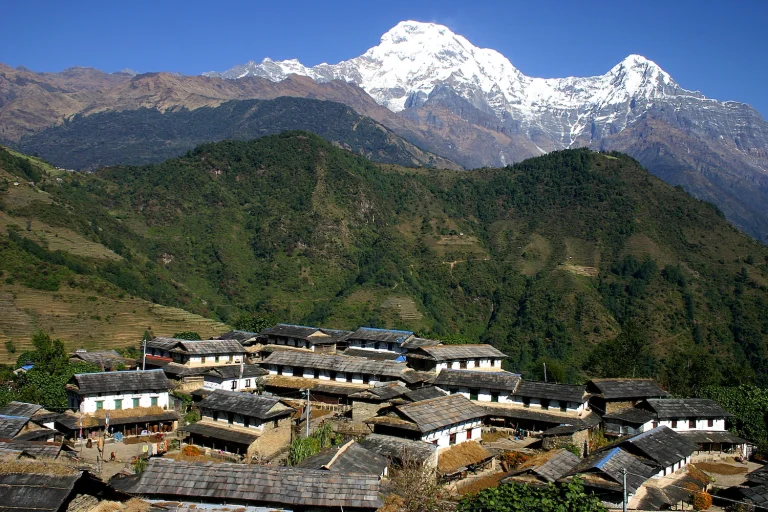
The density is the other thing. The Kathmandu Valley holds seven separate monument zones inside a single UNESCO World Heritage listing, and most visitors see two of them. Chitwan holds 694 of the 752 rhinos counted in Nepal, which is why the animal people cross continents for is simply present here. Ghandruk is a working Gurung village of stone houses stacked up a hillside, not a viewpoint built for arrivals.

It is worth being clear about what this is not. There is no base camp at the end of it and no pass to cross. The walking is gentle, on maintained stone paths, and nobody needs previous trekking experience or mountaineering fitness. The demand this journey makes is time, and the willingness to stay somewhere long enough that it stops performing for you.

Departures are private and built around your dates rather than a fixed calendar. The guide, the vehicle and the interpretation are yours alone, which is what allows a morning to change when the light is better somewhere else.

Journey Itinerary

Day 01

Accommodation Options

Arrival in Kathmandu

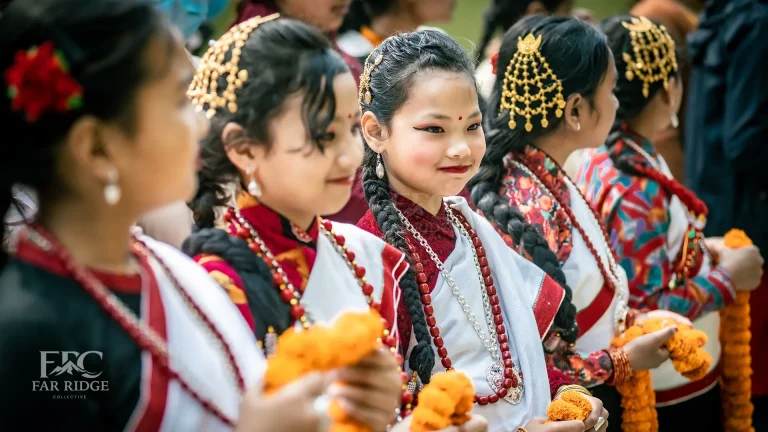
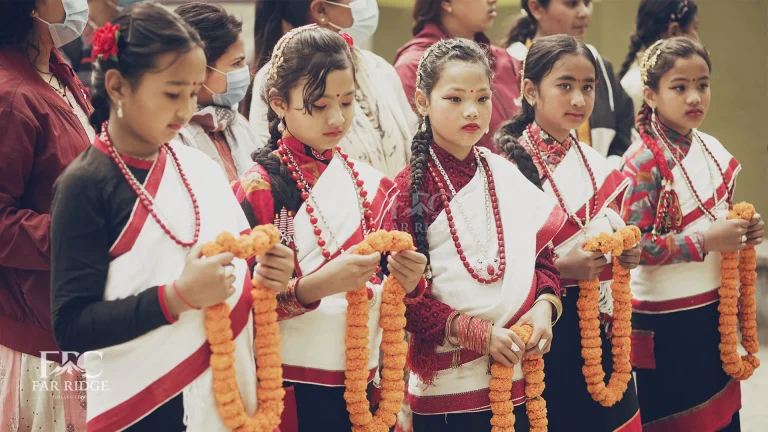
You are met at the airport and welcomed with the Panchakanya, five young women in traditional dress offering flowers and blessings, then a Sagun of yoghurt, rice, vermillion and betel nut, each standing for something the household wishes on you.

Your guide joins you later, and the journey ahead is laid out properly: the valley, the mountains, the jungle, the hills. Ask everything now.

Dinner is Newari, in a private room, with classical and tantric dance performed for your group alone.

  • Duration:Airport transfer, 30 minutes
  • Max Altitude:1,350m
  • Meals:Welcome gala dinner
  • Accommodation:Five star hotel, Kathmandu
Day 02

Accommodation Options

Kathmandu: Living Heritage

The valley holds seven monument zones inside a single UNESCO World Heritage listing. You take three of them today, with a heritage scholar, which is the difference between being shown a temple and understanding one.

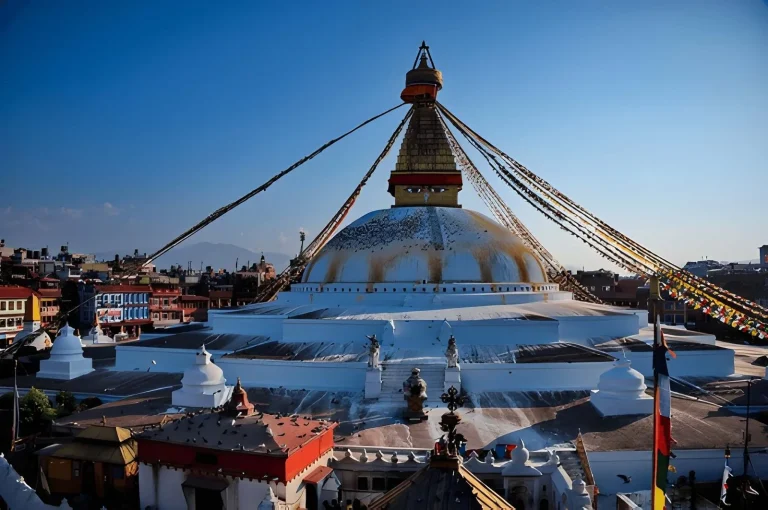
At Pashupatinath the cremation ghats run along the Bagmati and the smoke does not stop. It is confronting, and it is the most honest thing in the valley. Boudhanath comes after, where the stupa is circled clockwise every dusk by families whose grandparents walked here from Tibet.

Patan closes the day. Gilded doorways, a working city, and stone that has been polished by hands rather than restoration.

  • Duration:Full day
  • Max Altitude:1,400m
  • Meals:Breakfast
  • Accommodation:Five star hotel, Kathmandu
Day 03

Accommodation Options

Kathmandu: The Hidden City

Behind the squares the valley keeps its real architecture. The bahal are courtyards reached through a doorway low enough to make you bow, and there is no chance of finding them without someone who belongs there.

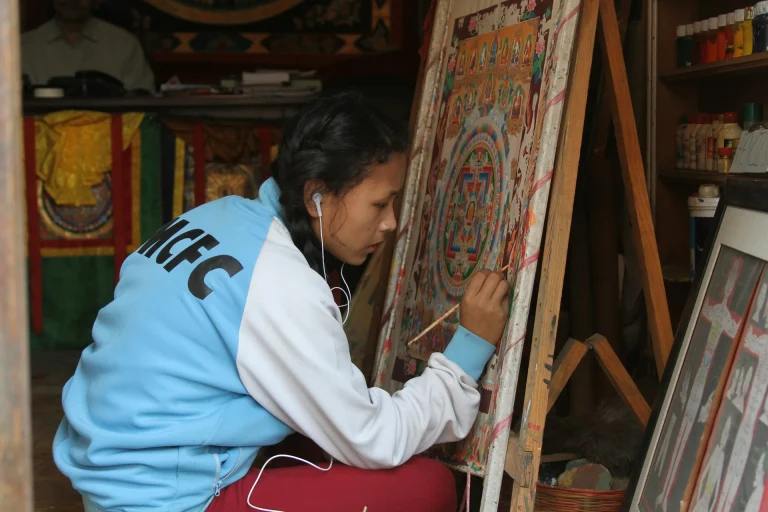
In the workshop you stand beside Newar metalworkers and thangka painters working to patterns their grandfathers set. A single figure takes weeks. Watching an hour of it says more than a week of temples.

Dinner is Nepali cooking at the level almost no visitor ever reaches.

  • Duration:Full day
  • Max Altitude:1,400m
  • Meals:Breakfast, dinner
  • Accommodation:Five star hotel, Kathmandu
Day 04

Accommodation Options

Kathmandu to Pokhara

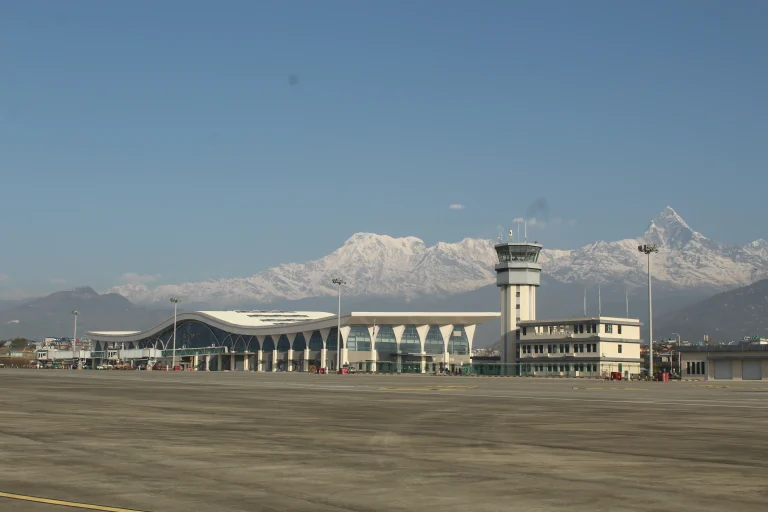
You fly west after breakfast, and the Annapurna wall comes up along the right side of the aircraft.

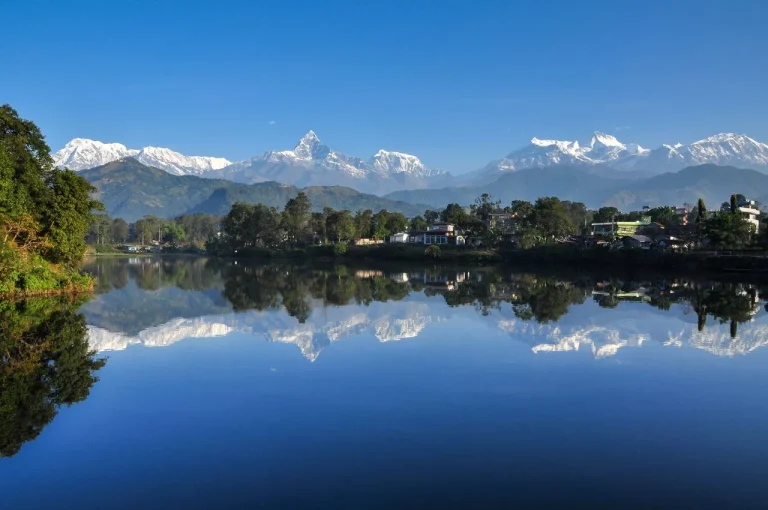
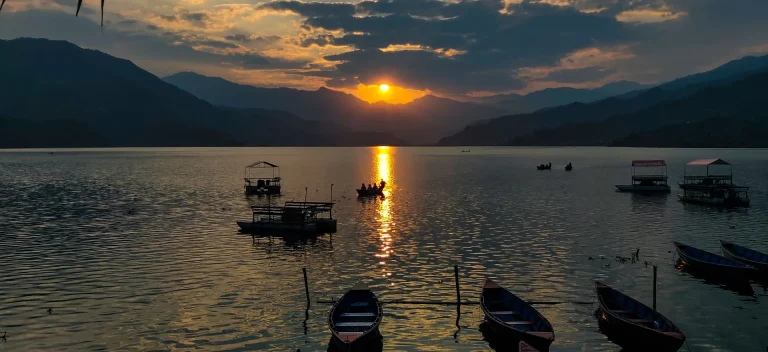
Pokhara is lower, greener and slower than the valley you left. The afternoon is on Phewa Lake, privately, with Machhapuchhre standing behind the far shore and its reflection lying on the water when the boats are still.

You stay above the town rather than in it. The range is the view from the room.

  • Duration:Domestic flight, then transfer
  • Max Altitude:Around 800m
  • Meals:Breakfast
  • Accommodation:Luxury mountain property, Pokhara
Day 05

Accommodation Options

The Annapurna Horizon

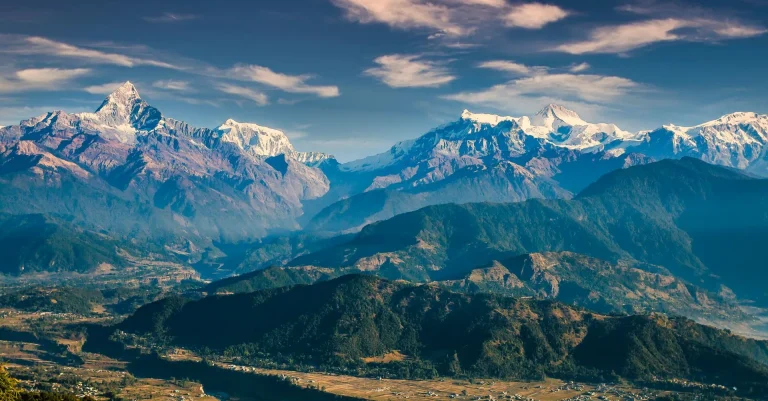
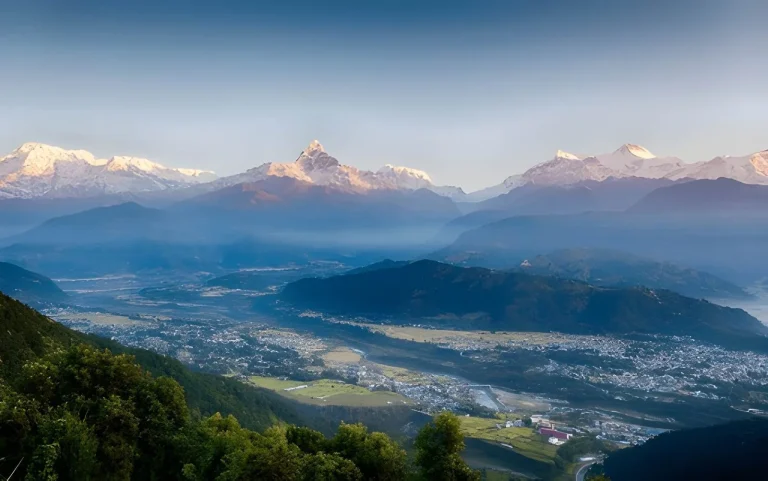
Sarangkot before dawn. The ridge is dark and cold, and then the light reaches Machhapuchhre and Annapurna South several minutes before it reaches anything beneath them. That gap is the reason people come up here.

The morning after is deliberately unhurried. The lake again, then a walk through farming villages on the valley floor where the terraces are worked the way they have always been worked.

Sarangkot is also the launch ridge. If anyone wants to fly off it under a wing, today is the day.

  • Duration:Sunrise excursion and village walk
  • Max Altitude:1,592m
  • Meals:Breakfast
  • Accommodation:Luxury mountain property, Pokhara
Day 06

Accommodation Options

Into the Annapurna Foothills

The road climbs west out of the lake basin, tightens, and gives up the valley floor entirely. You are driven in, so the mountains arrive today rather than after a week on foot.

Ghandruk is Gurung, built in stone and stacked up the hillside in terraces, and it looks straight across at Annapurna South, Hiunchuli and the fishtail summit of Machhapuchhre. The afternoon walk is short by design.

You slept beside a lake last night and you sleep under the Annapurnas tonight. Today exists to make that change feel earned rather than abrupt.

  • Duration:Drive about 2 hours, then a short walk
  • Max Altitude:Just over 2,000m
  • Meals:Breakfast, lunch, dinner
  • Accommodation:Mountain lodge, Ghandruk
Day 07

Accommodation Options

Annapurna Mountain Experience

The path out of the village runs through rhododendron and oak, over stone laid down long before anyone came here to walk for pleasure. Mule trains still use it. You stand aside for them.

Annapurna III and Gangapurna open up where the forest breaks. Nothing is being climbed toward, and that is the pleasure of it.

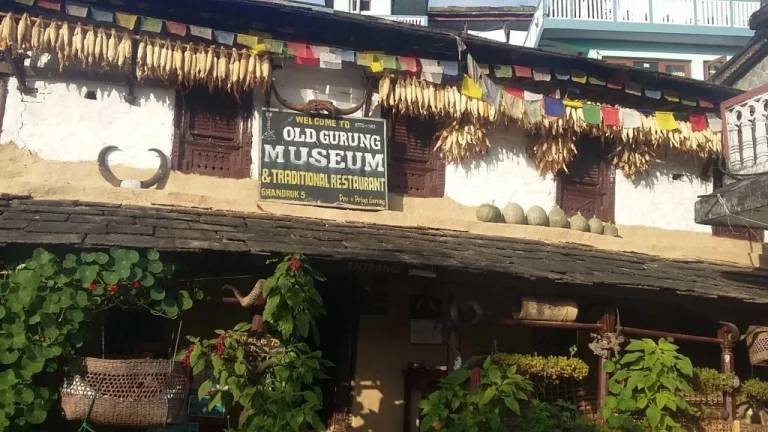
Back in Ghandruk the Gurung museum is worth an hour. The community that built these houses also sent its sons to two world wars, and the story is told here by the people it belongs to.

  • Duration:4 to 5 hours walking
  • Max Altitude:Just over 2,000m
  • Meals:Breakfast, lunch, dinner
  • Accommodation:Mountain lodge, Ghandruk
Day 08

Accommodation Options

Mountain to Pokhara

The last mountain morning is left empty. Most guests walk a short way above the village and sit with the range in front of them rather than filling the time with anything.

Then the descent, stone paths giving way to terraces, terraces to the lake basin.

The afternoon is by the water, and nothing is scheduled.

  • Duration:Drive about 2 hours
  • Max Altitude:Just over 2,000m
  • Meals:Breakfast
  • Accommodation:Luxury mountain property, Pokhara
Day 09

Accommodation Options

Pokhara to Chitwan

South, off the hills and down into the Terai. The temperature rises the whole way and the light turns heavier.

Chitwan was Nepal’s first national park and has been UNESCO listed since 1984. Of the 752 rhinos counted in the country, 694 of them live here, which is why the animal most visitors travel to Africa for is simply present.

You reach the lodge with the afternoon still in hand and go out as the forest begins to move.

  • Duration:Drive about 5 hours
  • Max Altitude:Around 150m
  • Meals:Breakfast, lunch, dinner
  • Accommodation:Jungle lodge, Chitwan
Day 10

Accommodation Options

Chitwan: Wildlife

Out at first light with a naturalist, in an open vehicle. The grassland edges and river margins are where rhino graze and where, if the week is kind, a tiger crosses in front of you.

Nobody promises a tiger. The 2026 census counted 145 of them here, and the forest is thick, and both of those things are true at once.

Later the river: gharial hauled out on the sand, mugger crocodile, and birds from a list that runs past five hundred species. The middle of the day is left alone, because so is the forest.

  • Duration:Dawn and afternoon excursions
  • Max Altitude:Around 150m
  • Meals:Breakfast, lunch, dinner
  • Accommodation:Jungle lodge, Chitwan
Day 11

Accommodation Options

Chitwan: Forest and Culture

The second excursion goes somewhere the first did not. Sal forest holds its light differently from floodplain, and the animals in it behave differently too.

The afternoon belongs to the Tharu, who lived in this valley when malaria kept everyone else out of it, and whose knowledge of the forest predates the park boundary by centuries. You sit and talk. It is not a performance.

Evening is at the lodge, where the sound after dark is worth staying outside for.

  • Duration:Two excursions and a cultural afternoon
  • Max Altitude:Around 150m
  • Meals:Breakfast, lunch, dinner
  • Accommodation:Jungle lodge, Chitwan
Day 12

Accommodation Options

Chitwan to Kathmandu

North again, out of the heat and back up into the valley.

The evening is deliberately unplanned. It falls between the jungle and the hills, and by this point most guests want an evening nobody has arranged for them.

  • Duration:Return to Kathmandu
  • Max Altitude:1,400m
  • Meals:Breakfast
  • Accommodation:Five star hotel, Kathmandu
Day 13

Accommodation Options

Kathmandu to Dhulikhel

East out of the city to Dhulikhel, on the rim, where people have come to look north at the Himalaya for as long as there has been a road.

You arrive with the afternoon intact and do very little with it.

The sunset from this ridge is the reason for arriving early rather than late.

  • Duration:Drive about 1.5 hours
  • Max Altitude:1,550m
  • Meals:Breakfast, dinner
  • Accommodation:Wellness retreat, Dhulikhel
Day 14

Accommodation Options

Himalayan Renewal

The day is built on practice rather than sightseeing. Yoga at first light while the range is still sharp, then meditation, taught properly.

The Ayurvedic consultation is a genuine clinical one. It begins with your constitution, your digestion and how you sleep, not with a treatment menu.

Everything between is the hillside, and the instruction to use it.

  • Duration:Full day at the retreat
  • Max Altitude:1,550m
  • Meals:Breakfast, lunch, dinner
  • Accommodation:Wellness retreat, Dhulikhel
Day 15

Accommodation Options

Namo Buddha and Farewell

Namo Buddha holds one of the oldest stories in the Buddhist world. A prince came upon a tigress too weak from hunger to feed her cubs, and gave her his own body. The stupa stands where it is said to have happened.

You can walk in from the Dhulikhel side, three hours through terraced hill country, or you can drive. Both are the right answer on different mornings.

The final session is in the afternoon. Dinner is the farewell, and it is not rushed.

  • Duration:Excursion and final practice
  • Max Altitude:1,550m
  • Meals:Breakfast, lunch, dinner
  • Accommodation:Wellness retreat, Dhulikhel
Day 16

Departure from Kathmandu

A representative accompanies you to the airport for your flight home.

You leave having stood in courtyards older than most European capitals, walked under Annapurna South, watched rhino at first light in the Terai, and given the last three days to the kind of practice most people intend to begin and never do.

Guests write to us afterwards more often than they expect to. Usually about Dhulikhel.

  • Duration:Airport transfer
  • Max Altitude:1,350m
  • Meals:Breakfast
  • Accommodation:Not applicable, departure day

Journey Include

  • 15 nights' accommodation in five-star hotels, luxury lodges and a wellness retreat.
  • All breakfasts, plus the meals listed against each day.
  • Domestic flight from Kathmandu to Pokhara.
  • All private vehicle transfers throughout the journey.
  • Professional English-speaking guide for the full sixteen days.
  • Private cultural interpretation at Pashupatinath, Boudhanath and Patan by a heritage scholar.
  • Private access to Newar courtyards and a craft workshop with working artisans.
  • Private boat on Phewa Lake and the Sarangkot sunrise excursion.
  • Guided walks in the Annapurna foothills with a mountain guide.
  • Annapurna Conservation Area permit and all trekking documentation.
  • Two nights at a mountain lodge in Gurung country.
  • Chitwan National Park entry permits and all park fees.
  • Naturalist-led wildlife excursions by vehicle, plus a river excursion.
  • Tharu cultural encounter with the community.
  • Three nights at the Dhulikhel wellness retreat.
  • Yoga and meditation sessions with certified instructors.
  • Ayurvedic consultation with a qualified practitioner.
  • Namo Buddha excursion.
  • Welcome dinner with classical and tantric dance, and a farewell dinner.

Journey Exclude

  • International airfare.
  • Nepal entry visa and visa fees.
  • Travel insurance, which is mandatory and must include helicopter evacuation.
  • Lunches and dinners not listed against a day.
  • Alcoholic and other personal beverages.
  • Personal expenses.
  • Personal donations at temples or monasteries.
  • Optional activities, including the Sarangkot paragliding flight.
  • Additional spa or Ayurvedic treatments beyond the consultation.
  • Tips and gratuities.
  • Expenses caused by flight delays, natural disasters, political unrest, illness, or other unforeseen circumstances.
  • Any item not specifically mentioned under Included.
BEGIN YOUR JOURNEY

Let's design Nepal around you.

Every Far Ridge journey is privately designed around your interests, preferred pace, accommodation preferences and travel style. Tell us what you have in mind, and our Nepal journey designers will be in touch within 24 hours.

Name

Common Questions

The questions guests ask us most often about the Grand Nepal Journey, on fitness, timing, wildlife and how private the departures really are.

Planning the Grand Nepal Journey

Expand all

Reasonably fit, and that is all. The longest walking day is four to five hours on maintained stone paths in the Annapurna foothills, and the highest point is just over 2,000m, which is low enough that altitude is not a factor. No previous trekking experience is needed.

Because Nepal changes character four times and each change needs its own time. Ten days forces you to drop either the wildlife or the wellness, and both are the reason this itinerary exists rather than a straightforward trek.

October and November give the clearest mountain views, then March to May. February to April is the strongest window for Chitwan, when the grass is short and animals concentrate near water, so late February through early April suits this particular journey well.

On the ground

Expand all

You fly. The morning belongs to the lake rather than to a road, and the Annapurna wall runs alongside the aircraft on the way in.

Possibly. Chitwan held 145 tigers in the 2026 national census, so the density is high by global standards, but the forest is thick and nobody honest guarantees a sighting. Rhino are a different matter, since 694 of Nepal’s 752 rhinos live in Chitwan.

No. Viewing is from a vehicle with a naturalist, and on foot or by river where that is appropriate.

Comfort and privacy

Expand all

Yes. Departures are private and built around your dates. The group is your own party, capped at five guests, and the guide, vehicle and interpretation are yours alone.

Five-star in Kathmandu, a luxury property outside Pokhara with the range in view, a mountain lodge in Ghandruk which is the best available in the village rather than a hotel, a jungle lodge in Chitwan, and a wellness retreat at Dhulikhel.

Yes, and it often is. Guests add days in the foothills, swap Chitwan for Bardia if they want fewer people, or extend the wellness section. Tell us early and it shapes the plan rather than getting bolted on.