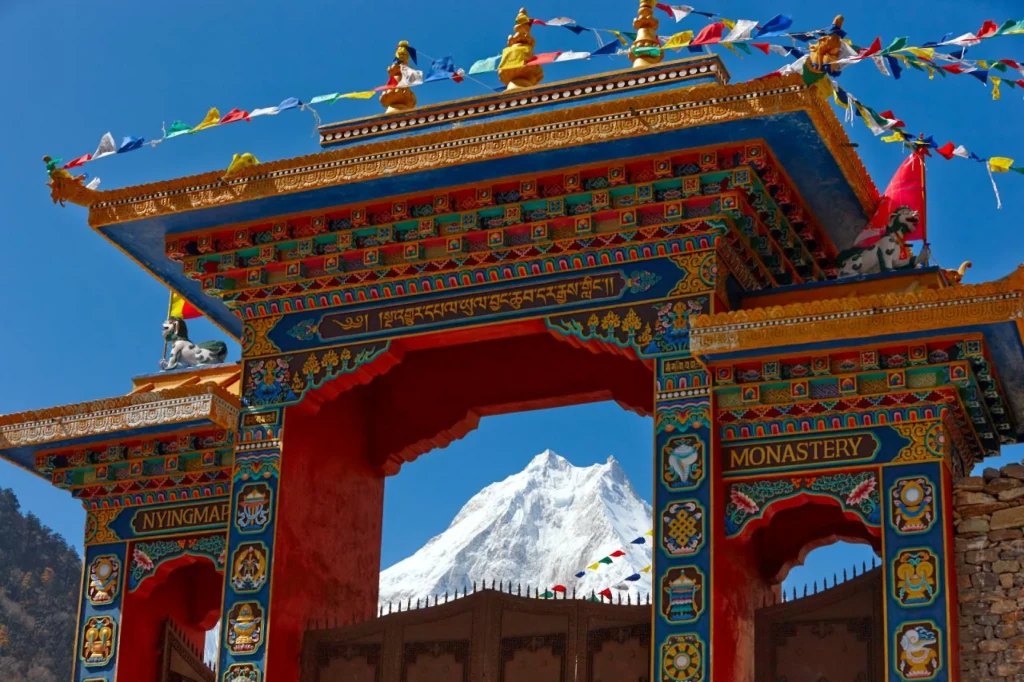
Nepal Luxury Tour and Trekking: What It Actually Means
Nepal receives more visitors than ever, yet daily spend sits near a record low. Here is what luxury trekking in Nepal should actually mean.
 Ankit Mishra
Updated on
Ankit Mishra
Updated on
The best time to trek in Nepal is October and November. The monsoon has cleared by then, the air is stable, and mountain visibility is at its best all year. Spring, from March to May, comes a close second and brings rhododendron into flower along the lower trails.
That is the short answer. The useful part is why the window sits where it does, and the Nepali government publishes the data that explains it.
Nepal’s Department of Hydrology and Meteorology tracks the monsoon every year. Its normal onset date is 13 June and its normal withdrawal date is 2 October, which gives an average monsoon of 112 days. The department treats June to September as the monsoon season.
Those dates are the real reason autumn works. The rain leaves, the dust that has been hanging over the valleys since the spring washes out of the air, and the mountains come back as if somebody had cleaned a window. That is not a figure of speech, it is the single most common reaction from guests who arrive in the second half of October.
The spread around the average is worth knowing, because it is wide. The earliest recorded onset was 31 May 1996 and the latest was 27 June 1982. Withdrawal has ranged from 2 September 1995 to 19 October 2013. The shortest monsoon on record lasted 73 days in 1979, the longest 130 days in 2008.
One trend matters for planning. Withdrawal used to happen in September, and since 2013 it has more often slipped into October. So an early October departure is less reliably clear than it was twenty years ago, and late October is the safer bet for a first view of the range.
The Nepal Tourism Board publishes international visitor arrivals every month. Here is 2026 so far.
January 2026 ran 15.7 percent ahead of January 2025 and 13.9 percent above pre pandemic January 2019, published by the Nepal Tourism Board. March reached 94.6 percent of its pre pandemic March 2019 level, and July still rose 2.3 percent on July 2025.
So March carries roughly 68 percent more visitors than July. That swing drives everything from lodge availability to how many people share your sunrise. October and November are the other peak, but the 2026 figures for those months do not exist yet, because the season has not happened.
Across the whole of 2025 Nepal received 1,158,459 foreign visitors, about 96.8 percent of the pre pandemic figure, according to The Himalayan Times. December closed with 98,190 arrivals, up 6.7 percent on the year before.
After the monsoon withdraws the air is washed clean, and this is when the Himalaya looks the way it does in photographs. Skies are stable. Daytime temperatures are comfortable at walking height. Long range visibility is the best of the year.
Because of that, autumn is when the best lodges fill first. If you want a particular property on a particular night in late October, three to six months of notice is sensible. Shorter notice is workable, but it starts to shape the route rather than the other way round.
November holds the clarity and loses some of the crowd. Nights are colder. Many people who have walked both months end up preferring November precisely because the trails have emptied out while the air has not yet lost the quality that brings everyone in October.
Spring is warmer and greener. Rhododendron forest below about 3,000m comes into flower, which changes the lower half of an Annapurna walk completely. Visibility is generally good, although haze builds as the season goes on and the pre monsoon heat arrives.
March and April are the strongest months. By late May the air is softer and the mountains hide more often, so a May departure trades some certainty for warmth and flowers.
Spring is also the climbing season on the big peaks. That does not affect a trekking route directly, but it does mean Kathmandu is busier with expeditions passing through.
July sits at the bottom of the arrivals chart for a reason. Cloud is persistent, trails are wet, and leeches appear in the forest sections. Views come and go, mostly go.
Even so, some travellers prefer it. The country is quiet, the hills are intensely green, and the rain in the Himalaya is not the wall of water people imagine. Certain routes north of the main range sit in a rain shadow and stay walkable. Mustang is the clearest example, and the Nepal Tourism Board lists it among the few regions in Nepal fit for trekking during the monsoon. If solitude matters more than summits, this is the season nobody else wants.
Winter brings cold nights at altitude and often crisp, clear days. Fewer people walk in January, which means lodges are easy and the trails feel empty.
The trade off is temperature rather than visibility. High passes can close with snow, so route choice narrows. A lower route in January, walked in cold, still air with the whole range standing out against a hard blue sky and barely another party on the trail, can be one of the most rewarding weeks of the year, and almost nobody does it.
| Month | Conditions | Worth walking? |
|---|---|---|
| January and February | Cold, quiet, often very clear | Yes, on lower routes |
| March | The season opens, rhododendron begins below 3,000m | Yes |
| April | Warm, green and busy | One of the two best months |
| May | Hazier and hotter as the pre monsoon builds | Early May only |
| June to September | Monsoon, with normal onset on 13 June | Rain shadow routes only |
| October | Withdrawal normally 2 October, so late is safer than early | Yes, the most popular month |
| November | The clearest air of the year, thinner crowd than October | The best of the year |
| December | Cold and clear, with short days | Yes, on lower routes |
The broad windows are the same, because the monsoon governs both. The practical difference is access rather than weather.
Everest routes depend on flights into Lukla, and that airstrip is sensitive to cloud. A marginal weather day in the Khumbu can cost you two. Annapurna is reached by road through Pokhara, so the same weather costs you comfort rather than days. If your dates cannot move, that difference is worth weighing, and our comparison of Annapurna and Everest goes through it properly.
If mountain views are the priority, take late October or November and book early. If flowers and warmth matter more, take late March or April.
Should your dates be fixed by work or family, almost any month is walkable with the right route. What you want then is an operator who tells you honestly what the cloud is likely to do, rather than one who promises clear skies in July.
Our Annapurna trek and wellness journey runs on dates chosen by the guest rather than on fixed departures, so the season can be matched to the traveller instead of the other way round.
October and November, with November holding the same clarity and a thinner crowd. April is the strongest spring month.
The normal withdrawal date is 2 October, according to the Department of Hydrology and Meteorology. Since 2013 it has more often slipped later into October.
The normal onset date is 13 June, with an average season of 112 days.
Yes, and it is the single most popular month. Late October is more reliable than early October, because withdrawal now runs later than the historic average.
Yes, though views are limited and trails are wet. Routes in the rain shadow north of the main range stay walkable, and the country is very quiet.
Not on lower routes. Nights are cold and high passes can close, but the days are often the clearest of the year.
For a specific lodge on a specific night in late October, three to six months is sensible.
Send us your questions about routes, costs or the best time to go — our travel experts in Nepal reply within 24 hours.

Nepal receives more visitors than ever, yet daily spend sits near a record low. Here is what luxury trekking in Nepal should actually mean.
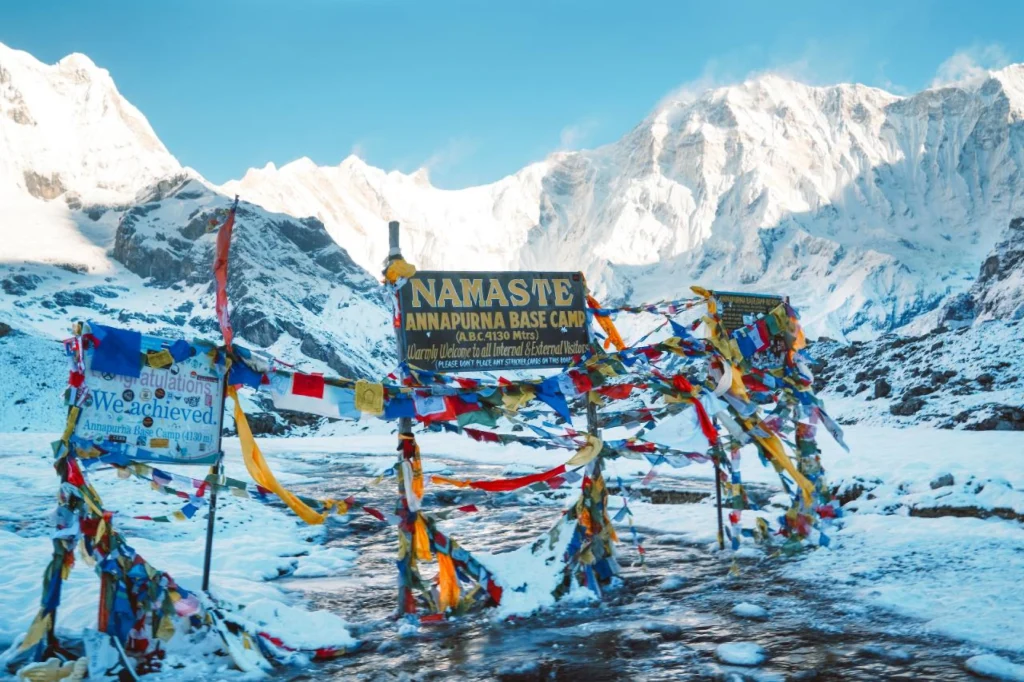
Annapurna Base Camp sits at 4,130m in a ring of peaks. What the trek involves, how long it takes and what it asks of you.