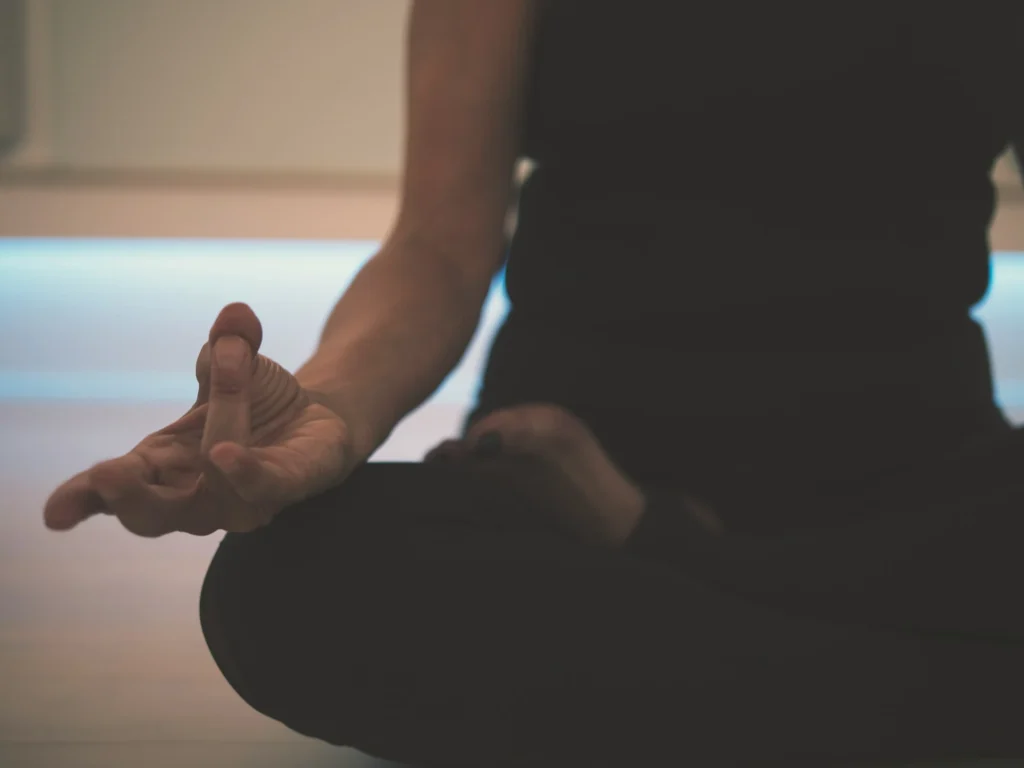
Nepal Retreats: Meditation, Yoga and Ayurveda, Honestly Assessed
Nepal holds three unbroken practice traditions and a large industry built to imitate them. How to tell the difference, where the real teachers sit, and what to ask before you…
 Pawan Bhattarai
Updated on
Pawan Bhattarai
Updated on
A Nepal luxury tour, whether it involves trekking or not, means private guiding, five star nights in the cities and an itinerary built around you rather than a fixed departure. Luxury trekking in Nepal adds one more thing to that: an ascent paced for safety instead of speed.
That definition matters, because the word gets used loosely. So this guide sets out what the term should mean, what the government figures say about high value travel in Nepal, and how to judge an operator before you commit to one.
Here is the number that explains the whole market. In 2025 the average visitor to Nepal stayed 16.34 days, a record high. Yet average daily spending was USD 33.09, the second lowest figure ever recorded, against a regional norm of roughly USD 100 to 150 a day. Those figures come from Nepal’s tourism ministry and the Nepal Tourism Board, reported by The Kathmandu Post.
So people stay longer in Nepal than almost anywhere, and spend less while they do it. Daily spend peaked at USD 79.1 back in 2003 and has never recovered. The lowest figure on record, USD 31.9, dates from 1996.
This is not because Nepal lacks anything worth paying for. It is because the things wealthy travellers rely on, mainly transport and reliable access, have not kept up. As a result the country attracts volume rather than value, and the trekking industry has organised itself around that reality.
The scale is real. Nepal received 1,158,459 foreign visitors in 2025, about 96.8 percent of the pre pandemic level, according to The Himalayan Times. More than a million people a year come, and the average one spends less per day than a decent lunch costs in the cities they flew from.
So a genuine luxury operation in Nepal is doing something unusual. It is solving the problems that keep demanding travellers away, rather than adding a spa treatment to a standard trip.
Group size is the single clearest signal. A trek sold to sixteen people moves at the pace of its slowest member. It eats when the lodge can seat everyone. It cannot stop because one guest wants an extra hour somewhere.
Once the cap drops to five or fewer, the itinerary becomes genuinely yours. The guide can change the day around weather, or around how you slept, or around a village festival nobody knew was happening.
Private departure matters just as much. If an operator publishes fixed dates, you are fitting into their calendar. Our 14 day Annapurna trek and wellness journey runs only on dates the guest chooses, for groups of no more than five.
Slower is not indulgence. It is the most evidence backed thing a good operator does.
Pace is the one variable an operator fully controls, and the evidence on it is unambiguous. Hospital data from Nepal shows a rushed ascent roughly doubles the risk of serious altitude sickness against a measured one. That is why day counts belong on a specification sheet, not in the marketing. The numbers are here.
Twice the risk, on the same route, purely because of pace.
That is why a six day walk to Annapurna Base Camp is safer than a four day one. It is also a fair question to put to any operator, because the honest ones will explain their profile without being asked. We cover the evidence in our guide to Annapurna Base Camp altitude.
Above roughly 2,000m there are no five star hotels, so anyone promising them is misleading you. What a serious operator controls is the half of the trip that happens in Kathmandu and Pokhara, and the quality of the lodges chosen on the trail.
In Kathmandu that might mean a heritage property rather than an international chain. Dwarika’s Hotel in Battisputali is the clearest example. Dwarika Das Shrestha founded it in 1952 after finding carved Newari woodwork being burned as firewood, and it took more than thirty years to build. A restoration workshop has run on site since 1962. The building revived the Dacchiapa carved brick technique, and it holds a UNESCO Asia-Pacific Heritage Award.
Both a chain hotel and that one are comfortable. Only one of them could exist nowhere else on earth.
At this level the currency is access. Sitting with a lama in a working monastery. Entering a courtyard baha in the old city with no sign on the door. Time with Vedic scholars and Ayurvedic doctors who actually practise, rather than staff hired to perform a version of it for guests.
You cannot buy that at a front desk, and it does not appear in a brochure as a bullet point. It comes from an operator’s own relationships, built over years. That is also the hardest thing in this business for anyone else to copy.
This is the least glamorous question on the list and the one most likely to shape your week. Stomach trouble ends more Himalayan trips than altitude does.
On the trail the kitchen belongs to the lodge, not to your operator. What a good operator controls is which lodges, how the water is treated, and whether a guide is watching what comes out of the kitchen. Ask how drinking water is handled on the walk. A vague answer is an answer.
Nepal has a deep and living spiritual tradition. It also has a lot of wellness theatre aimed at visitors. The difference is usually who is leading it.
A yoga class run by a hotel staff member is a nice way to spend an hour. A morning of pranayama with someone who has taught it for thirty years, followed by a conversation about what they think you should be doing differently, is something else. Ask who leads it, and what else they do with their time. The answer separates the two immediately.
Not every route in the country supports this kind of travel. The lodges and the access are not spread evenly. Three areas carry it well.
The Annapurna region. Reached by road from Pokhara, with the strongest lodge network in Nepal and a high point at Annapurna Base Camp of 4,130m. It sits inside the Annapurna Conservation Area, which the National Trust for Nature Conservation launched in 1986 and which covers 7,629 square kilometres. More than 100,000 people live inside it. This is the most reliable region for a first Himalayan journey, and the one our current trip follows.
The Everest region. Higher, barer, and reached by flights into Lukla that mountain weather often stops. Superb, and harder to promise. Our private Everest journey walks as far as Tengboche and sees the high valley from the air, and our comparison of Annapurna and Everest goes through the trade offs. For Base Camp itself, our guide to how far comfort reaches on a luxury Everest Base Camp trek is candid about the top half.
The Kathmandu Valley. Not a trek at all, but the cultural half of any serious Nepal journey, and the part most itineraries treat as an airport transfer with a temple stop.
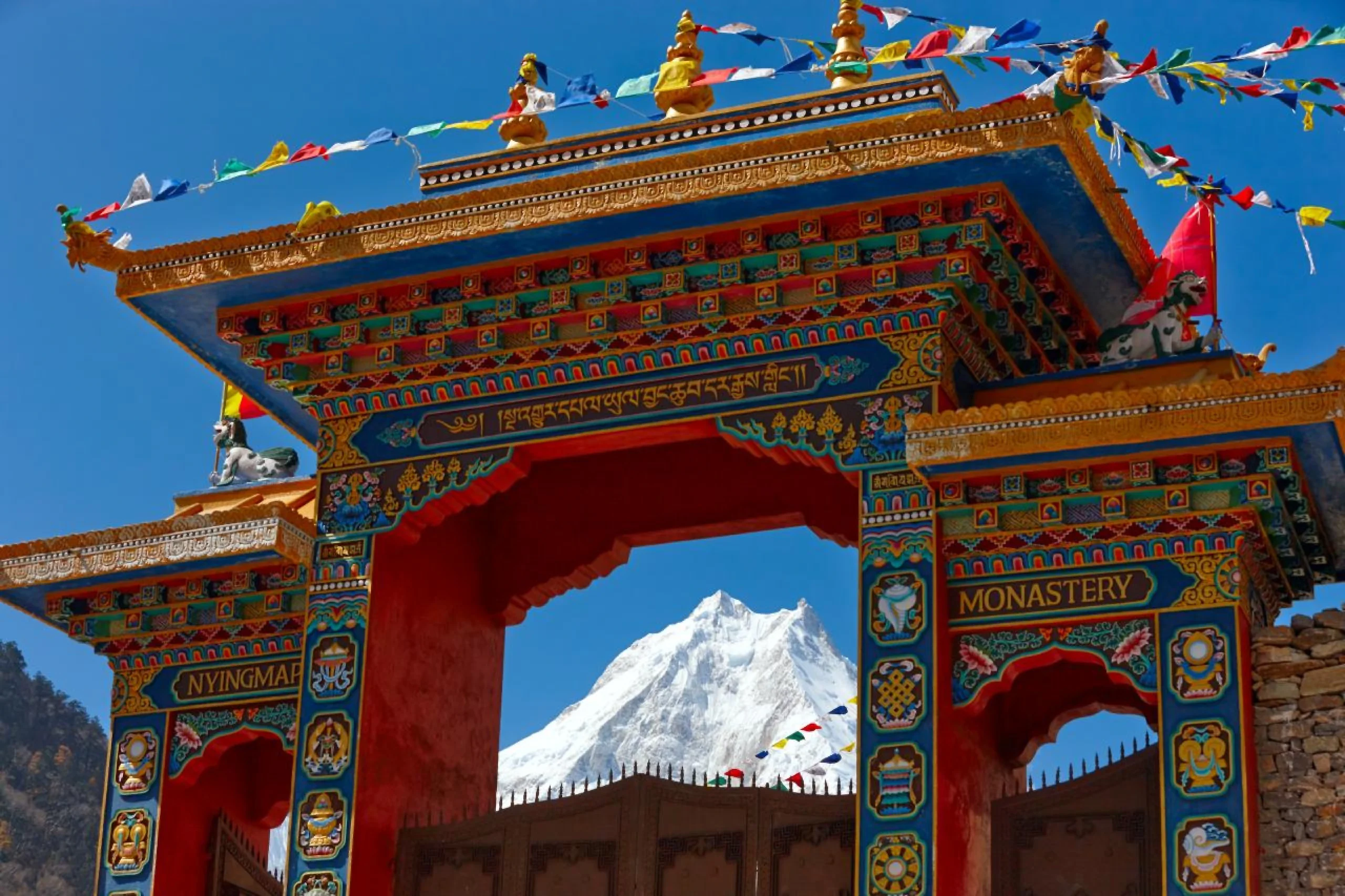
Other regions, including Upper Mustang and Manaslu, are restricted. They need their own permits and more notice, and they suit a traveller who has already done a first Himalayan walk.
The valley holds a UNESCO World Heritage property inscribed in 1979 under criteria three, four and six. It is made up of seven monument zones: the durbar squares of Hanuman Dhoka in Kathmandu, Patan and Bhaktapur, plus the religious ensembles of Swayambhu, Bauddhanath, Pashupati and Changu Narayan.
Most trekking itineraries give this a single rushed day. That is a mistake, and it is where the difference between a walking holiday and a journey through Nepal actually shows.
Bhaktapur before the coaches arrive is a different city from Bhaktapur at eleven in the morning. Pashupati at dawn is a working cremation ground and a place of daily practice, not a viewpoint. Getting those hours right needs someone who knows the city and has the standing to arrange access, and it needs the schedule to allow for it.
Not everyone who wants Nepal wants to walk for six days, and that is a perfectly reasonable position. A luxury tour of Nepal works without a single trekking day in it.
The Kathmandu Valley alone holds seven UNESCO monument zones. Add Pokhara and the lake, time with teachers and craftspeople, and the mornings that only open up when someone knows the right person, and you have a full journey. The mountains are still there. You simply look at them from a terrace rather than from a ridge.
This also matters when a party has mixed appetites. One traveller walks to Base Camp while another spends those days in the valley, and the two halves meet again in Pokhara. That only works with a private itinerary, which is the whole argument for one.
Nepal’s Department of Hydrology and Meteorology puts the normal monsoon onset at 13 June and normal withdrawal at 2 October. That single pair of dates explains the trekking calendar better than anything else.
The arrival figures follow it closely. In 2026 the Nepal Tourism Board recorded 120,516 international arrivals in March against just 71,775 in July. April reached 106.5 percent of its pre pandemic level. The monthly series is published on the Nepal Tourism Board data portal.
Spring and autumn dominate because the air is clearest and the weather most stable. Still, that means the good lodges fill first, and in a region with a handful of genuinely comfortable places to sleep, that constraint arrives earlier than people expect. Full detail sits in our guide to the best time to trek in Nepal.
A properly paced Annapurna Base Camp walk needs about six trekking days to reach 4,130m. Add the Kathmandu Valley at a decent pace, a night or two in Pokhara, and time to recover before flying home. A full journey lands at around a fortnight. Our complete guide to the Annapurna Base Camp trek sets out the route stage by stage.
It can be squeezed. The question is what you lose. Cut days from the ascent and you raise the altitude risk the Jomsom research measured. Cut them from the valley and the cultural half becomes sightseeing. Neither is a good trade for someone who has flown a long way and will likely do this once. Our tour plan for Nepal sets out how the days divide, and why the road to Pokhara decides more of the schedule than most people expect.
Trekking in Nepal’s protected areas requires permits. Since 31 March 2023 a licensed guide has also been mandatory in specified areas under the revised TIMS provision, published by the Nepal Tourism Board. Solo trekking on those routes is no longer permitted.
For the Annapurna region that means an Annapurna Conservation Area permit and a TIMS card. Any operator worth using arranges both before you land. Our guide to Nepal trekking permits gives the current fees and the issuing bodies.
It is worth being blunt about the limits, because the gap between what is promised and what exists is where most disappointment comes from.
It does not mean a hotel at altitude. The lodges near Base Camp are lodges. They are clean and warm and the food is good, and they are not hotels. An operator who lets you believe otherwise has already told you something.
It does not mean the walk is easy. Six days up and several days back down is real walking, on stone steps, at height. The pacing makes it safe and pleasant. It does not make it soft.
It does not mean everything runs to plan. Weather moves, flights sit on the ground, and a pass closes. What you are paying for is the quality of the response, not a promise that nothing will go wrong.
And it does not mean crowds are absent. Autumn on the main Annapurna routes is busy. A good operator shifts your hours rather than pretending the season is empty, which is why departure time in the morning is a more useful question than it sounds.
Six questions, and the answers tell you most of what you need to know.
| Ask this | A good answer sounds like | Walk away if |
|---|---|---|
| What is the maximum group size, and is the departure private? | A number under six, on dates you choose | A fixed date with a dozen strangers |
| How many days does the ascent take, and why that many? | The thinking, explained before you ask | Faster is sold to you as better |
| Who leads the cultural and wellness parts? | Named people, with what else they do | Hotel staff, or nobody in particular |
| What happens if I need to leave early? | A concrete plan they have used before | It has never come up |
| Who is my guide, and how long with you? | A name and a number of years | Assigned nearer the time |
| What is the plan when the weather is wrong? | A second version of the itinerary | A promise about the weather |
The last one matters more than it looks. Every good itinerary has a second version, and an operator who has never needed one has not run enough trips.
Safety is usually the first question of all. Our guide to whether Nepal is safe to visit sets out what the US, UK and Canadian governments advise, region by region, and how a private journey changes the risks.
A private guided journey, small group size, five star city hotels, the best available lodges on the trail, and an ascent paced for safety rather than speed.
No. Above roughly 2,000m the accommodation is lodges, and quality varies. Anyone promising five star rooms at altitude is describing something that does not exist.
For a first Himalayan journey, the Annapurna Sanctuary route to Base Camp at 4,130m. It has the strongest lodge network, road access rather than a mountain flight, and it pairs easily with the Kathmandu Valley.
Around fourteen days for a complete journey, including six trekking days, the Kathmandu Valley, and recovery time.
The main controllable risk is altitude, and pace is what governs it. Peer reviewed Nepali research found that compressing an ascent roughly doubled the odds of moderate or severe altitude sickness.
Yes, in the specified protected areas, which include the main Annapurna and Everest routes. That has been the rule since 31 March 2023.
October and November for the clearest air, March and April for warmth and rhododendron. The monsoon normally withdraws on 2 October.
Three to six months for an autumn departure, because the best lodges are booked first and the good guides are committed early.
Send us your questions about routes, costs or the best time to go — our travel experts in Nepal reply within 24 hours.

Nepal holds three unbroken practice traditions and a large industry built to imitate them. How to tell the difference, where the real teachers sit, and what to ask before you…

Nepal counted 429 wild tigers in 2026, nearly four times its 2010 figure. What that means on the ground, and how Chitwan and Bardia differ.