Nepal Luxury Tour and Trekking: What It Actually Means
Nepal receives more visitors than ever, yet daily spend sits near a record low. Here is what luxury trekking in Nepal should actually mean.
 Pawan Bhattarai
Updated on
Pawan Bhattarai
Updated on
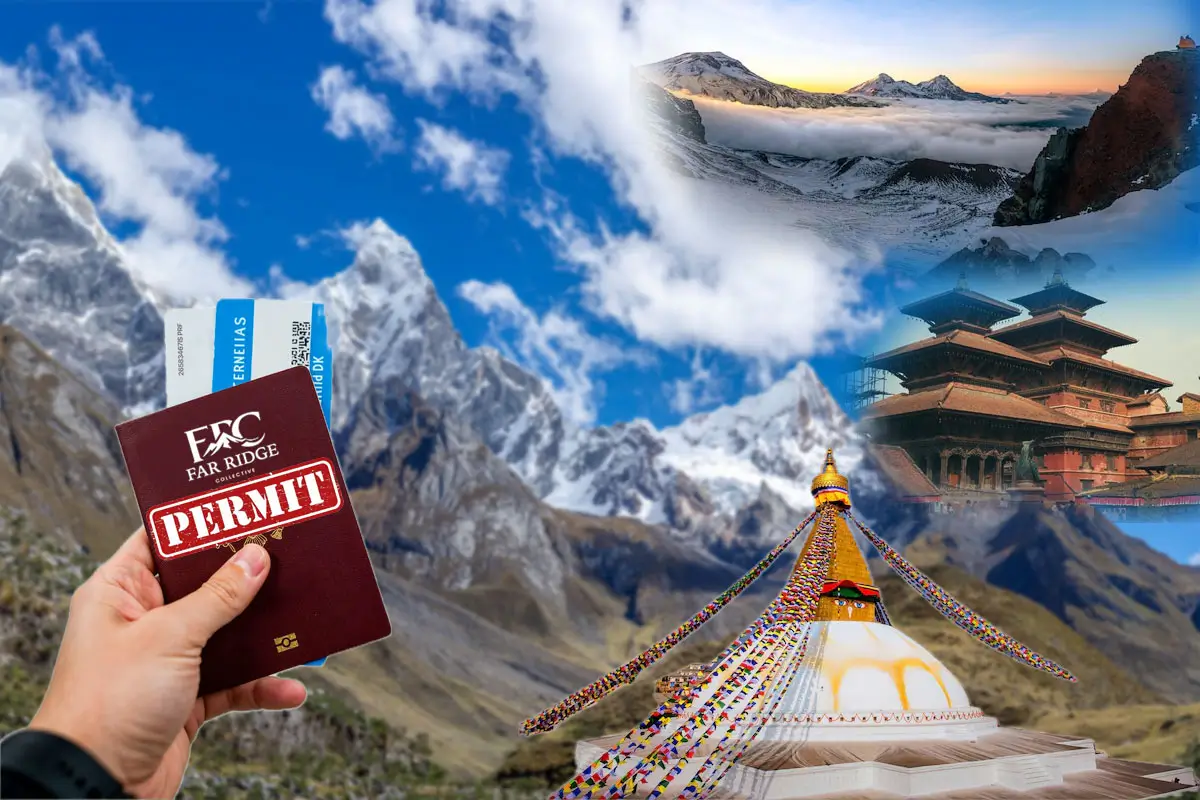
Trekking in Nepal’s protected areas needs two documents: an area entry permit and a TIMS card. For the Annapurna region the entry permit costs NRs 3,000 for foreign nationals. The TIMS card costs NRs 2,000. Since 31 March 2023 a licensed guide has also been required in specified protected areas.
Every figure here comes from the body that issues the document. That matters more than it sounds. Most of what is written about Nepal permits online is now out of date, because the rules changed in 2023 and the fees changed after that.
The Annapurna Conservation Area is run by the National Trust for Nature Conservation. It issues the entry permit through its online ePermit system. The fee is NRs 3,000 for foreign nationals and NRs 1,000 for SAARC nationals, tax included.
The area is bigger than most visitors expect. The project began in 1986. It covers 7,629 square kilometres. More than 100,000 people live inside it, from many language and cultural groups, according to the National Trust for Nature Conservation. It was Nepal’s first Conservation Area, and it is still the largest protected area in the country.
That last detail matters. You are not walking through empty wilderness. You are walking through a lived-in landscape where people farm, keep shops and run the lodges you sleep in, and where the same families have worked the same terraces for generations rather than moving in to serve the trekking season. Your fee is part of what pays to look after it.
This is also why the permit is worth more than a receipt. A conservation area is not a national park in the usual sense, because people were never moved out of it, and the model has always tried to fund protection and local livelihoods through the same door. Whatever you think of that as policy, it is what your NRs 3,000 buys into.
TIMS stands for Trekkers’ Information Management System. The card exists so the authorities know who is on the trails. That matters when weather shuts a route, or when someone fails to arrive.
The Nepal Tourism Board publishes the current fees. They are simpler than the old four tier system that many articles still quote.
| Document | Foreign nationals | SAARC nationals | Issued by |
|---|---|---|---|
| Annapurna Conservation Area permit | NRs 3,000 | NRs 1,000 | National Trust for Nature Conservation |
| Sagarmatha National Park entry | NRs 3,000 | NRs 1,500 | Nepal Tourism Board listing |
| TIMS card | NRs 2,000 | NRs 1,000 | Nepal Tourism Board or a registered agency |
Fees are per person. Entry permits are charged per protected area, so a route crossing two areas needs both.
So if you find a page listing one rate for group trekkers and another for solo trekkers, you are reading something written before the current rule. Check the issuing body, not the article.
The revised TIMS provision took effect on 31 March 2023. Under it, trekkers in specified protected areas must walk with a licensed guide. They must also carry a TIMS card issued through a trekking agency registered with the government.
The Nepal Tourism Board lists the routes this covers. They include the Everest, Annapurna and Manaslu regions. Solo trekking on those trails is no longer allowed.
This is still the most misunderstood rule in Nepal trekking. Guidebooks and blog posts written before 2023 describe a system that no longer exists, and because those pages have had years to gather links and authority, they are very often what a search engine puts in front of you before it offers anything the Nepal Tourism Board has published more recently.
On a private journey the rule changes nothing, because a licensed guide was always part of it. It only matters if you planned to walk alone.
Entry fees are set for each protected area. So an Everest trek does not cost the same as an Annapurna one. Sagarmatha National Park holds the Everest routes, and it charges NRs 3,000 for foreign nationals and NRs 1,500 for SAARC nationals, according to the Nepal Tourism Board.
Nepal has 20 protected areas in all, and entry fees apply across them, also according to the Nepal Tourism Board. A route that crosses from one area into another needs the paperwork for both.
Some regions sit in a separate restricted category. Upper Mustang is one. Parts of Manaslu are another.
These need a special permit from the Department of Immigration rather than the standard entry permit, and they cost a good deal more. They cannot be arranged by a traveller acting alone, either. A registered agency has to apply for you, and some routes carry a minimum group size.
So if a restricted area is part of what you want, settle it early. The paperwork has a lead time that an ordinary trek does not.
Permits must be issued before you reach the trailhead. In practice that means once your dates are fixed, not once you land.
You supply passport details and photographs. A registered operator does the rest. On our Annapurna trek and wellness journey the Annapurna permit and the TIMS card are both arranged and included, so nothing is left for a guest to chase.
Nobody should spend the first morning of a journey queuing at an office. That is the whole point of having someone handle it.
Checkpoints sit on the main routes, and they do check. Walking without a valid permit risks a fine, and it can end the trek there.
There is a second reason to carry them. The TIMS record is how officials know where you are, so if a landslide takes out a section of trail behind you or the weather shuts a pass for several days, the search starts from a known point rather than from a guess. That is worth the form filling on its own.
An area entry permit for the protected area you walk in, plus a TIMS card. For Annapurna that means the Annapurna Conservation Area permit and TIMS.
NRs 3,000 for foreign nationals and NRs 1,000 for SAARC nationals, tax included, issued by the National Trust for Nature Conservation.
NRs 2,000 for foreign nationals and NRs 1,000 for SAARC nationals, according to the Nepal Tourism Board.
Yes, in specified protected areas, and those include the main Annapurna and Everest routes. The rule took effect on 31 March 2023.
Not on the specified protected routes. Solo walking is still possible on some trails outside them, but not on the ones most visitors come for.
The Annapurna permit comes from the National Trust for Nature Conservation, including through its online ePermit system. TIMS cards come from the Nepal Tourism Board or a registered trekking agency.
They are issued per route and per entry. A trip that covers two separate protected areas needs the paperwork for each.
The entry fee is the same for foreign nationals at NRs 3,000, but the SAARC rate differs, and the two sit in different protected areas.
Send us your questions about routes, costs or the best time to go — our travel experts in Nepal reply within 24 hours.

Nepal receives more visitors than ever, yet daily spend sits near a record low. Here is what luxury trekking in Nepal should actually mean.
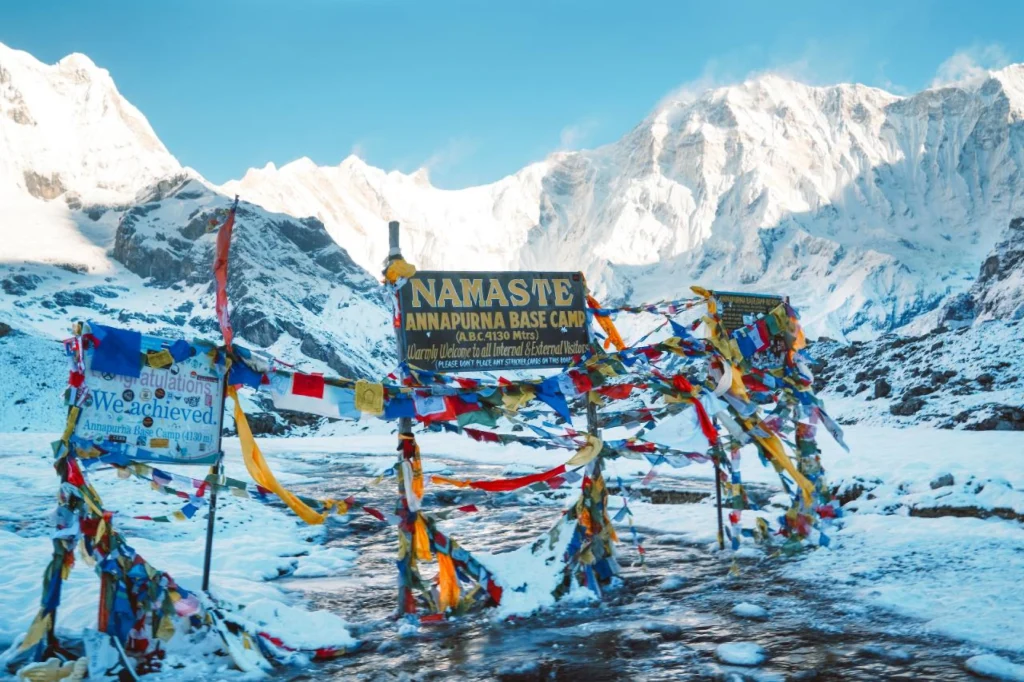
Annapurna Base Camp sits at 4,130m in a ring of peaks. What the trek involves, how long it takes and what it asks of you.