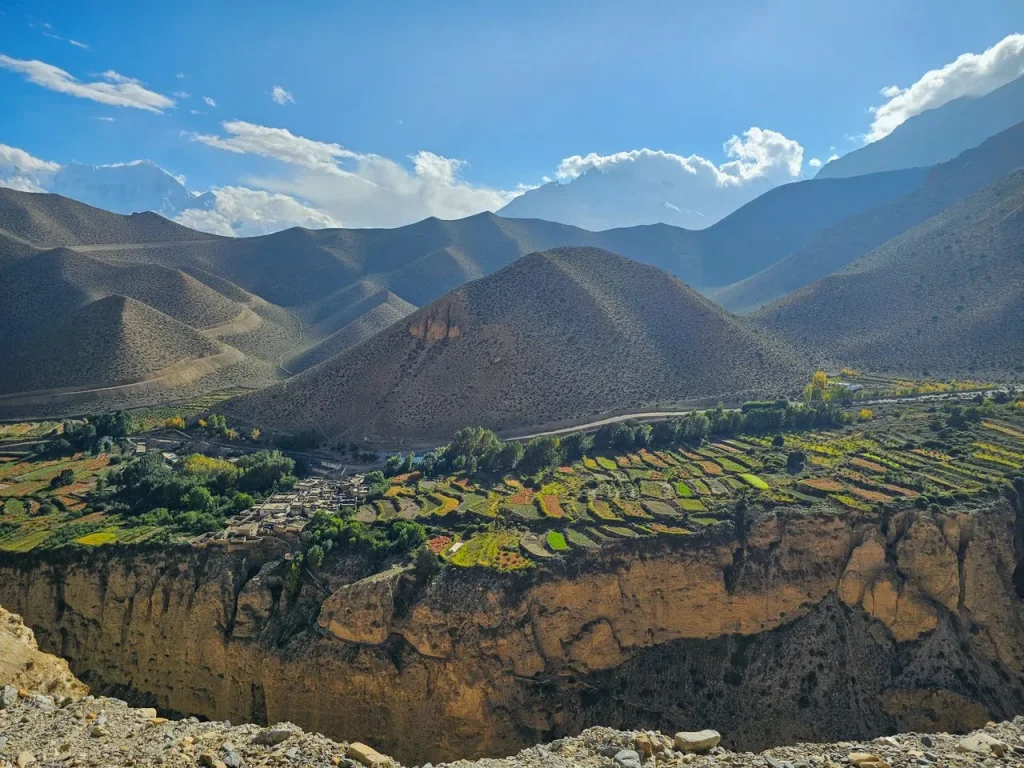
The Old Kingdom of Mustang, Nepal: Upper and Lower
Mustang is a district in north central Nepal. It was a kingdom in its own right until 1950, and it is split in two by law. Lower Mustang is open.…
 Pawan Bhattarai
Updated on
Marpha and Kagbeni are the two villages that give Lower Mustang its character, and both are reached and returned from Jomsom inside a day. Neither needs a restricted area permit. The short answer on what they are now: Marpha is still the apple capital of Nepal, though the crop that defines it is climbing north up the valley, and Kagbeni is still repairing itself after a flood took part of the village in 2023.
Neither fact appears in most descriptions of them. Both change what you see.
Who this guide is for: travellers deciding what to do with their days in Lower Mustang, and anyone who wants the valley as it is rather than as it photographs. For the region as a whole, start with our guide to Mustang, Nepal, and for the base itself see Jomsom.
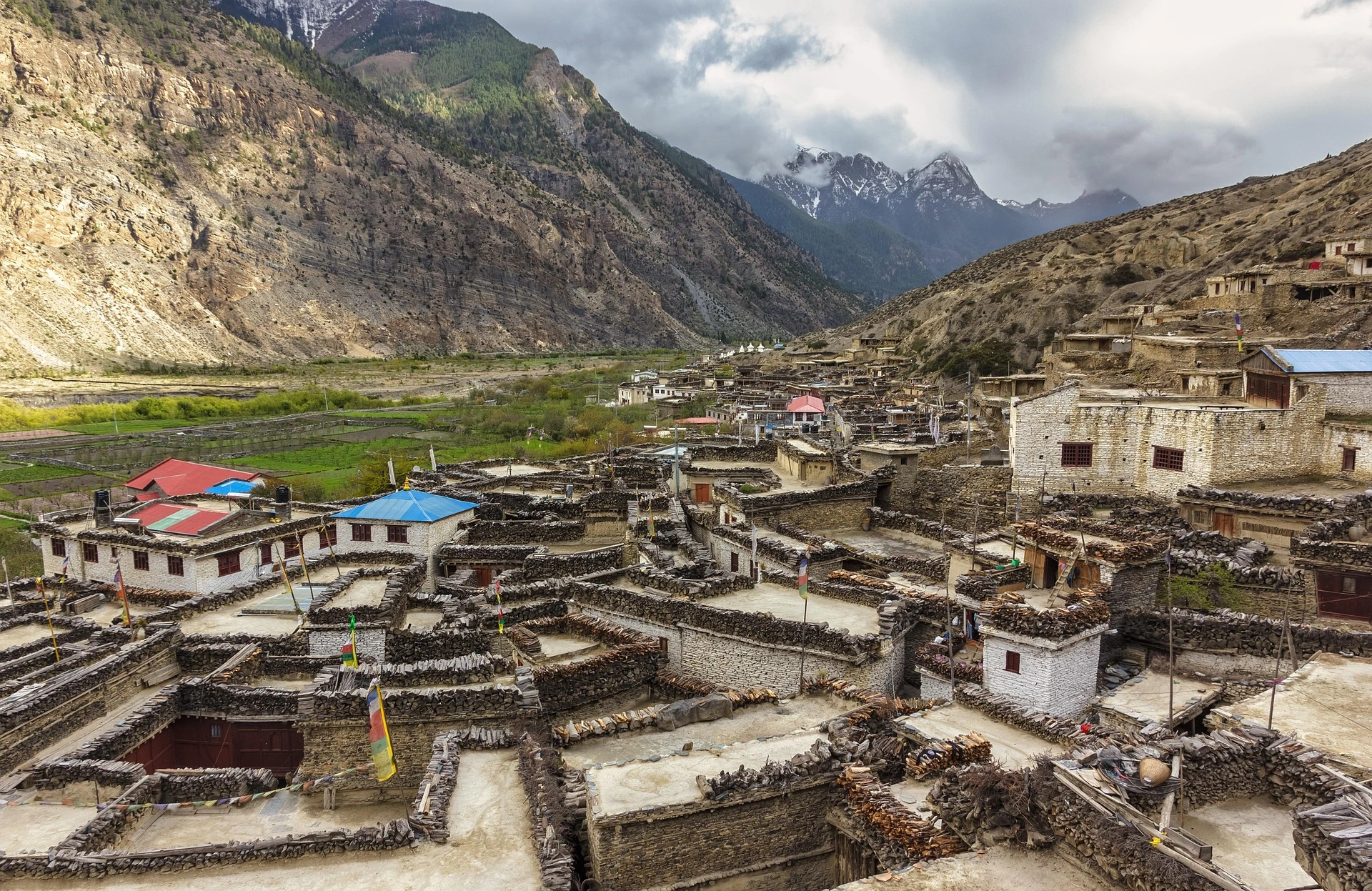
In short, Marpha is built against the wind. Flat roofs, whitewashed walls and narrow lanes set below the line of the gale, on the old salt road between Nepal and Tibet. It is the tidiest village in the valley and the one most people photograph.
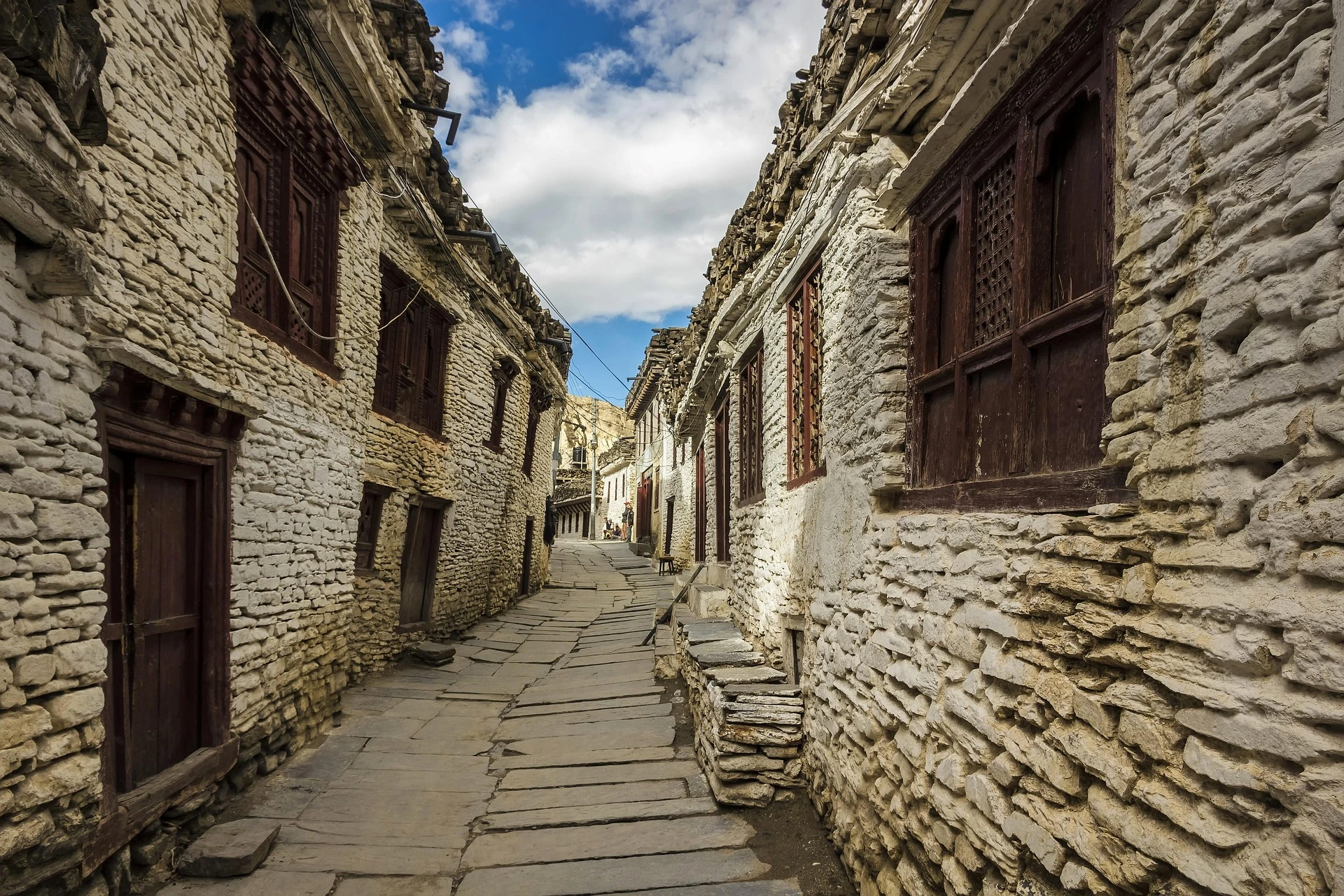
It is also a working agricultural centre rather than a museum. The Kathmandu Post calls Marpha the apple capital of Nepal, and the government’s Temperate Horticulture Development Center sits there. Apples, dried apples and apple brandy are what the village sells.
This is the part worth knowing before you taste anything.
Warming has not destroyed Mustang’s apples. It has moved them. In 2015 the District Agricultural Development Office reported that Lete and Kunzjo had stopped producing apples altogether, with Marpha, Tukuche, Jomsom and Kagbeni named as the main growing zones instead. A senior officer put it plainly at the time: apple trees were vanishing in the lowlands and fruiting in the highlands.
By 2019 the line had moved again. Three decades of rising temperatures had made the north more hospitable, and growers were trying orchards as far up as Lo Manthang at 3,840m, once considered too cold and dry for the fruit. Mustang produced more than 5,300 metric tonnes that year.
So the orchard belt is walking north up the Kali Gandaki, one village at a time. Marpha still holds the name. The frontier has moved past it.
Kagbeni sits where the Jhong valley meets the Kali Gandaki, and it is the last open village before the restricted zone. Everything north of it needs a permit and an escort. That single administrative fact has shaped the place for decades, because it is where one kind of journey stops and another begins.
The old village is mud brick and tunnel like, with the remains of a fort above it. It is a pilgrimage stop as well as a trekking one.
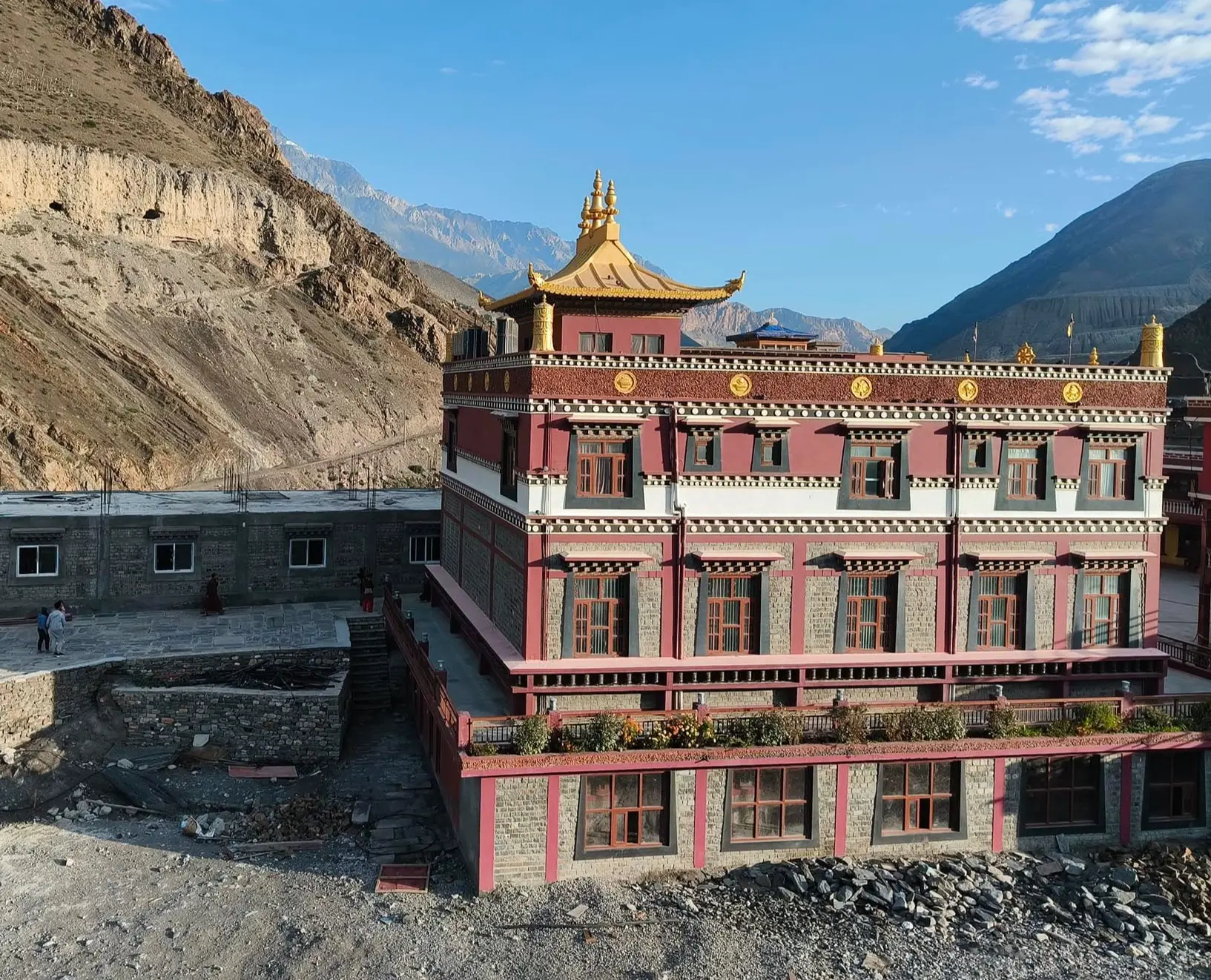
The short answer: a landslide dammed the Kag river upstream, the dam burst, and the water took part of the village on the evening of 13 August 2023.
| Lost or damaged | Reported |
|---|---|
| Houses swept away | 29 |
| Houses damaged | 13 |
| Families displaced | 35 |
| Bridges | One motorable on the Jomsom to Korala road, one suspension, three temporary |
| Assessed damage | About one billion rupees |
The figures come from The Kathmandu Post and from the disaster management committee of Baragung Muktikshetra Rural Municipality, reported by The Annapurna Express. It happened in the evening, which is why the district officer said people got out.
Recovery has been slow. In May 2024 residents were repairing their own houses without help, the embankment the government had promised had not been built, and silt had raised the river bed above its old level. That report is more than two years old now, so confirm the current state before you plan around it.
What this means for a visit is simple. Kagbeni is open and people are working, but you will see construction, raw riverbank and gaps where buildings were. Arriving expecting an untouched medieval village is the mistake.
| Marpha | Kagbeni | |
|---|---|---|
| Direction from Jomsom | South, down valley | North, up valley |
| Why go | Architecture, orchards, the horticulture centre | Old village, the fort ruin, the edge of the restricted zone |
| Restricted permit | No | No, until you go north of it |
| Condition | Intact | Rebuilding since 2023 |
They sit on opposite sides of Jomsom, which is the argument for basing there rather than moving each night. Our guide to Nepal trekking permits covers the conservation permit both need.
Autumn is apple season, which is the obvious time for Marpha and the one week the village smells of fruit rather than dust. Spring is quieter and the light is longer. Mustang sits in the rain shadow, so the monsoon works here when the rest of Nepal is under cloud, although that is also when the rivers carry the most and when the 2023 flood happened.
Our guide to the best time to trek in Nepal sets out the wider calendar.
Two things change how these days feel.
The first is direction. Because Marpha is downhill and Kagbeni is uphill from Jomsom, we send guests north early, while the wind is still low, and south later. Doing it the other way round means walking into the gale in the afternoon, which is the single most common way a pleasant day becomes a tolerated one.
The second is knowing what you are looking at. For example, a guest who has been told about the flood reads Kagbeni’s bare riverbank as recent history rather than neglect, and usually ends up talking to somebody about it. In our experience that conversation is the thing they remember, not the fort.
Neither village asks for much. Both are low by Nepali standards, both are short days, and neither needs a permit beyond the one everyone carries. What they ask is that you arrive knowing the valley is in motion, in the orchards and in the riverbed both.
Far Ridge Collective is a Nepali owned luxury tour operator in the Nepal travel industry, running private guided journeys in Mustang and the wider Himalaya, capped at five guests. Our Kingdom of Mustang journey is based in this valley and reaches both villages as day trips.
Apple figures, flood figures and recovery status were checked against The Kathmandu Post, The Annapurna Express and The Himalayan Times in September 2026. Conditions in Kagbeni change with each monsoon, so confirm before you travel.
Not a restricted area permit. Both villages sit south of the restricted line, so the Annapurna conservation permit that everyone entering the conservation area needs is enough. The restricted permit only applies once you go north of Kagbeni.
Because it is the centre of the valley’s apple growing and holds the government Temperate Horticulture Development Center. The Kathmandu Post uses the title directly. Apples, dried apples and apple brandy are what the village sells.
A landslide dammed the Kag river upstream and the dam burst on the evening of 13 August 2023. The flood swept away 29 houses and damaged 13 more, displaced 35 families, and took a motorable bridge, a suspension bridge and three temporary bridges. Damage was assessed at about one billion rupees.
Yes, and it is open. Expect to see construction, raw riverbank and gaps where buildings stood. As of May 2024 residents were repairing their own homes and the embankment the government promised had not been built, so confirm the current state before you plan around it.
Yes. They sit on opposite sides of Jomsom, Marpha south and Kagbeni north, and both are reached and returned from inside a day. Going north early is better, because the valley wind builds through the morning.
It has moved them rather than destroyed them. By 2015 Lete and Kunzjo had stopped producing apples entirely while Marpha, Tukuche, Jomsom and Kagbeni became the main growing zones. By 2019 growers were trying orchards as far north as Lo Manthang at 3,840m, once thought too cold and dry for the fruit.
The old village of mud brick lanes, the ruins of the fort above it, and the confluence where the Jhong valley meets the Kali Gandaki. It is also the last open village before the restricted zone, and a pilgrimage stop as well as a trekking one.
Autumn. That is when the orchards are picked and the village smells of fruit rather than dust, and it is the obvious time to go if the apples are the reason.
Send us your questions about routes, costs or the best time to go — our travel experts in Nepal reply within 24 hours.

Mustang is a district in north central Nepal. It was a kingdom in its own right until 1950, and it is split in two by law. Lower Mustang is open.…
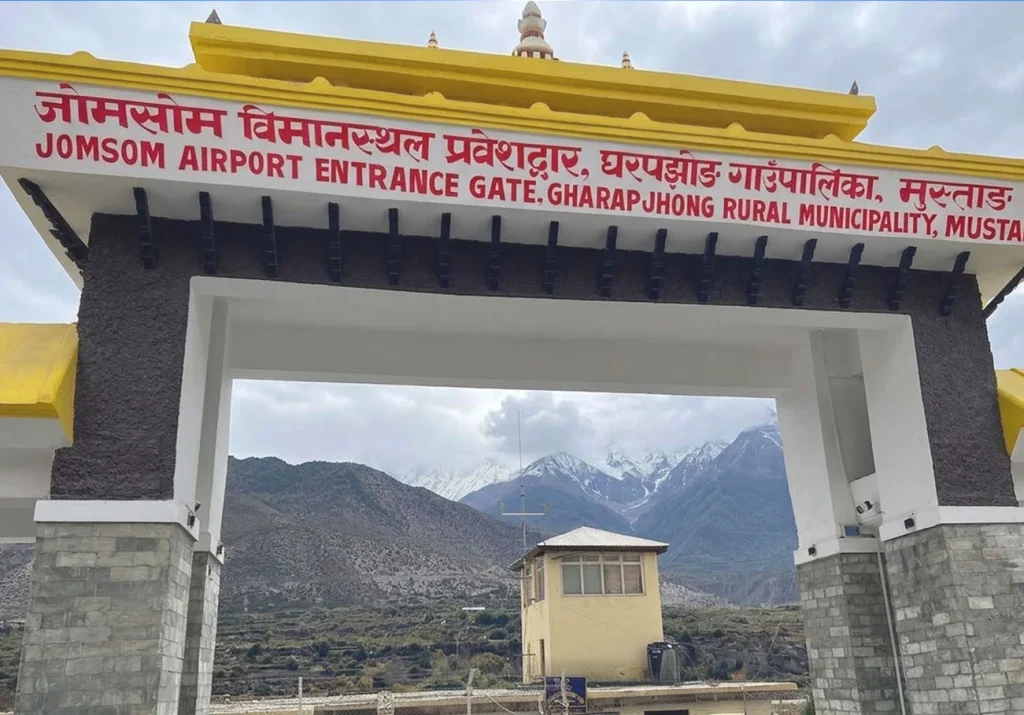
Jomsom is the administrative centre of Mustang district and the way into the whole valley, set on the Kali Gandaki between the Dhaulagiri and Annapurna massifs. The short answer on…