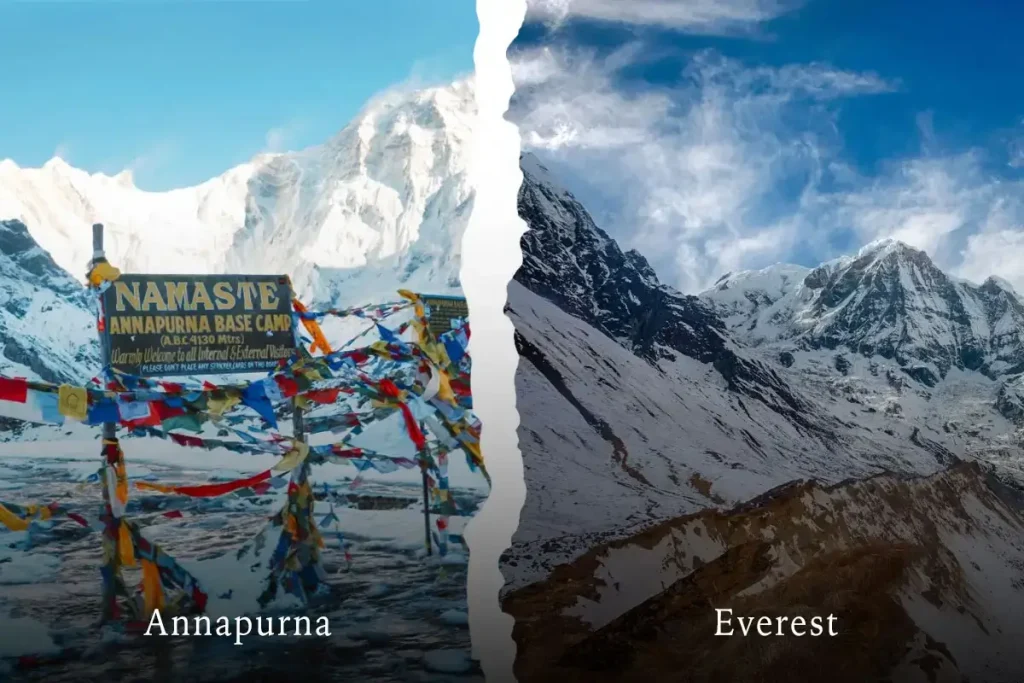
Annapurna or Everest Base Camp: An Honest Comparison
Both routes are superb and they suit different people. Altitude, access and the shape of the walk are what actually separate them.
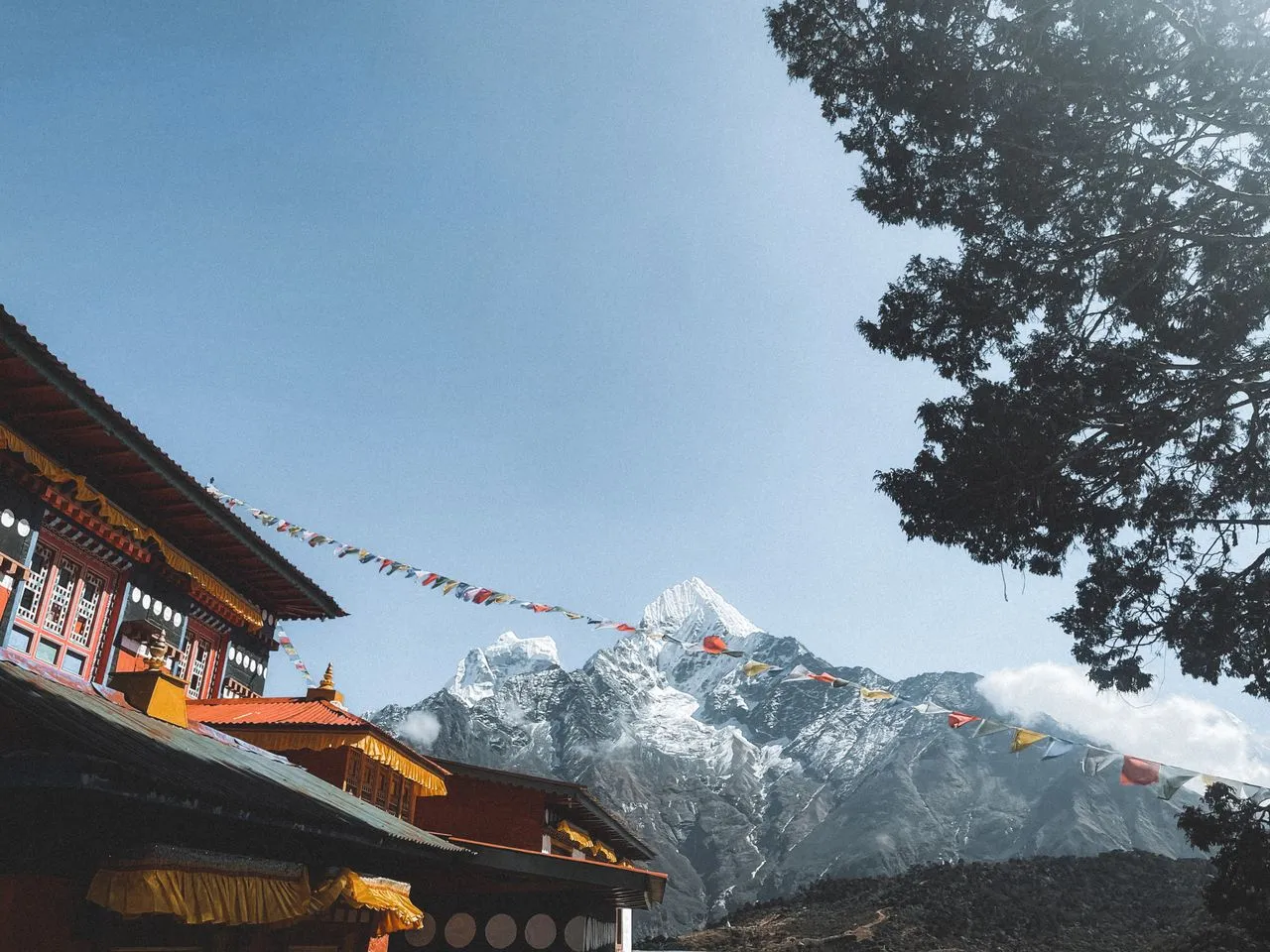
 Pawan Bhattarai
Updated on
A luxury Everest Base Camp trek is comfortable for the lower half of the climb, and no further. The good lodges on the route stop at Deboche, just below Tengboche Monastery, which the Nepal Tourism Board places at 3,867m. Above that, every night on the way to Base Camp is spent in a simple teahouse. A helicopter can still carry you back down from Gorak Shep or Kala Patthar when the weather allows, though not from Base Camp itself.
None of that makes the walk less extraordinary. It does change what you are buying.
Who this guide is for: private travellers deciding between Everest Base Camp on foot and a more comfortable way to see Everest. It follows how we plan our own Everest journeys at Far Ridge Collective, a travel company registered in Nepal, operating private treks, tours, wellness and wildlife journeys, and every figure in it comes from a named source, most of them Nepali government bodies and national newspapers.
Best for: understanding where the comfort ends on the Base Camp trail, and what the helicopter rules now allow.
When to use it: while choosing between the full Base Camp trek and a shorter, more comfortable Everest journey.
Less useful if: you are planning an expedition above Base Camp, which is a different undertaking with its own permits.
Partly. The Nepal Tourism Board describes the route as a two-week trek that starts and finishes at Lukla, the airstrip most walkers fly into. On that route, comfort follows altitude. Low in the valley, the best lodges are as good as mountain lodges get. Higher up, the choice narrows to teahouses, and the table shows where that line falls in our own assessment.
| Stage | Where you sleep | What to expect |
|---|---|---|
| Lukla to Monjo | Comfortable lodges | Real beds and rooms with their own bathroom. The trail follows the Dudh Koshi river. |
| Namche Bazaar, 3,500m | Comfortable lodges | The Sherpa capital, and the first place to stop and acclimatise |
| Tengboche, 3,867m, and Deboche | The last comfortable lodges | The monastery has Ama Dablam behind it. Deboche, a short walk below, is as high as we would call any lodge luxurious. |
| Pangboche, Dingboche and Pheriche | Simple teahouses | Pheriche holds the Himalayan Rescue Association’s aid post |
| Lobuche | Simple teahouses | About six hours on from Dingboche or Pheriche |
| Gorak Shep | A few teahouses | The last settlement, and the base for Base Camp and Kala Patthar |
| Everest Base Camp | No lodges | Reached along the glacier, a walk the Tourism Board says can take up to five hours |
The Tourism Board’s own line on Gorak Shep is plain: “The few tea houses at this place provide shelter.” That is the honest standard for the last nights of any Base Camp trek, whoever arranges it.
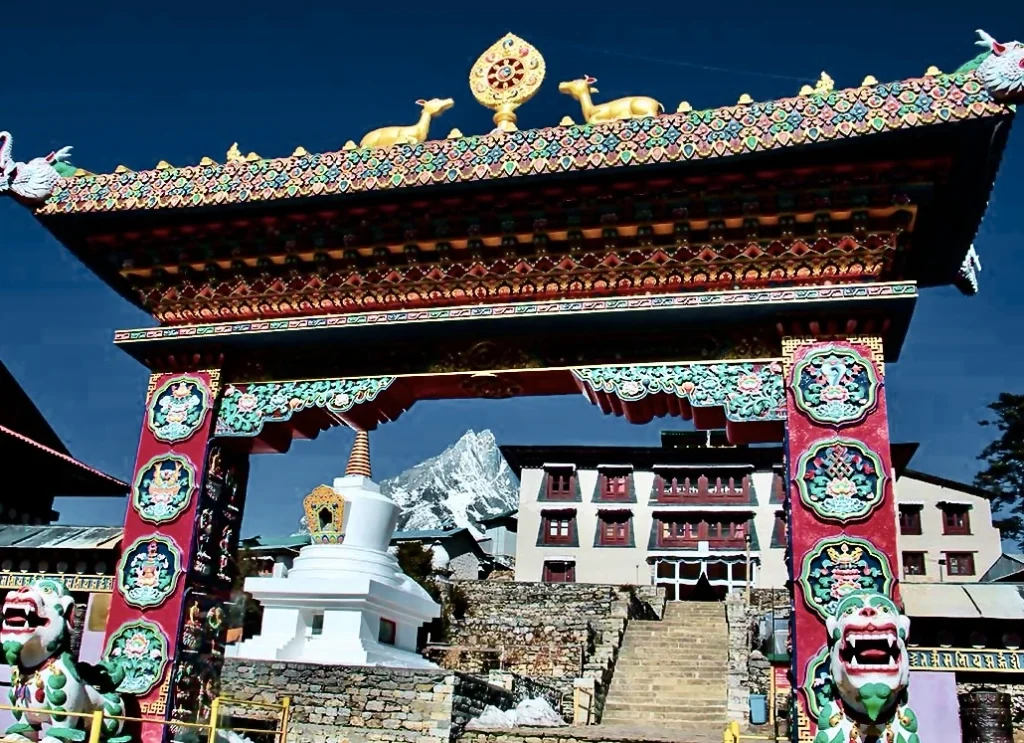
You fly to Lukla, then walk. Most trekkers fly to Lukla to begin, in the Tourism Board’s words, and beyond it there is no regular commercial flight, so the rest of the way is on foot. In the busy seasons, fixed-wing flights to Lukla leave from Ramechhap rather than Kathmandu, after a road transfer: in autumn 2025, 50 to 65 flights a day left Ramechhap when the weather allowed. Weather can hold them for days. In October 2024, more than one thousand tourists heading to Lukla were stuck at Manthali.
A helicopter from Kathmandu to Lukla avoids both the road and the queue, which is why a private itinerary plans around it. Helicopters wait for clear weather too, so any itinerary into the Khumbu needs a day or two of margin.
Our assessment is simple. We know of no lodge above Deboche that we would call luxurious. The teahouses are run by Sherpa families and the welcome is real, which counts for a great deal at the end of a cold, breathless day in the high valley. The rooms are basic, though, and the nights are cold.
Altitude does the rest. The UIAA, the international mountaineering federation, lists sleep disorders and loss of appetite among the symptoms of acute mountain sickness. Both can turn a simple room into a long night. So up here the pace matters far more than the bedding, and a good guide will slow you down before you ask, even on the mornings when you feel strong enough to go faster.
Yes, from Gorak Shep or Kala Patthar when the weather allows, but not from Base Camp itself, where landings are not permitted. Before 2025, the Kathmandu Post noted, most trekkers who reached Base Camp flew back to Kathmandu, a 30-minute flight. Then the Khumbu tried to stop it. In December 2024 the Khumbu Pasang Lhamu Rural Municipality decided that beyond Lukla, “only rescue and sling flights that comply with the laws and regulations of Sagarmatha National Park will be allowed,” the Kathmandu Post reported.
A compromise followed in February 2025, The Himalayan Times reported, allowing sightseeing flights to land only below 4,300m. That plan is not being applied, and as of October 2026 the position looks like this:
| Flight | Operating in October 2026? |
|---|---|
| Kathmandu to Lukla, by plane or helicopter | Yes |
| Sightseeing flights over the valley | Yes, with landings at Kala Patthar when the weather allows |
| A helicopter back after the trek, from Gorak Shep or Kala Patthar | Yes, weather permitting |
| Landing at Base Camp itself | No. Flights pass over it instead |
| Rescue flights | Yes |
Nepal’s aviation regulator disputes the power of local bodies to set any of this: in December 2024 it said the national park had “no legal ground to enforce such a ban,” and the position has moved more than once since. So we check it again before every departure, and every journey that relies on a helicopter keeps a walking fallback.
Sightseeing flights are a separate question. Our guide to the Everest Base Camp helicopter tour sets out what a tour does now, and where it lands.
One caution: a flight home and a rescue are different things. In March 2026 the Kathmandu Post described a fake rescue racket in which trekkers who did not want to walk back were told to “pretend to be sick, and a helicopter will come.” Investigators confirmed 171 fake rescues between 2022 and 2025. Then, on 12 March 2026, the Central Investigation Bureau charged 32 people. If you would rather fly back, book the flight for what it is, because a real evacuation is a medical decision and should stay one.
Plan on about two weeks on foot, from Lukla and back. That is the Tourism Board’s own figure, and altitude is the reason it does not shrink. The UIAA’s medical commission advises that above 2,500m to 3,000m, each night should be planned no more than 300 to 500m higher than the last. On this route, that means a slow climb with rest days built in, because the villages above Namche sit far enough apart in height that the body needs time to catch up with the walking.
The first long pause is Namche, where the Tourism Board suggests you “halt here for a few days to acclimatize”. A second rest day follows higher up, at Dingboche or Pheriche, before the long walk to Lobuche. The usual shape of the climb looks like this:
If you walk down, the descent is planned as carefully as the walk up, with nights back in the comfortable lodges at Namche and below once the high valley is behind you.
You go down, on foot, and early. The UIAA advises descending if symptoms of altitude illness do not improve, or get worse, within 24 hours. A good guide makes that call before anyone has to ask for it, and on a private trip there is no group schedule pushing anyone to keep climbing when they should be heading down.
Help is also closer than it looks. The Himalayan Rescue Association, formed in 1973, staffs its aid post at Pheriche with volunteer doctors in each trekking season, and it runs the Everest ER medical camp at Base Camp as well. Helicopter rescue remains available for genuine medical need, which is why your travel insurance must cover evacuation from altitude.
In spring, Base Camp is a town. In autumn, the expedition tents are gone. The Department of Tourism issued Everest permits to 495 people in spring 2026, and more than 1,000 people, from climbers and Sherpas to cooks and liaison officers, stayed at Base Camp at the peak of that season. In autumn 2025, by contrast, only four climbers from two teams held Everest permits.
| Spring | Autumn | |
|---|---|---|
| Everest climbers | 495 permits in 2026 | 4 climbers in 2025 |
| Base Camp | More than 1,000 people at the 2026 peak | No expedition town. Trekkers visit for the day from Gorak Shep. |
| Why go then | To see the expedition camp and the scale of an Everest season | For a quieter glacier |
The trail itself is busy in both seasons, so the choice comes down to what you want to find at the top: the noise and colour of an expedition camp in spring, or the glacier and the Khumbu Icefall in autumn, without the tents. For the weather side of the choice, our guide to the best time to trek in Nepal works from the Department of Hydrology and Meteorology’s own monsoon records.
The trail is shared, so privacy comes from what surrounds it. On a single Monday in April 2025, the Sagarmatha National Park office in Namche counted 694 arrivals, and hotels in Lukla and Namche were reported packed. The park recorded 12,003 visitors in the month from mid-March to mid-April.
What we can make private is your guide and your pace. A private guide walks at your speed and reads your day as it unfolds, and we book rooms early, which matters most in the weeks when the lower valley fills.
Far Ridge Collective’s own Everest journey is built around where the comfort is. Guests fly into the Khumbu by helicopter from Kathmandu, which skips the road to Ramechhap and the queue for fixed-wing seats. The Khumbu part of the journey runs like this:
| Day | What happens | Where you sleep |
|---|---|---|
| 3 | Helicopter from Kathmandu to Lukla, then three to four hours on foot | Premium mountain lodge, Phakding |
| 4 | Up to Namche Bazaar, five to six hours | Premium mountain lodge, Namche |
| 5 | Namche and the Sherpa villages above it | Premium mountain lodge, Namche |
| 6 | Tengboche Monastery, then down to Deboche | Premium mountain lodge, Deboche |
| 7 | Everest from the air, then out to Kathmandu | The Dwarika’s, Kathmandu |
On the seventh day a private helicopter lifts off near Deboche, flies over Base Camp and, weather permitting, lands at Kala Patthar, before carrying guests out of the mountains. Helicopters wait for weather too, so the journey keeps a margin near the end. The last evening belongs to a Sherpa who has stood on the summit.
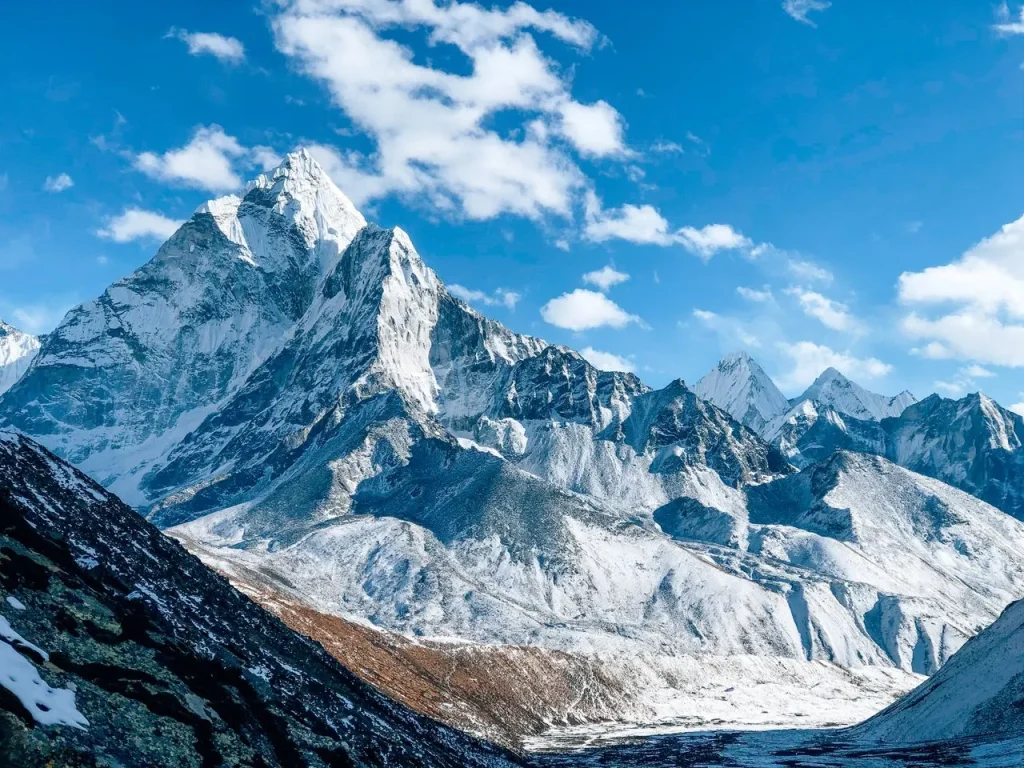
That journey is Everest Above the Clouds, and it is the version of Everest we recommend to most of our guests.
Two things decide how a guest feels about the Khumbu. The first is pace. We plan every Everest walk around the altitude, so the days bend to the guest’s body, and in our experience the guests who enjoy the upper valley most walk more slowly than they feel they need to, especially above Namche.
The second is expectation. For example, a guest who reaches Lobuche expecting the standard of Deboche has a long night, while a guest who knew the standard in advance sleeps better and minds less. That is why we describe the upper valley plainly before anyone books, and why this guide does the same.
It depends on what matters most to you, and on how many nights you are happy to spend above the comfortable lodges, which on the classic Base Camp route means several nights in a row in simple teahouses. Use this as a quick guide:
| If this matters most | The better fit |
|---|---|
| Standing at Base Camp yourself | A private Base Camp journey, about two weeks on foot from Lukla |
| A comfortable lodge every night | Everest Above the Clouds, ten days, on foot as far as Tengboche |
| Seeing the expedition camp | Base Camp in spring |
| A quieter Base Camp | Base Camp in autumn |
| Seeing Everest with less walking | Everest Above the Clouds, with its scenic flight |
Then go, and do it properly. We arrange a private Base Camp journey on request. That means the best room available at every stop, and a pace set by the altitude. It also means a guide trained to spot altitude illness early. Before you book, we will tell you which nights will be the hardest. On the classic route they are the two highest, at Lobuche and Gorak Shep, and we plan the walk down as carefully as the walk up.
If that is the trip you have in mind, tell us about your dates and your group, and we will design it around you. If you are still weighing Everest against the Annapurna, our honest comparison of the two base camps is a good place to start. Our guide to what luxury trekking in Nepal actually means sets out how we run every walk.
In part. Comfortable lodges reach Deboche, just below Tengboche Monastery at 3,867m. Above that, every night to Base Camp is spent in a simple teahouse, so the top half of any Base Camp trek is basic, whoever arranges it.
Yes, from Gorak Shep or Kala Patthar when the weather allows, though not from Base Camp itself, where landings are not permitted. A February 2025 plan to limit landings in the Khumbu to below 4,300m is not being applied. The position has moved more than once, so check it close to your dates.
About two weeks on foot from Lukla and back, the same as any well-paced Base Camp trek. The Nepal Tourism Board describes a two-week trek that starts and finishes at Lukla. Altitude sets that pace: the UIAA advises raising your sleeping height by no more than 300 to 500m a night above 2,500m to 3,000m.
Yes. Sightseeing flights pass over Base Camp and land at Kala Patthar when the weather allows, and the walk to Tengboche stays in comfortable lodges the whole way. Our Everest Above the Clouds journey combines the two.
They go down. The UIAA advises descending if symptoms do not improve or get worse within 24 hours. The Himalayan Rescue Association staffs its aid post at Pheriche with volunteer doctors each trekking season, and helicopter evacuation is there for genuine medical need.
In peak weeks, yes. The Sagarmatha National Park office in Namche counted 694 arrivals in a single day in April 2025, and 12,003 visitors in the month from mid-March to mid-April. What can be private is your guide and your pace.
Spring if you want to see the expedition camp, autumn if you want a quieter Base Camp. More than 1,000 people stayed at Base Camp at the peak of the spring 2026 season, while only four climbers held Everest permits in autumn 2025.
Send us your questions about routes, costs or the best time to go — our travel experts in Nepal reply within 24 hours.

Both routes are superb and they suit different people. Altitude, access and the shape of the walk are what actually separate them.
Nepal receives more visitors than ever, yet daily spend sits near a record low. Here is what luxury trekking in Nepal should actually mean.