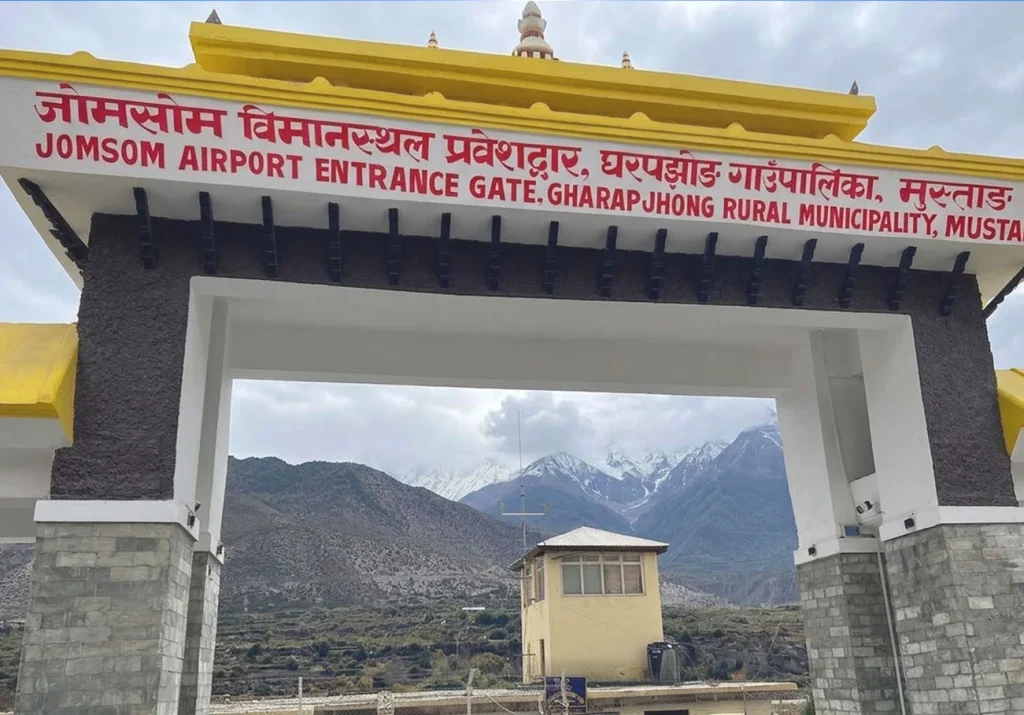
Jomsom, Nepal: The Flight, the Road and What Changed
Jomsom is the administrative centre of Mustang district and the way into the whole valley, set on the Kali Gandaki between the Dhaulagiri and Annapurna massifs. The short answer on…
 Pawan Bhattarai
Updated on
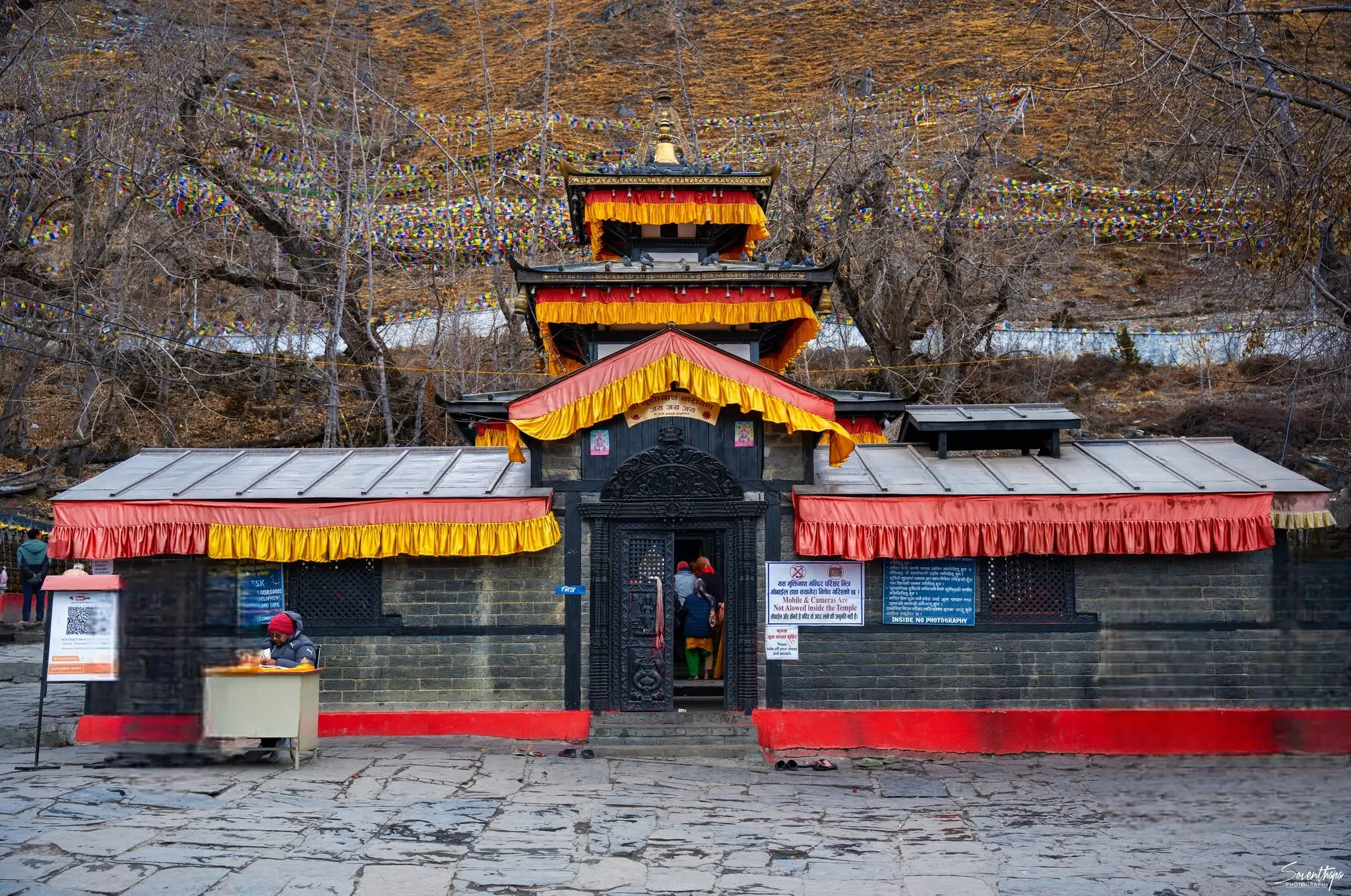
Muktinath is a temple complex at about 3,800m in Mustang, sacred to Hindus and Buddhists alike, and it is the busiest place in the district by a wide margin. The short answer on what to expect: this is a working pilgrimage site rather than a viewpoint, and on a peak day you will share it with tens of thousands of people who came to worship rather than to look.
That is not a warning. It is the thing worth understanding before you go.
Who this guide is for: travellers deciding whether Muktinath belongs in their days, and what hour to arrive. For the region start with our guide to Mustang, Nepal, and for the base below it see Jomsom.
In short, it is one site that two religions have venerated for centuries without dividing it. The Nepal Tourism Board describes a pagoda temple dedicated to Vishnu, whom Buddhists worship as Avalokiteshwar. Hindus call the surrounding ground Mukti Kshetra, the place of salvation. Buddhists call the complex Chumig Gyatsa, the Hundred Waters.
Both names describe the same water.
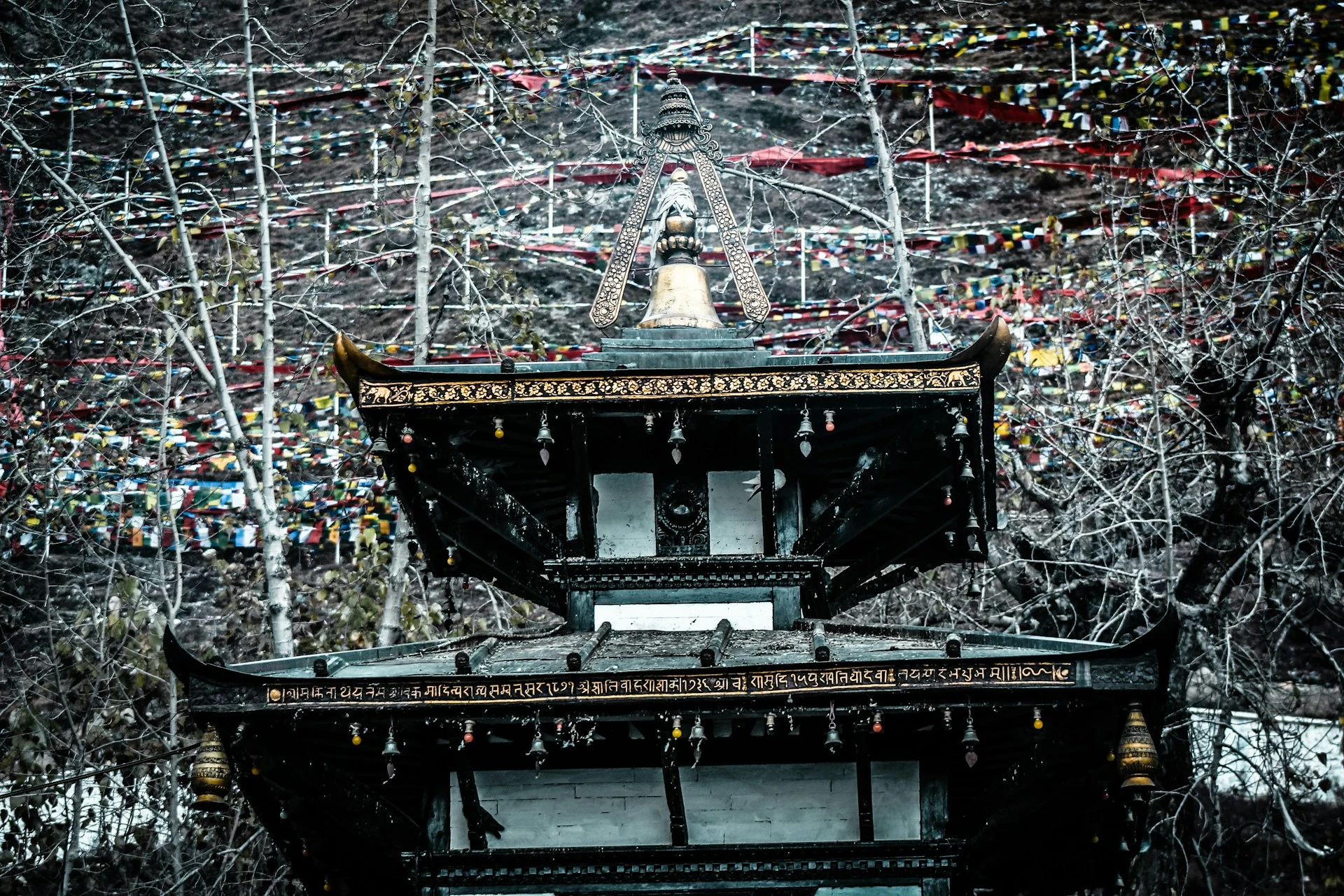
| What you will see | What it is |
|---|---|
| The temple | A simple pagoda dedicated to Vishnu, and to Avalokiteshwar |
| The 108 spouts | Spring water through gilded bull head spouts, for ritual bathing |
| Jwala Mai | A nearby temple holding a continuously burning blue flame |
| The riverbed below | Where shaligram fossils are found, held to be Vishnu in stone |
The altitude is worth a note, because the Nepal Tourism Board publishes two figures. Its Muktinath page gives 3,800m and its Annapurna region page gives 3,749m. Treat it as just under 3,800m and do not build an acclimatisation plan on the difference.
The short answer: overwhelmingly Indian pilgrims, in numbers that would surprise anyone picturing a remote Himalayan shrine.
The Kathmandu Post reported in June 2026 that Muktinath had received around 30,000 Indian pilgrims in a single day. The tourism minister acknowledged in the same piece that there is a shortage of accommodation and vegetarian food for those numbers.
This is the direct consequence of the road. Muktinath used to be a five hour walk up from Jomsom. It is now a drive, and the people who could never have walked it now arrive by the busload, which is a good thing for them and a planning problem for you.
None of that makes the site less worth seeing. It changes what time you should be standing in it.
This is the part almost nobody mentions, and it connects Muktinath to the rest of the valley.
Shaligrams are fossil ammonites, the remains of extinct sea creatures, found in the Kali Gandaki and venerated as a form of Vishnu. The Himalayan Times reports they have been held sacred across Hinduism, Buddhism and Bon for more than 2,000 years, and that fewer of them surface each year. Faster glacial melt and gravel extraction are shifting the river away from the fossil beds that produce them.
So the same warming that is pushing Marpha’s apple orchards north up the valley is quietly moving the river away from the stones that made this stretch of it holy. The valley is changing in the orchards, the riverbed and the sanctuary alike.
| On foot | By vehicle | |
|---|---|---|
| Time from Jomsom | About five hours, per the Nepal Tourism Board | A short drive |
| Gain | Acclimatisation, and the valley at walking pace | Time, and access for anyone who cannot walk it |
| Cost | A day | Arriving with the buses |
No restricted area permit is needed. Muktinath sits south of the line, so the Annapurna conservation permit everyone carries is enough, as our guide to Nepal trekking permits explains. The village below the temple is Ranipauwa, which is where the lodges and the bus park are.
The weather question is easy. Mustang sits in the rain shadow, so it works when most of Nepal does not, and our guide to the best time to trek in Nepal covers the calendar.
The crowd question is the real one, and it runs on the Indian holiday calendar rather than the trekking seasons. Peak pilgrimage weeks and long weekends are when the single day numbers happen. Those dates are published months ahead, which means they can be planned around rather than discovered on arrival.
Two things decide whether Muktinath lands.
The first is the hour. We take guests up early, before the vehicles have come up from Ranipauwa and while the light is still low on the spouts. By late morning the courtyard is full and the queue for the water is long. The same place at eight and at eleven is not the same place.
The second is disposition. For example, a guest who arrives treating it as a temple with a queue has a better morning than one who arrives treating it as a photograph with people in the way. In our experience the ones who get most from it are the ones who watch what is happening at the spouts and understand that they are guests at somebody else’s most important day.
Muktinath asks for a morning, no special permit and a little altitude sense, since it is the high point of most Lower Mustang itineraries. It does not ask for technical skill. What it does ask is that you arrive as a visitor to a living sanctuary rather than a spectator at a view.
Far Ridge Collective is a Nepali owned luxury tour operator in the Nepal travel industry, running private guided journeys in Mustang and the wider Himalaya, capped at five guests. Our Kingdom of Mustang journey is based in this valley and reaches Muktinath, Kagbeni and Marpha as day trips from a single base.
Temple details and altitudes come from the Nepal Tourism Board. Pilgrim numbers and the shaligram findings were checked against The Kathmandu Post and The Himalayan Times in September 2026. Crowd levels move with the Indian festival calendar, so confirm dates before you plan around them.
A temple complex in Mustang, sacred to Hindus and Buddhists alike. Hindus worship Vishnu there and call the ground Mukti Kshetra, the place of salvation. Buddhists worship the same figure as Avalokiteshwar and know the complex as Chumig Gyatsa, the Hundred Waters.
Just under 3,800m. The Nepal Tourism Board publishes two figures, 3,800m on its Muktinath page and 3,749m on its Annapurna region page, so treat it as about 3,800m. It is the high point of most Lower Mustang itineraries.
Because both traditions venerate the same figure and the same water. The temple is dedicated to Vishnu, whom Buddhists worship as Avalokiteshwar, and the spring feeding the 108 spouts is holy in both. The nearby Jwala Mai temple and its continuously burning blue flame are honoured by both as well.
Spring water running through 108 gilded spouts shaped as bull heads, set behind the temple. Pilgrims bathe under them as a ritual. The number is why Buddhists call the site the Hundred Waters.
Not a restricted area permit. Muktinath sits south of the restricted line, so the Annapurna conservation permit that everyone entering the conservation area carries is enough.
Either on foot, which the Nepal Tourism Board puts at about five hours, or by vehicle on the road that now reaches the site. Walking buys acclimatisation, driving buys time and makes the temple reachable for people who could never have walked it.
Very, on a peak day. The Kathmandu Post reported around 30,000 Indian pilgrims arriving in a single day in 2026, and the tourism minister acknowledged a shortage of accommodation and vegetarian food for those numbers. Arriving early in the morning, before the vehicles come up from Ranipauwa, changes the visit completely.
A fossil ammonite found in the Kali Gandaki and held to be Vishnu in stone form. They have been venerated across Hinduism, Buddhism and Bon for more than 2,000 years. Fewer surface each year, because faster glacial melt and gravel extraction are shifting the river away from the fossil beds.
Send us your questions about routes, costs or the best time to go — our travel experts in Nepal reply within 24 hours.

Jomsom is the administrative centre of Mustang district and the way into the whole valley, set on the Kali Gandaki between the Dhaulagiri and Annapurna massifs. The short answer on…
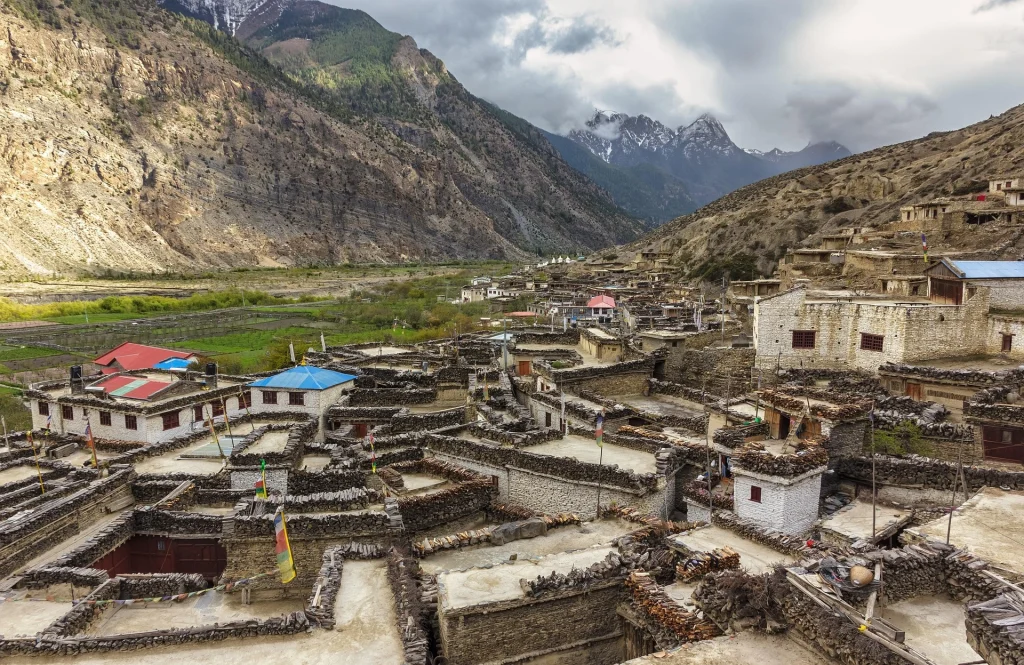
Marpha and Kagbeni are the two villages that give Lower Mustang its character, and both are reached and returned from Jomsom inside a day. Neither needs a restricted area permit.…