Nepal Luxury Tour and Trekking: What It Actually Means
Nepal receives more visitors than ever, yet daily spend sits near a record low. Here is what luxury trekking in Nepal should actually mean.
 Ankit Mishra
Updated on
Ankit Mishra
Updated on
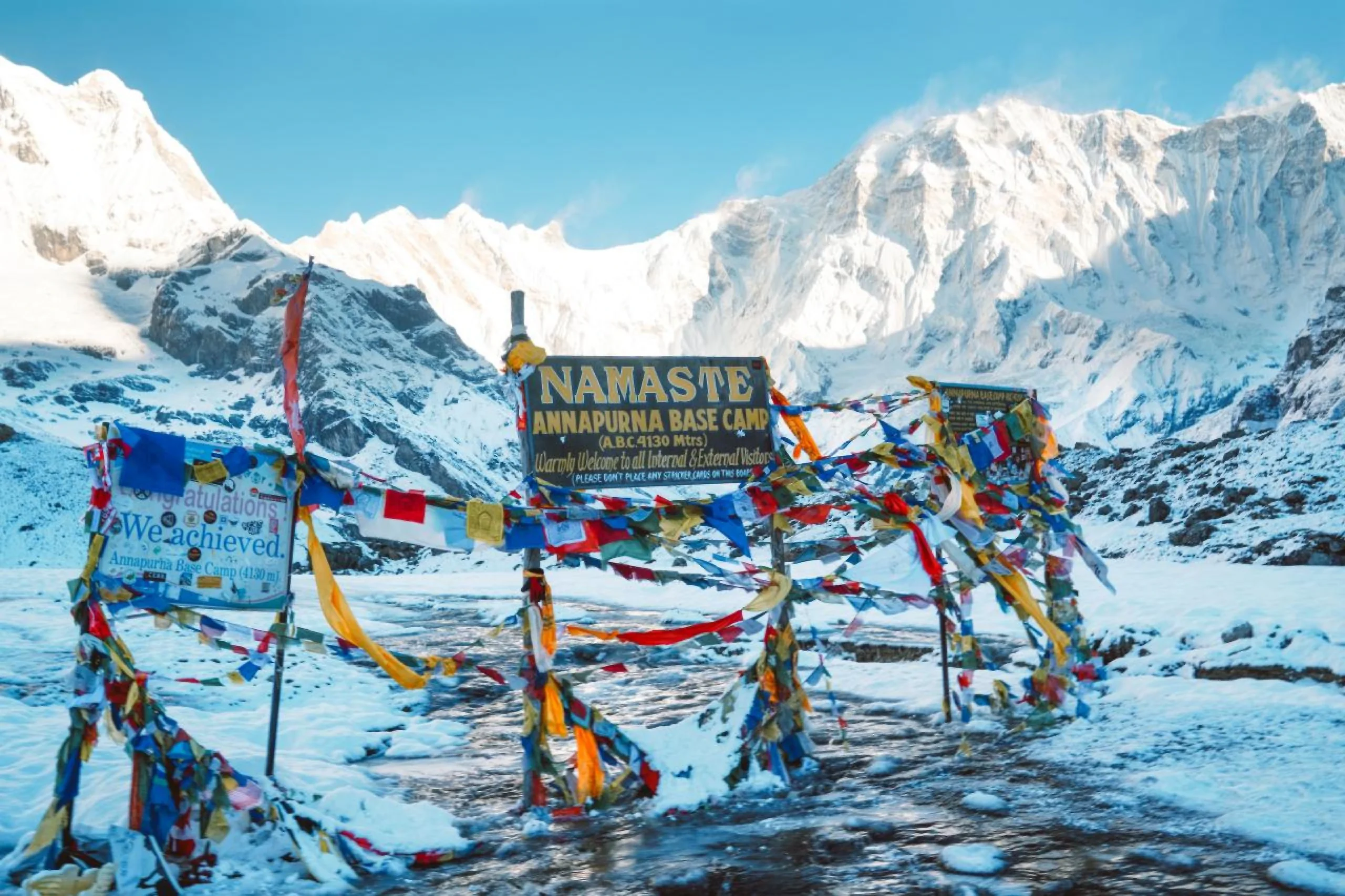
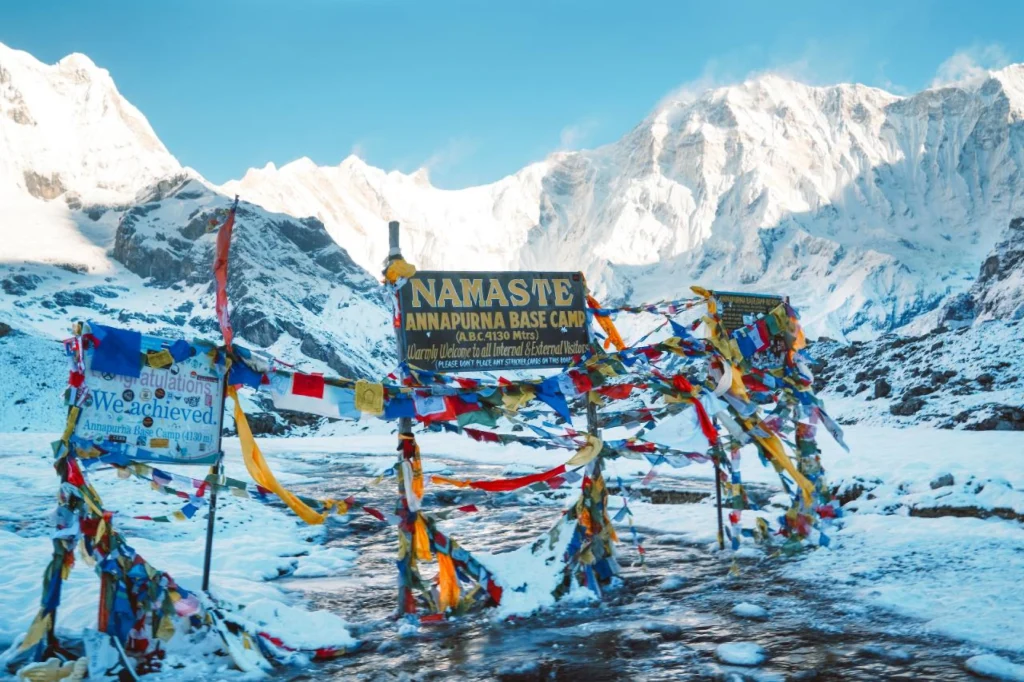
The Annapurna Base Camp trek takes you to 4,130m, into a glacial amphitheatre ringed by Annapurna I at 8,091m, Annapurna South, Hiunchuli and Machhapuchhre. Most itineraries run seven to twelve days from Pokhara. It is graded moderate, and it needs no climbing skill.
This guide covers the route, the timing, the permits and the honest difficulty. Every figure comes from the body that issues it rather than from another operator.
The trail starts near Pokhara and climbs the Modi Khola valley. The usual line runs through Ghandruk, then Chhomrong, Bamboo, Deurali and Machhapuchhre Base Camp before the final stretch into the Sanctuary.
Chhomrong is the hinge. Below it you walk through terraced farmland and Gurung villages. Above it the valley narrows fast, rhododendron gives way to bamboo, and the rock walls close in on both sides. After Deurali the tree line thins out entirely.
Then the Sanctuary opens. It is a natural amphitheatre, and the effect of arriving is the reason people make the walk. Annapurna I stands directly above the base camp. Machhapuchhre, still unclimbed and closed to climbing, fills the eastern side.
| Stage | What changes underfoot |
|---|---|
| Pokhara to Ghandruk | Terraced farmland, and Gurung villages below the trail |
| Ghandruk to Chhomrong | The hinge of the walk. Below it farmland, above it the valley narrows fast |
| Chhomrong to Bamboo | Rhododendron gives way to bamboo, and the rock walls close in on both sides |
| Bamboo to Deurali | The tree line thins out, then stops |
| Deurali to Machhapuchhre Base Camp | The approach into the Sanctuary, still climbing |
| Machhapuchhre Base Camp to Annapurna Base Camp, 4,130m | The amphitheatre opens, with Annapurna I standing directly above |
Seven to twelve days from Pokhara, depending on where you start walking and how fast you climb.
Shorter itineraries drive further up the valley to a higher trailhead and compress the ascent. Longer ones walk in from lower down, or add Poon Hill on the way. The difference is not fitness. It is acclimatisation, and it matters more than most schedules admit.
Moderate. You walk five to seven hours on a typical day, on maintained trail with a great many stone steps. Nothing is technical. You will not need ropes, crampons or any mountaineering experience.
Two things make it demanding.
How fast you climb matters more than how fit you are. Emergency ward records from a hospital in Mustang put the difference at roughly double the odds of serious symptoms when the same height gain is squeezed into a third of the time. We break the study down separately.
So when you compare itineraries, the number of days is a safety specification rather than a comfort one. Ours takes six trekking days to reach 4,130m for exactly that reason.
October and November give the clearest air and the most stable weather of the year. March to May is warmer, with rhododendron in flower on the lower trail, though haze builds as spring goes on.
The Nepal Tourism Board’s arrival figures show how sharp the pattern is. In 2026 the country recorded 120,516 international arrivals in March against 71,775 in July, as reported by The Himalayan Times. Monsoon months are quiet because cloud sits on the mountains for days at a time.
Winter is cold at the top but often crisp and clear, and the trail is empty. For more on this, see the best time to trek in Nepal.
You need two documents. The Annapurna Conservation Area permit costs NRs 3,000 for foreign nationals and NRs 1,000 for SAARC nationals, issued by the National Trust for Nature Conservation through its ePermit system. A TIMS card costs NRs 1,000 for group trekkers or NRs 2,000 for individuals, per the Nepal Tourism Board.
Since March 2023 a licensed guide has been mandatory in Nepal’s specified protected areas, and solo trekking there is no longer permitted. The current fees and paperwork are in our permits guide.
Full detail sits in our guide to Nepal trekking permits.
Annapurna is lower, greener and reached by road rather than by a mountain airstrip. Everest climbs considerably higher and depends on flights into Lukla, which weather disrupts often. We weigh the two properly in Annapurna or Everest.
Most of the trail is served by tea house lodges, which are simple and perfectly adequate. Above roughly 2,000m nothing five star exists, and any operator promising otherwise is misleading you.
What can change is everything around the walking: the hotels in Kathmandu and Pokhara, the size of the group, whether the ascent is paced properly, and who guides you. That is the difference between the standard trek and a luxury one.
It is graded moderate, so most reasonably fit walkers manage it. You walk five to seven hours on a typical day on maintained trail, with a lot of stone steps. Nothing is technical, so no climbing skill is needed. What makes it hard is walking day after day, and then the altitude near the top.
The trail itself is not dangerous in normal conditions. The real risks are altitude illness above 3,000m, and weather. Both are managed by pacing the ascent properly and by walking with a guide who recognises early symptoms.
No. First-time trekkers complete this route regularly, since the difficulty is stamina rather than skill. General fitness therefore matters far more than experience. If you can walk five or six hours and then repeat it the next morning, you are ready.
Start about eight weeks out. Walk, hike, cycle or swim three or four times a week. Then add hills or stairs with a light daypack, because that is closest to the real thing. Breaking in your boots beforehand matters more than any other single preparation.
Annapurna Base Camp sits at 4,130m, which is 13,550 feet. Machhapuchhre Base Camp, passed shortly before it, is a little lower.
It is possible above 3,000m, and this trek goes higher, so how fast you climb matters more than how fit you are. We cover the hospital evidence and the symptom thresholds separately, because the detail deserves more room than one answer allows.
Nights at Base Camp fall below freezing for much of the year, and coldest in December through February. Days on the lower trail, however, can be warm even in winter. Layers matter more than one heavy jacket, because you will shed and add them constantly.
Seven to twelve days from Pokhara. Shorter versions drive to a higher trailhead and climb faster. Longer versions walk in from lower down or add Poon Hill. Extra days buy acclimatisation, not just comfort.
Fly or drive to Pokhara first, then travel by road to the trailhead and walk from there. The flight takes about 25 minutes, while driving takes most of a day.
They are different treks, although the names confuse people constantly. Base Camp goes up the Modi Khola into the Sanctuary and back. The Circuit is a far longer loop around the whole massif, crossing a pass well above Base Camp, so it needs more time and more acclimatisation.
No. Everest sits roughly 200km east in a different range. What fills the sky instead is Annapurna I at 8,091m, with Annapurna South, Hiunchuli and Machhapuchhre around the rim. We compare the two regions here.
Yes. A licensed guide has been required in Nepal’s specified protected areas since March 2023, and solo trekking there is no longer allowed. Our permits guide sets out the current fees and what a registered agency handles for you.
Two. The Annapurna Conservation Area permit is NRs 3,000 for foreign nationals and NRs 1,000 for SAARC nationals, from the NTNC ePermit system. A TIMS card is NRs 1,000 for group trekkers or NRs 2,000 for individuals, per the Nepal Tourism Board. Fees apply per route, per person, per entry.
Layers you can add and remove through the day, boots already broken in, a warm down jacket for Base Camp, sun protection and a light daypack. Trekking poles help a great deal on the descent, which is where knees suffer. Anything missing can be bought or hired in Kathmandu or Pokhara before you set off.
Send us your questions about routes, costs or the best time to go — our travel experts in Nepal reply within 24 hours.

Nepal receives more visitors than ever, yet daily spend sits near a record low. Here is what luxury trekking in Nepal should actually mean.
A year of emergency ward data from Jomsom shows how much ascent rate matters. The finding should shape how any itinerary is built.