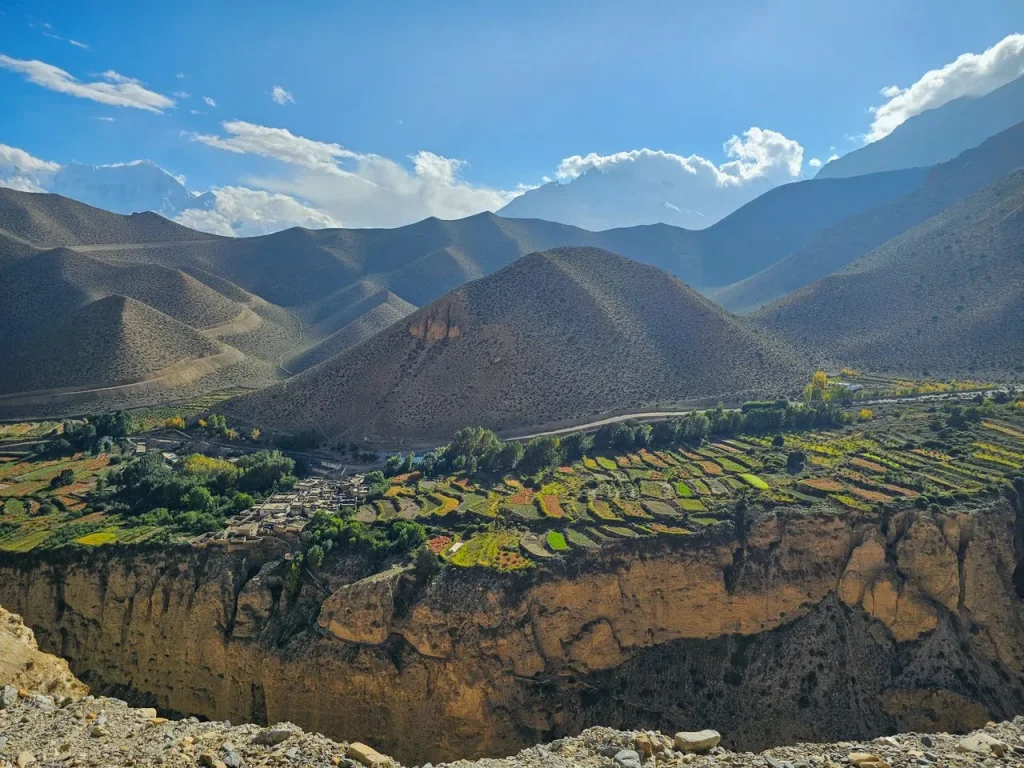
The Old Kingdom of Mustang, Nepal: Upper and Lower
Mustang is a district in north central Nepal. It was a kingdom in its own right until 1950, and it is split in two by law. Lower Mustang is open.…
 Pawan Bhattarai
Updated on
The Kingdom of Lo was a Himalayan kingdom whose capital, Lo Manthang, still stands behind its earthen wall at around 3,800m in Upper Mustang. The short answer on whether it survives: the town does, the dynasty does not, and the royal palace has been shut since the 2015 earthquakes.
That last part rarely appears in the writing about Lo. The romance of a forbidden kingdom is easy to sell. What is actually standing, open and lived in is more useful to know before you commit a fortnight to reaching it.
Who this guide is for: travellers weighing whether Lo Manthang justifies the journey, and readers who want the history without the myth. For the permit and the road, see our guide to Upper Mustang.
In short, Lo was a Buddhist kingdom that outlived its own independence by more than two centuries. It sat on the salt and wool route between the Tibetan plateau and the Nepali midhills, which is what made a walled capital at this altitude worth building.
Nepali sovereignty came long before the monarchy ended. The dates below are the ones carried by the sources, and they are worth having straight, because most accounts compress them into a single romantic date.
| Year | What happened |
|---|---|
| 15th century | Lo Manthang built on the plateau, behind an earthen wall |
| 1790 | King Wanggyal Dorje accepts Nepali sovereignty |
| 1961 | The Rajya Rajauta Act lets annexed kings keep their titles for life |
| 1964 | Jigme Dorje Palbar Bista takes the throne after his father, Angun Tenzing Trandul |
| 1994 | Upper Mustang opens to non-Nepali trekkers |
| 2008 | Nepal becomes a republic, the Act is scrapped, the titular kingship ends. Lo Manthang joins the UNESCO tentative list the same year |
| 2016 | Jigme Dorje Palbar Bista dies, aged 86, born in Lo Manthang in 1930 |
The dynastic dates come from The Himalayan Times, the opening date from the Nepal Tourism Board, and the tentative listing from a Kathmandu Post column that argued, in its own headline, that Mustang is no longer a forbidden kingdom.
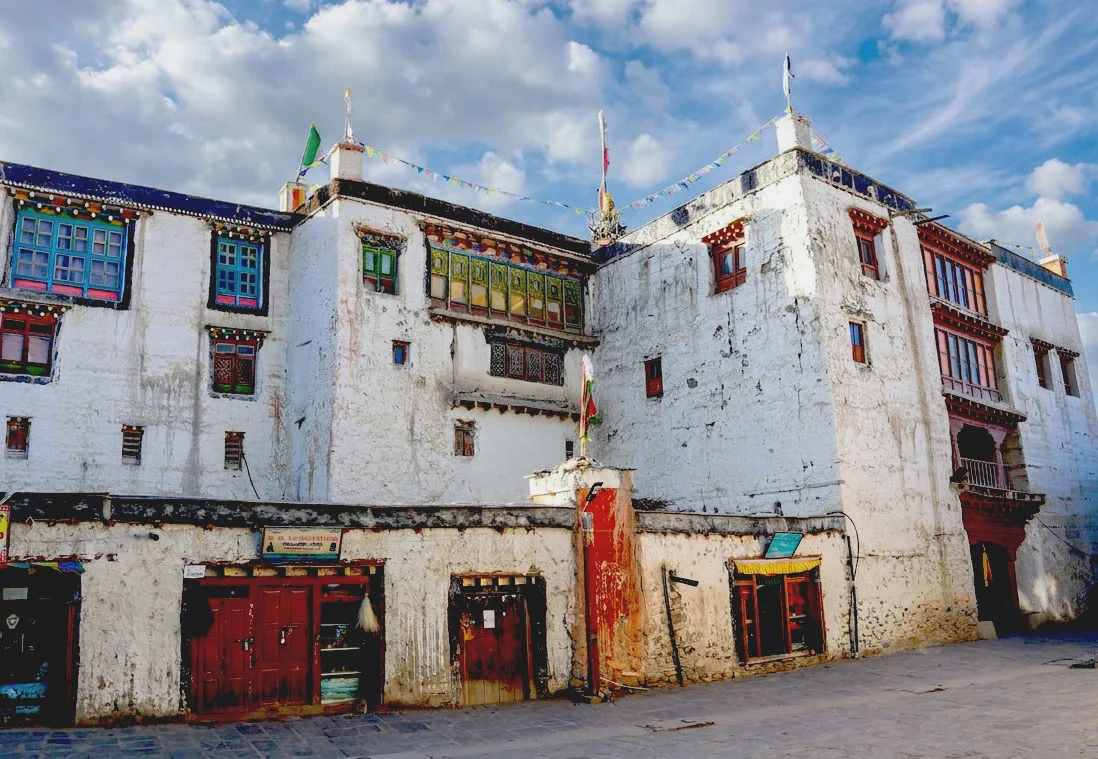
The short answer is the town itself, and not the palace. Lo Manthang is a walled settlement rather than a monument with a ticket office, and the walking is the point.
| What | Status |
|---|---|
| The walled town | Standing and lived in. Earthen wall, alleys, the reason to come |
| The royal palace | Five storeys, damaged in the 2015 earthquakes, closed to visitors when last reported |
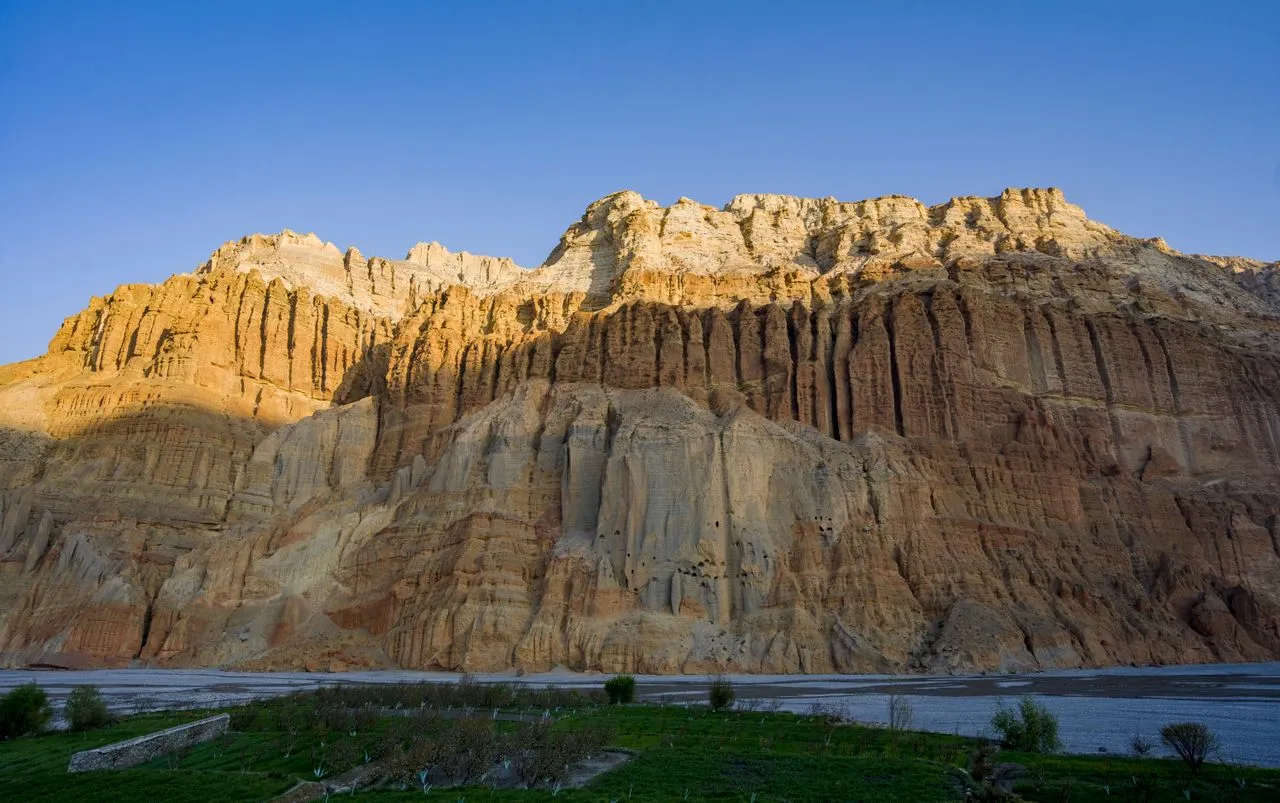
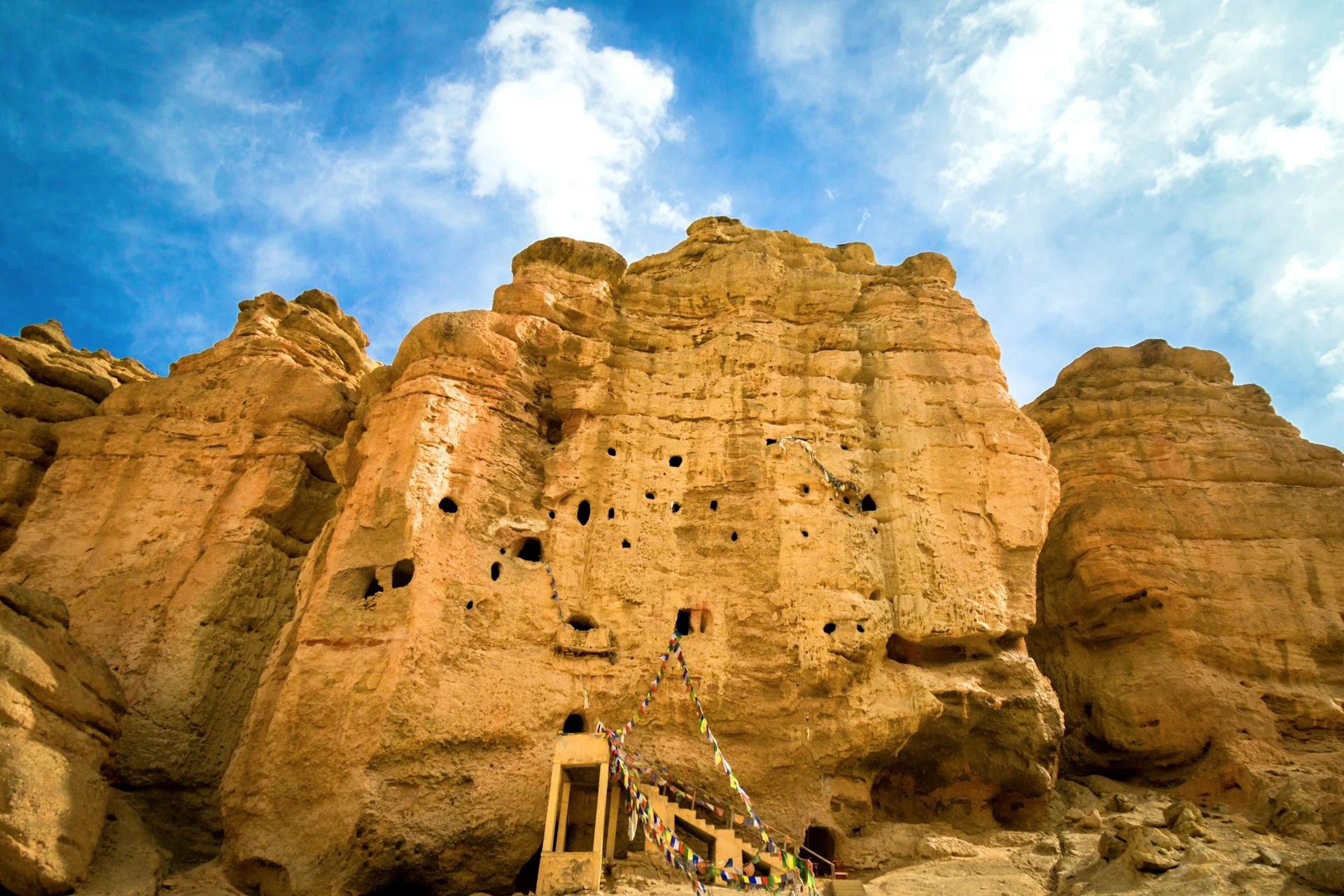
| Jhong cave, Chhoser | Five storeys cut into the cliff, about 150 rooms, wooden ladders. NRs 500 for foreign nationals |
| UNESCO status | Tentative list since 2008, not formally inscribed |
The palace closure matters more than it sounds. It is the single building most visitors picture, and the last published status had it shut. That report is from 2020, so confirm it before you build a day around it.
Around 4,000 international visitors reach Lo Manthang in a year, and the town holds roughly 30 small hotels between them. Set that against the hundreds of thousands who walk the Annapurna and Everest regions.
The quiet is not a marketing line here. It is a consequence of the permit, the distance and the season, and it is the clearest argument for going.
There is a harder side to the same fact. The Kathmandu Post column above describes young people leaving Mustang villages for the cities, and reports of art theft from religious buildings. Lo Manthang is not preserved in amber. It is a working town losing its young, which is what makes the timing of a visit a real question rather than a romantic one.
In short, the rain shadow inverts the Nepali calendar. The Himalaya take the monsoon before it reaches the valley, so the Nepal Tourism Board lists Mustang among the few regions in Nepal fit for trekking even during the monsoon. Winter is the season to avoid, because it is cold and always windy.
For how this sits against the rest of the country, see the best time to trek in Nepal. For the wider region, start with Mustang, Nepal.
Two things change how Lo Manthang lands, and neither is on a map.
The first is arriving with time rather than passing through. For example, a guest who reaches the town at midday and leaves the next morning sees a wall and some alleys. A guest who stays two nights sees the same alleys at dusk, when the day’s work stops and the town belongs to the people who live in it. The second night is the one that does the work.
The second is going in with the history straight. In our experience the visitors who get least from Lo Manthang are the ones who arrived expecting a sealed medieval kingdom and found a town with satellite dishes and a closed palace. The place is remarkable on its actual terms. It does not need the myth.
Reaching Lo Manthang asks for the restricted area permit, a government appointed official, and either four days on foot from the roadhead or a long day in a vehicle. It does not ask for altitude experience beyond sensible pacing, and the town sits lower than Everest Base Camp.
For how Mustang fits inside a wider itinerary, and what the word luxury should mean here, see our guide to a Nepal luxury tour. Far Ridge Collective is a Nepali owned luxury tour operator in the Nepal travel industry, running private guided journeys in Mustang and the wider Himalaya, capped at five guests. Our Kingdom of Mustang journey covers Lower Mustang. Lo Manthang sits inside the restricted zone and is arranged on enquiry.
Historical dates and site status were checked against The Himalayan Times, The Kathmandu Post and the Nepal Tourism Board in September 2026. Building status in particular changes, so confirm the palace before you plan around it.
A Himalayan Buddhist kingdom whose capital was Lo Manthang, in what is now Upper Mustang in Nepal. It sat on the salt and wool route between Tibet and the Nepali midhills. Nepali sovereignty was accepted in 1790, but the monarchy continued in title until 2008.
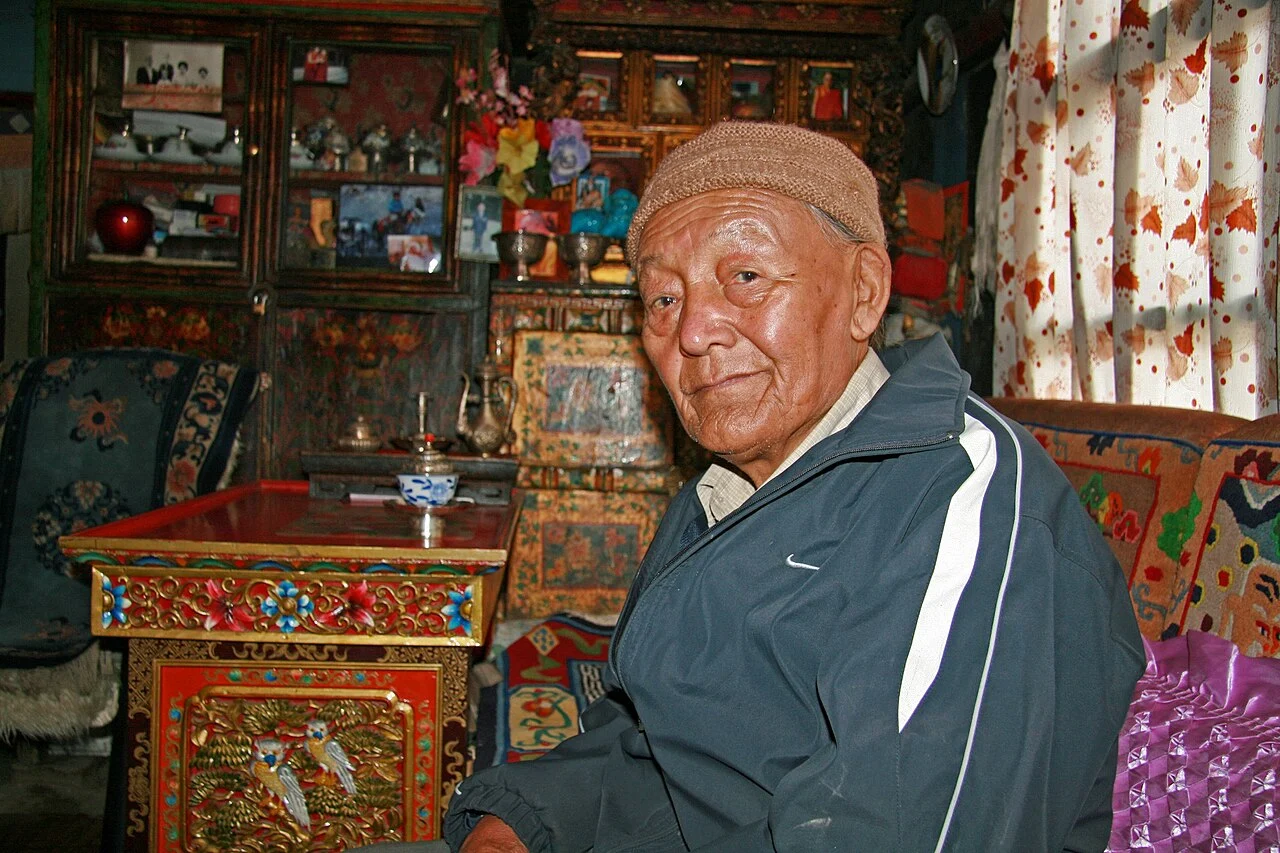
Jigme Dorje Palbar Bista. He was born in Lo Manthang in 1930, took the throne in 1964 after his father Angun Tenzing Trandul, and held a titular kingship until 2008. He died in December 2016, aged 86, according to The Himalayan Times.
In 2008. Nepal became a republic and scrapped the Rajya Rajauta Act of 1961, which had allowed annexed kings to keep their titles for life. The kingdom had already accepted Nepali sovereignty in 1790, so the 2008 change ended a title rather than a state.
Not as of the last published report. The five storey palace was damaged in the 2015 earthquakes and The Kathmandu Post described it as closed to visitors. That report dates from 2020, so check its current status before planning a day around it.
No, not yet. It was added to the UNESCO tentative list in 2008 and has not been formally inscribed since. Tentative listing signals candidacy rather than protection, which is part of why campaigners keep pressing for full designation.
Around 4,000 international visitors a year, served by roughly 30 small hotels. Set against the hundreds of thousands who walk the Annapurna and Everest regions, that is the clearest measure of how quiet Upper Mustang still is.
Either four days on foot from the roadhead, which the Nepal Tourism Board gives as the minimum, or a long day by vehicle now that the Kali Gandaki road reaches the town. Both routes need the restricted area permit and a government appointed official.
No, and a Kathmandu Post column said so in its headline in 2022. The restricted permit still limits numbers, but a road reaches the town, young people are leaving for the cities, and the palace is shut. The place is worth seeing on its real terms rather than the myth.
Send us your questions about routes, costs or the best time to go — our travel experts in Nepal reply within 24 hours.

Mustang is a district in north central Nepal. It was a kingdom in its own right until 1950, and it is split in two by law. Lower Mustang is open.…
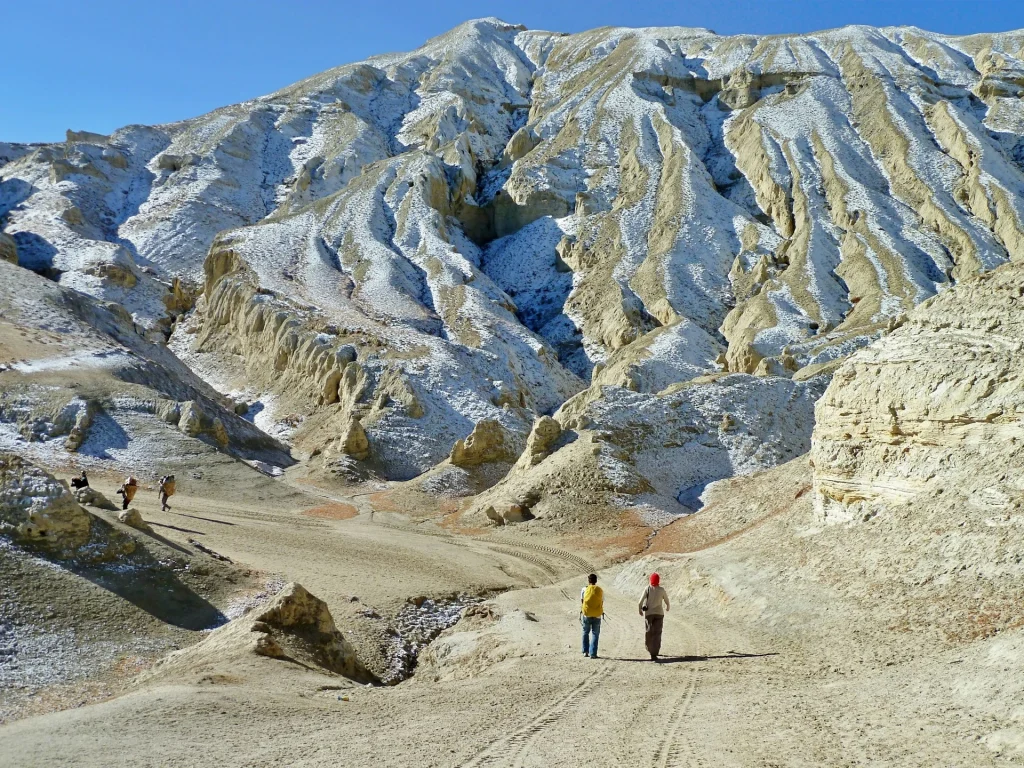
Upper Mustang is the restricted half of Mustang district, north of Kagbeni, and it needs a permit costing USD 50 per person per day on top of the ordinary conservation…