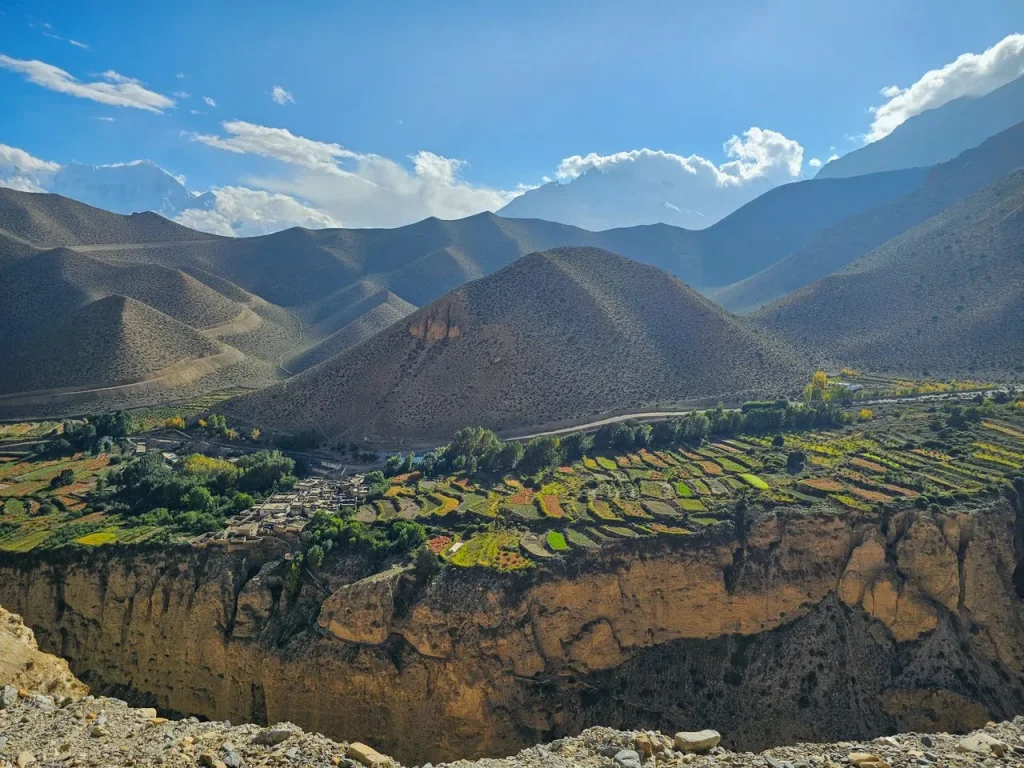
The Old Kingdom of Mustang, Nepal: Upper and Lower
Mustang is a district in north central Nepal. It was a kingdom in its own right until 1950, and it is split in two by law. Lower Mustang is open.…
 Pawan Bhattarai
Updated on
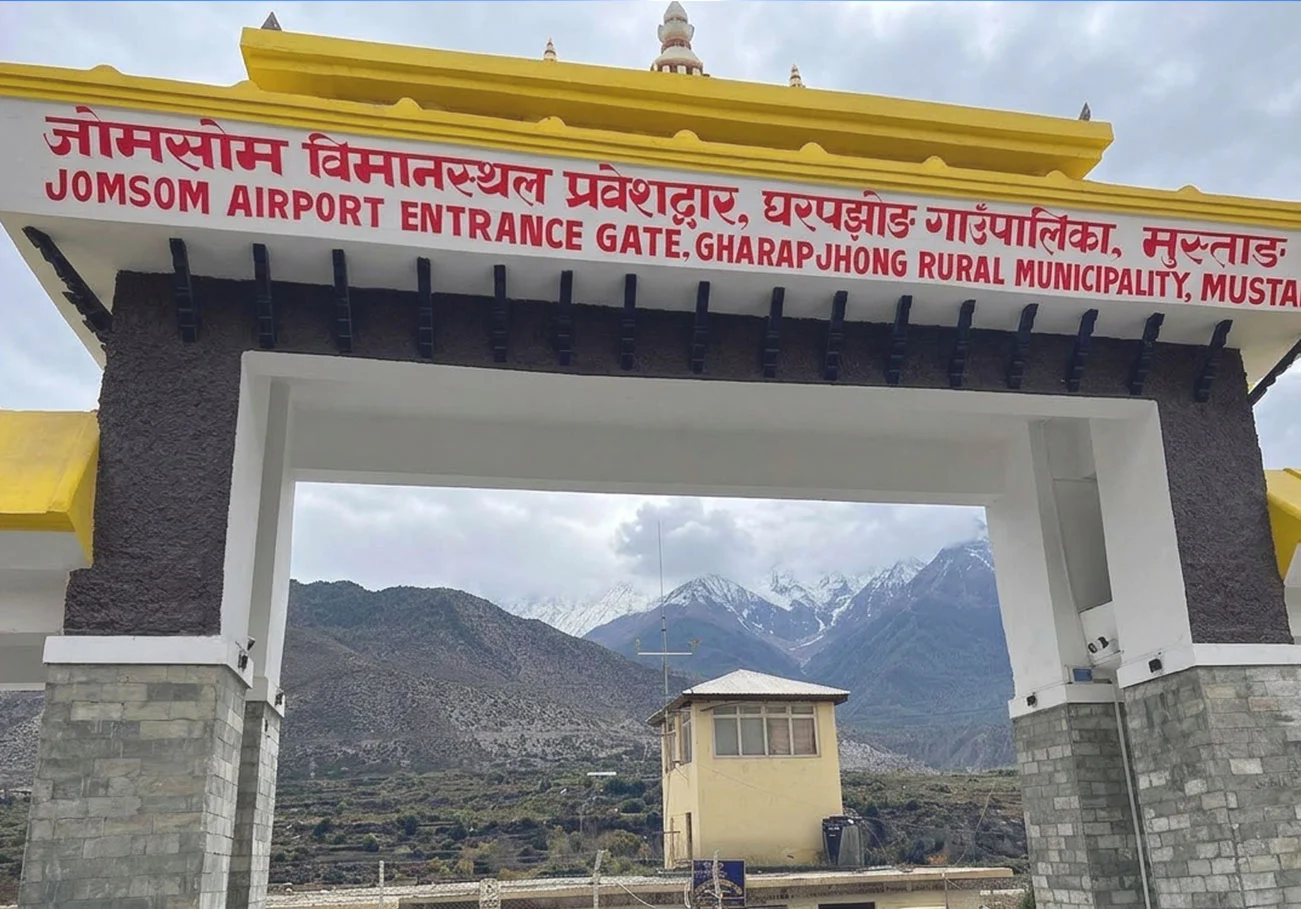
Jomsom is the administrative centre of Mustang district and the way into the whole valley, set on the Kali Gandaki between the Dhaulagiri and Annapurna massifs. The short answer on getting there: most visitors no longer fly. Road building has cut Pokhara to Jomsom flights by two thirds, and Mustang now fills up by vehicle instead.
That changes what a visit is. It also changes when you should come.
Who this guide is for: travellers working out how to reach Mustang, how reliable the flight is, and where to base once they arrive. For the region as a whole, start with our guide to Mustang, Nepal.
In short, the valley makes its own wind. The Nepal Tourism Board describes the Annapurna region as holding the wettest, driest and windiest places in Nepal, and the Kali Gandaki gorge, the deepest in the world, is why. Warm air lifts off the lowlands through the morning and funnels north between two peaks above 8,000m.
So the window is early and short. Once the wind is up, the day is finished. There is no afternoon slot to fall back on, which means a cancelled Jomsom flight usually costs a whole day rather than a few hours.
This is the fact most itineraries get wrong.
The Beni to Jomsom to Korala road did not only take passengers off the aircraft. It changed the route’s economics.
Republica reported that flights between Pokhara and Jomsom have dropped by two thirds since construction began, with one operator recalling up to 18 flights daily before the road. Five or six now run on a normal day, and about four fifths of the passengers are Indian.
| Before the road | Now | |
|---|---|---|
| Flights a day | Up to 18 | Five to six |
| Daily air arrivals | More than 300 | Roughly half that |
| Winter service | Ran through | Suspended 4 December to 4 March |
| Main passenger group | Mixed | About 80 per cent Indian |
The winter gap is the part that catches people. Summit Air and Tara Air both suspended the route for the season, and Tara Air put dates on it, 4 December to 4 March. Even so, the road stays open, so Mustang in winter is reachable. You simply drive.
The short answer: Mustang has become a road destination, and at peak it is busy.
Over one four day holiday the District Police Office in Mustang counted more than 30,000 people entering through the Ghasa checkpoint. The daily count ran 5,586, then 7,827, then 9,086 on the Friday. Mustang’s hotels hold about 10,000 guests a night between them. For most of that week the district was over its own capacity.
That answers the crowding question with a number instead of an opinion.
It is worth knowing who those visitors are, because it decides where and when the pressure falls. Of 150,130 foreign visitors from January to November 2025, the Annapurna Conservation Area Project office in Jomsom recorded 123,253 from SAARC countries and 26,877 from everywhere else. The surges track the Indian holiday calendar, not the Western trekking season.
Jomsom is a working town rather than a sight. It holds the district administration, the airstrip, an army post, a bank and the shops that supply everything further north. The Kali Gandaki runs through the middle of it, wide and grey and usually loud with wind by lunchtime.
Nobody comes for Jomsom itself. They come because it is the one place in Lower Mustang with an airstrip, a road junction and enough beds, which makes it the natural base for everything around it.
Lower Mustang is compact, and that is its real advantage. You unpack once and go out and back.
| Place | What it is | Restricted permit |
|---|---|---|
| Marpha | Apple and orchard village south of Jomsom, and the best surviving example of the valley’s whitewashed architecture | No |
| Kagbeni | Old settlement at the confluence, and the checkpoint where the restricted zone begins | No |
| Muktinath | Pilgrimage site sacred to Hindus and Buddhists, which the Nepal Tourism Board puts at 3,749m | No |
| North of Kagbeni | Upper Mustang, the old kingdom and Lo Manthang | Yes |
None of these needs a restricted area permit. Everyone entering still needs the Annapurna conservation permit, which our guide to Nepal trekking permits covers in full.
Mustang sits in the Himalayan rain shadow, so it is one of the few parts of Nepal that works during the monsoon while the rest of the country is under cloud. Spring and autumn are still the settled seasons. Our guide to the best time to trek in Nepal sets out the wider calendar.
The timing that matters here is not really the weather. It is the holiday calendar. Long weekends in India and Nepal are what produce the 9,000 person days, and they are predictable months ahead.
Three things decide how a Mustang trip feels, and none of them appear on a booking.
The first is the buffer day. Because the flight has one window and no afternoon fallback, we put a spare day before any international departure. For example, a guest flying home from Kathmandu on a Sunday is off the mountain by Friday, not Saturday. Guests who treat that day as slack are usually the ones who need it.
The second is basing. We keep guests in one place and reach Kagbeni and Marpha and Muktinath as day trips. Unpacking once is the comfort argument. Arriving acclimatised is the better one, since Muktinath is well above the valley floor.
The third is timing against the crowd rather than the forecast. In our experience the guests who enjoy Lower Mustang most are the ones who came in a quiet week, not the ones who came in the best weather. A settled sky over a full valley is the worse trade.
Jomsom asks for about a week, no special permit, and a willingness to treat the flight as optional rather than fixed. It does not ask for technical skill, and the walking is gentle by Nepali standards.
Far Ridge Collective is a Nepali owned luxury tour operator in the Nepal travel industry, running private guided journeys in Mustang and the wider Himalaya, capped at five guests. Our Kingdom of Mustang journey is based in Lower Mustang and built around this valley. For the restricted north, see Upper Mustang and the old capital at Lo Manthang.
Flight counts, arrival figures and road conditions were checked against Republica, The Annapurna Express, The Himalayan Times and the Nepal Tourism Board in September 2026. Schedules change with the season, so confirm the service before you plan around it.
Two ways. A morning flight from Pokhara, or the Beni to Jomsom road. Most visitors now arrive by road, because flight numbers fell by two thirds once the road was built and only five or six services run on a normal day.
Because of wind. The Nepal Tourism Board describes the Annapurna region as holding the windiest places in Nepal, and the Kali Gandaki funnels air north as the day warms. Aircraft go early and stop once it builds, and there is no afternoon fallback.
Yes, but fewer and not year round. Five or six operate on a normal day. Summit Air and Tara Air both suspended the route for the winter season, and Tara Air gave dates of 4 December to 4 March.
Not a restricted area permit. Jomsom sits in open Lower Mustang, so the Annapurna conservation permit that everyone entering the conservation area needs is enough. The restricted permit applies only north of Kagbeni.
Yes. Muktinath, which the Nepal Tourism Board puts at 3,749m, is reached and returned from Jomsom inside a day, as are Kagbeni and Marpha. That is why a single base works for Lower Mustang.
During Indian and Nepali public holidays rather than the Western trekking season. Over one four day holiday the District Police Office in Mustang counted more than 30,000 arrivals through the Ghasa checkpoint, against a district bed capacity of about 10,000 a night.
Yes, by road. Flights stop for the season but the Beni to Jomsom road stays open, so winter travel to Mustang means driving rather than flying.
As a base, yes. Jomsom is a working administrative town rather than a sight, but it holds the airstrip, the road junction and the beds, which makes it the practical centre for Kagbeni, Marpha and Muktinath.
Send us your questions about routes, costs or the best time to go — our travel experts in Nepal reply within 24 hours.

Mustang is a district in north central Nepal. It was a kingdom in its own right until 1950, and it is split in two by law. Lower Mustang is open.…
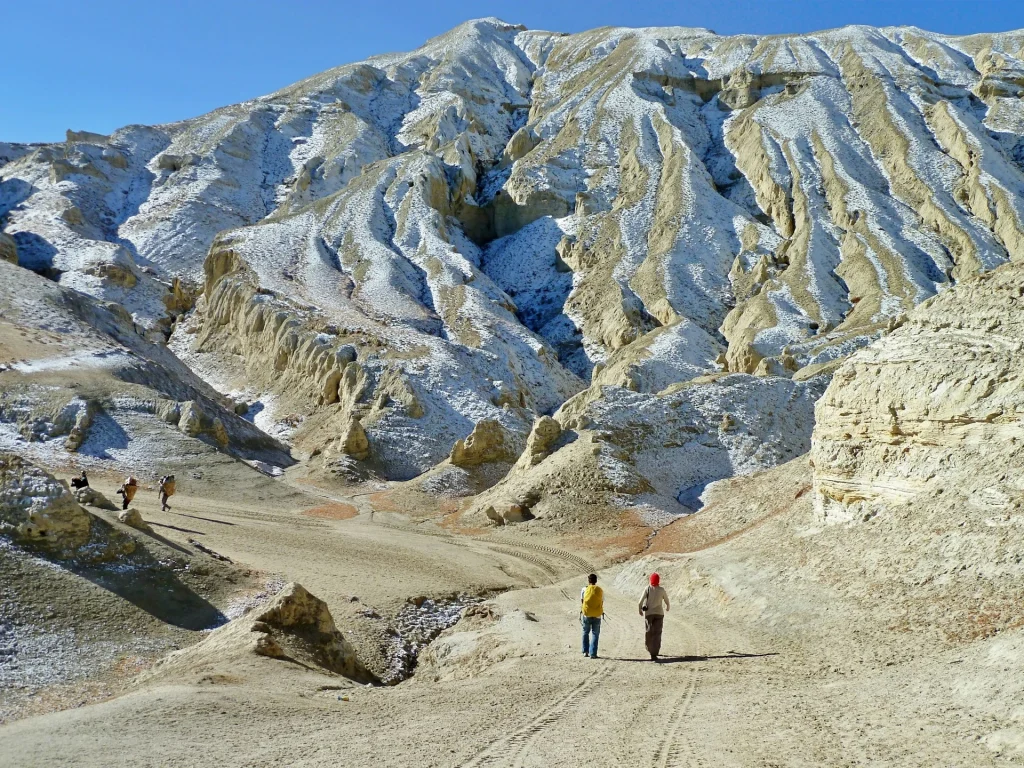
Upper Mustang is the restricted half of Mustang district, north of Kagbeni, and it needs a permit costing USD 50 per person per day on top of the ordinary conservation…