Nepal Luxury Tour and Trekking: What It Actually Means
Nepal receives more visitors than ever, yet daily spend sits near a record low. Here is what luxury trekking in Nepal should actually mean.

 Pawan Bhattarai
Updated on
Pawan Bhattarai
Updated on
A tour plan for Nepal works best built around three or four places, not eight. The country is small on a map and slow on the ground, so the itineraries that disappoint are almost always the ones that tried to fit everything in. Two weeks is the honest minimum for the Kathmandu Valley, a Himalayan section and the lowlands. Ten days works if you cut one of the three.
What follows is how the pieces actually fit, with the travel times that decide it. Distance is not the constraint here. Time on the road is.
The single biggest planning error is underestimating internal travel. Nepal rewards depth over coverage.
| Days | What fits comfortably | What you give up |
|---|---|---|
| 7 | Kathmandu Valley and one other region | Any trekking above a day walk |
| 10 | Valley, Pokhara, and either a short trek or the lowlands | You choose mountains or wildlife, not both |
| 14 | Valley, a properly paced trek, and Chitwan or Bardia | Little, this is the balanced length |
| 21 | All of the above plus Lumbini or a second trek | Nothing, though few guests have the time |
Fourteen days is where the country stops feeling rushed. That is not a sales position, it is arithmetic: a properly paced walk to Annapurna Base Camp needs about six trekking days, and the Valley deserves three on its own.
| Region | Why go | Give it |
|---|---|---|
| Kathmandu Valley | Seven UNESCO monument zones inside one valley | 3 days |
| Pokhara and Annapurna | The trekking heartland, and the lake | 6 to 8 days |
| Chitwan or Bardia | Tigers, rhinos, the Terai lowlands | 3 days |
| Lumbini | The Buddha’s birthplace, and the monastery zone | 2 days |
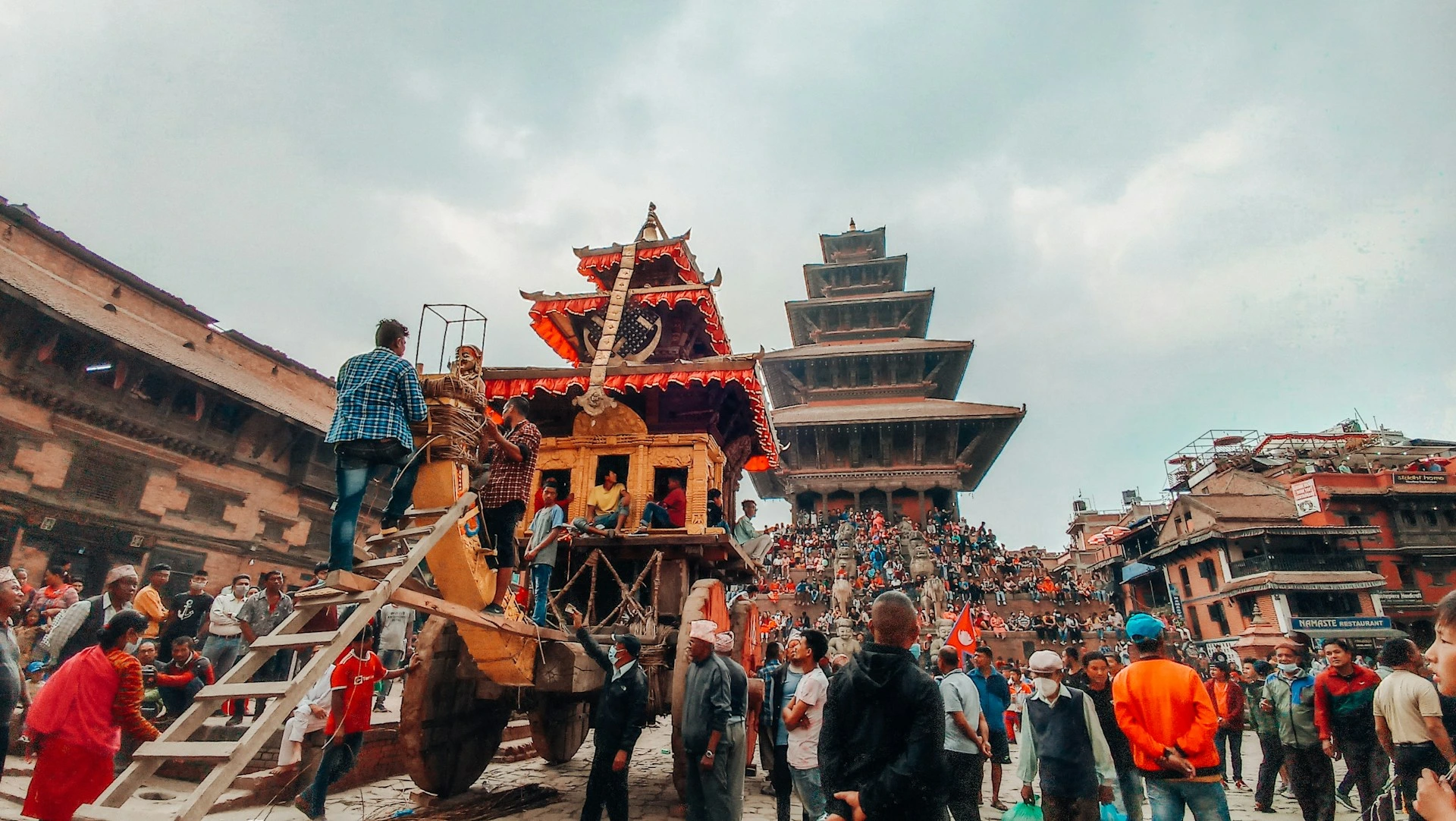
The Valley is one World Heritage property, not seven separate ones. UNESCO inscribed it in 1979 as a single site made of seven monument zones: the durbar squares of Kathmandu, Patan and Bhaktapur, then Swayambhu, Bauddhanath, Pashupati and Changu Narayan. Most visitors see two of the seven and think they have seen the Valley. Bhaktapur alone justifies a full day.
Sequence is where good plans separate from bad ones. Two constraints pull against each other.
The first is altitude. Hospital research from Jomsom found that ascending from Pokhara to Muktinath in a single day carried roughly twice the odds of moderate or severe altitude sickness compared with the same climb spread over three days. So the trekking section belongs after you have been in the country a few days, not on day two.
The second is recovery. Long haul arrivals land tired, and the Valley is the right place to be tired: low, warm, and full of things that reward slow attention. Then the mountains. Then the lowlands, which sit near sea level and make a gentle landing before the flight home.
Which gives the shape almost every good Nepal itinerary follows:
This is the part most plans get wrong. Kathmandu and Pokhara sit 200km apart. That sounds like a morning drive. It is not.
The Kathmandu Post reports the road journey now takes at least ten hours, because the Prithvi Highway widening has run years behind schedule. Republica reported the Mugling to Pokhara expansion at 55 percent on the eastern section and 19 percent on the western. Until that finishes, driving costs you a day in each direction.
So fly. Buddha Air, Yeti Airlines and Nepal Airlines all connect Kathmandu with Pokhara International Airport, and the same short hop replaces two full days on a road you will not enjoy. That is two extra days in the mountains for the same fortnight.
One warning worth planning around: mountain flights are weather dependent, and Kathmandu airport has cut its operating hours in recent years. Build a buffer day before any international departure. Anyone who tells you a Lukla or Jomsom flight is reliable in poor weather is selling optimism. For flight safety and what the US, UK and Canadian governments advise right now, see our guide to whether Nepal is safe to visit.
| Days | Where | What happens |
|---|---|---|
| 1 to 3 | Kathmandu Valley | Arrive, recover, Bhaktapur and Patan properly |
| 4 | Fly to Pokhara | The lake, and the Annapurna wall from the water |
| 5 to 10 | Annapurna | Six trekking days, paced for altitude |
| 11 | Fly to the Terai | Descend to Chitwan or Bardia |
| 12 to 13 | Terai | Two full days of wildlife, dawn and dusk |
| 14 | Kathmandu | Buffer day, then the flight home |
This is the frame we build guest journeys on. Our Grand Nepal Journey runs the same order across sixteen days, and it is the same logic behind what a Nepal luxury tour should mean.
Swap the trek for wellness and retreat days and the same fortnight becomes a different journey entirely, because the frame is about pacing rather than activity. The frame holds either way. That is the point of it.
Nepal issues visas on arrival, so nothing needs arranging in advance. They are available at Tribhuvan International in Kathmandu, at Pokhara and Gautam Buddha international airports, and at land borders.
The Department of Immigration publishes current fees and conditions. For guests travelling with us this is context, not a task, because we handle it.
Trekking permits are a separate matter, and the rules changed in 2023.
October and November give the clearest mountain views, then March to May. The monsoon retreats in late September, though the exact date moves each year.
Season shapes the plan more than most people expect, since the same trail in February and in October gives you two different journeys, one crisp and empty, the other clear and busy. Book early either way. The good lodges go first.
Fourteen days is the honest minimum for the Kathmandu Valley, a properly paced trek and the lowlands. Ten days works if you drop one of those three. Seven days covers the Valley and one other region, with no real trekking.
Kathmandu Valley for three days, fly to Pokhara, six trekking days in the Annapurna region, then descend to Chitwan or Bardia for wildlife, and return to Kathmandu with a buffer day before flying home. That sequence handles altitude and jet lag in the right order.
Fly. The 200km road takes at least ten hours because the Prithvi Highway widening is years behind schedule, so driving costs a full day in each direction. The flight gives those two days back to the mountains.
Most nationalities get a visa on arrival at Tribhuvan International in Kathmandu, at Pokhara and Gautam Buddha international airports, and at land borders. Nothing needs arranging in advance. You choose 15, 30 or 90 days at the counter, and multiple re-entry is included, which matters if you are pairing Nepal with Bhutan or Tibet.
Yes, in fourteen days or more. The Terai sits near sea level and the descent from the mountains to the jungle makes a natural end to a journey. In ten days you would be choosing between them rather than doing both well.
October and November for the clearest mountain views, then March to May for warmer days and rhododendron in bloom. The monsoon clears in late September, but the exact onset and retreat shift from year to year.
Send us your questions about routes, costs or the best time to go — our travel experts in Nepal reply within 24 hours.

Nepal receives more visitors than ever, yet daily spend sits near a record low. Here is what luxury trekking in Nepal should actually mean.
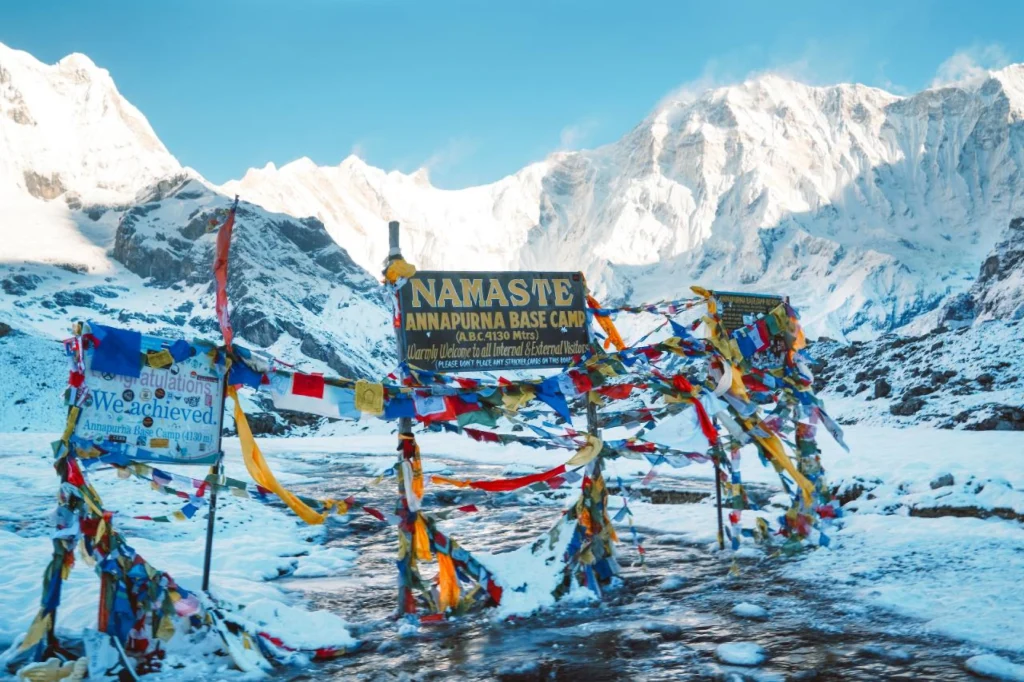
Annapurna Base Camp sits at 4,130m in a ring of peaks. What the trek involves, how long it takes and what it asks of you.